






 Portuguese
  Spanish


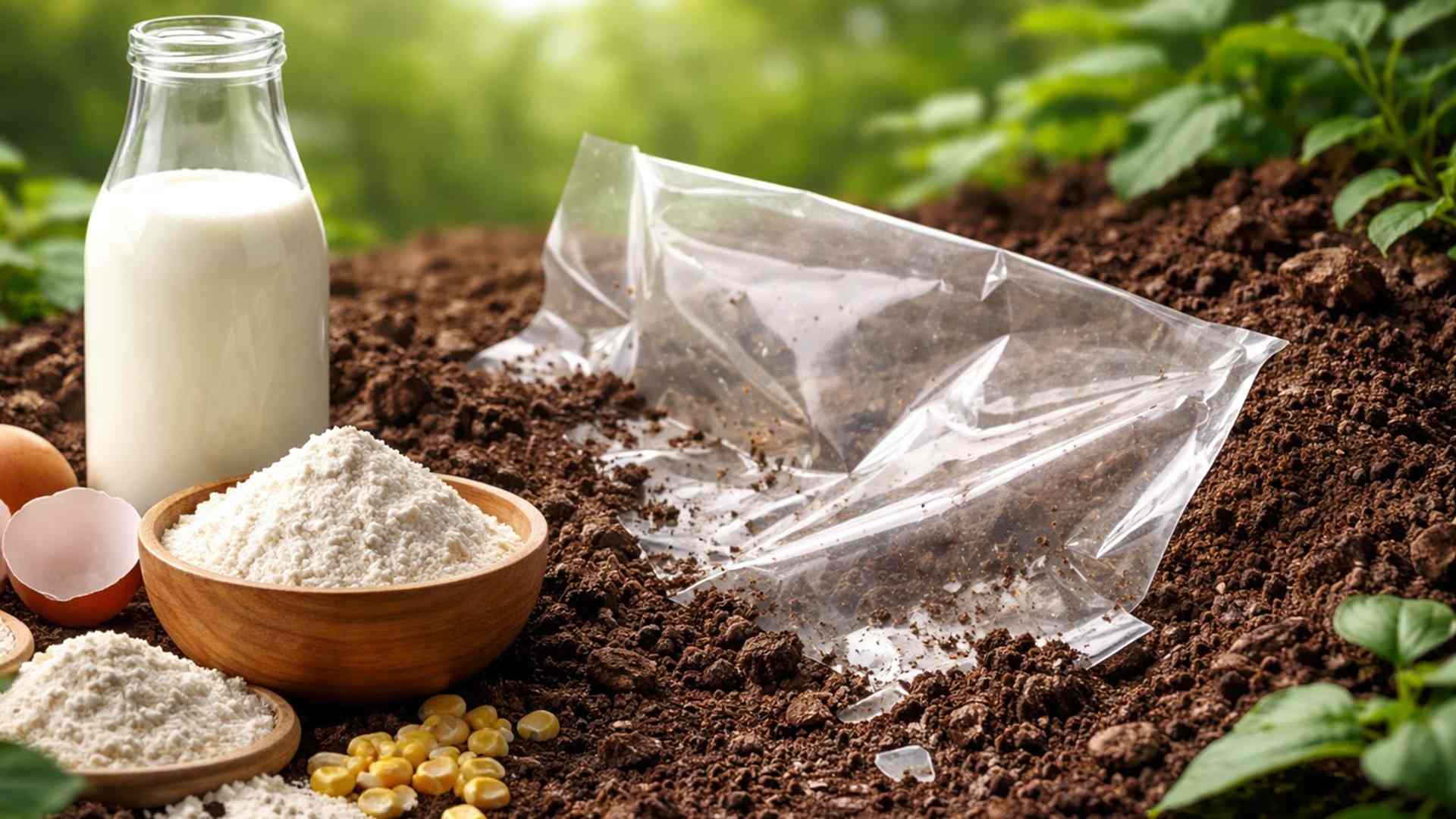


Researchers Developed a Biodegradable Plastic Produced from Milk Proteins, Modified Starch, and Clay, Capable of Completely Decomposing in Soil in About 13 Weeks, Pointing to a Possible Way to Reduce Plastic Waste and Environmental Impacts Associated with Disposable Packaging
Scientists are turning to milk proteins, starch, and clay nanofillers to develop biodegradable plastics capable of decomposing rapidly in soil, in response to the advancement of plastic pollution and the associated risks to human and environmental health.
Research on Milk and Starch-Based Biopolymers
Research conducted at Flinders University in South Australia describes the creation of a thin biodegradable film from the combination of calcium caseinate – derived from the main milk protein – with modified starch and bentonite nanofiller. The formulation also included glycerol and polyvinyl alcohol to enhance mechanical strength and flexibility.
The study was published in the scientific journal Polymers and presents initial results on the use of abundant and low-cost biopolymers as an alternative to conventional petroleum-derived plastics.
-
China Develops Custom 140-Ton Electric Mining Truck with 770 kWh Swappable Battery, Deploys 290 Units in Xinjiang’s Largest Zinc Mine

-
Meta to Launch Arena, a New Prediction App Targeting 3.56 Billion Users, Competing with Polymarket and Kalshi

-
Scientist Challenges Famous Human Evolution Theory, Argues Homo Sapiens Evolved Gradually Over Thousands of Years
-
15-Year-Old American Builds Ocean Generator with PVC Pipe and 3D-Printed Propeller for $12, Wins National Prize, Presents at White House, and Makes Forbes 30 Under 30 List




Biodegradability and Environmental Performance Testing
Laboratory trials showed that the material exhibits a continuous decomposition process when placed under normal soil conditions, with complete disintegration expected to occur in approximately 13 weeks. This performance indicates potential application in food packaging and other short-term uses.
Microbiological tests also indicated low toxicity. Bacterial colonies remained within the limits considered acceptable for biodegradable films that do not possess antimicrobial function, reducing concerns regarding immediate environmental impacts after disposal.
Safety, Health, and Material Limits
According to Professor Youhong Tang from the Flinders Institute of NanoScale Science and Technology, further antibacterial assessments are still recommended in future development stages.
He emphasizes that conventional plastics may contain thousands of chemical substances, some associated with toxic and carcinogenic effects.
In this context, the development of biodegradable alternatives is seen as a strategic step to reduce risks to human health and curb the growing plastic pollution in terrestrial and aquatic environments.
International Collaboration and Materials Innovation
The research involved international collaboration with chemical engineer Nikolay Estiven Gomez Mesa and Professor Alis Yovana Pataquiva-Mateus from Jorge Tadeo Lozano University in Bogotá.
According to Gomez Mesa, initial experiments with caseinates for the production of nanofibers revealed properties compatible with polymers used in commercial packaging.
The introduction of starch and natural nanofillers, such as bentonite, allowed for improved film strength and barrier properties while maintaining the goal of using inexpensive, biodegradable, and environmentally friendly ingredients.
Global Pressure for Alternatives to Conventional Plastic
The research is set against a backdrop of strong international pressure to reduce the use of disposable plastics. Estimates indicate that about 60% of all plastics produced are single-use, and only 10% are effectively recycled.
Global production, which was approximately 2 million tons in 1950, reached around 475 million tons in 2022, with projections of continued growth in the coming decades.
In this context, rapidly decomposing biodegradable films are increasingly considered one of the most promising alternatives to mitigate environmental impacts and support the transition to a circular economy.






