






 Portuguese
  Spanish





Motorola V3 Marked An Era With Its Elegant Design And High Price. Two Decades Later, Its Adjusted Value Reveals Curious Contrasts With Current Smartphones And Shows How The Mobile Phone Market Has Evolved Since The 2000s To Date.
One of the most iconic cell phones of the 2000s, the Motorola Razr V3, marked a generation with its futuristic design and metallic finish.
Originally released in 2004 and popularized in Brazil in 2005, the device stood out not only for its appearance but also for the high price charged at the time, which made it a status symbol among Brazilians.
Two decades later, an inflation-adjusted estimate shows how much it would cost today to acquire the iconic model.
-
Billionaire says the most valuable skill will help overcome job elimination caused by AI, following Bill Gates’ fears

-
A Dutchman created a ‘box’ that makes trees grow in the desert almost without water and without irrigation: the invention has already brought seedlings to dozens of countries and achieves up to 90% survival where common planting did not exceed 10%.

-
Abandoned warehouse hid a giant collection of rare computers, with over 2,000 artifacts from the 1930s to the 1980s.
-
She spent 73 years breathing inside an iron lung, survived the aftereffects of polio, and became the last woman in the United States dependent on the equipment before dying at 78 years old.





How Much Would The Motorola V3 Cost In 2025 With Inflation
At its peak, between 2005 and 2006, the Motorola V3 was sold in Brazil for approximately R$ 999.
This value, when adjusted by the National Index of Consumer Prices (IPCA), the main inflation gauge in the country, corresponds to R$ 2,915 in April 2025, according to calculations made using the official tool from the Central Bank.
The cell phone arrived in the country amid an explosion of popularity for flip models, often sold in partnership with telecommunications companies, which offered discounts in exchange for loyalty contracts.
Despite this, the price was still considered high compared to the minimum wage at the time, which was R$ 300.
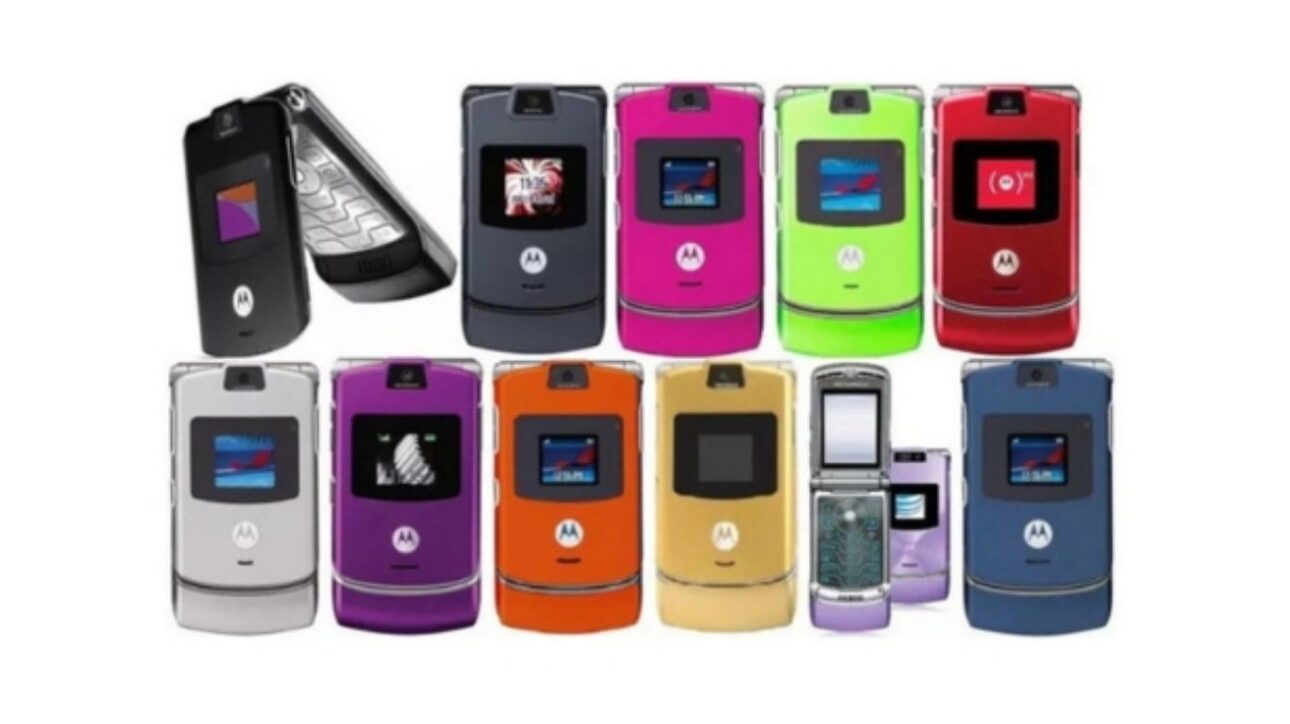
Motorola V3 And Purchasing Power In 2005
When comparing the value of the Motorola V3 to the minimum wage in 2005, it becomes evident that the consumer needed to work more than three months to purchase the device.
More precisely, it was necessary to allocate 3.33 minimum wages to buy the cell phone.
If this same logic were applied to the current minimum wage of R$ 1,518, the equivalent value of the V3 would soar to around R$ 5,054, more than 70% above the estimate based solely on inflation.
Although these simulations serve only for comparative purposes and do not constitute an official pricing calculation, they highlight the impact that the Motorola V3 had on the mobile phone market.
In practice, factors such as technological evolution, new business models, and changes in the production and tax chain make a direct price comparison over decades unfeasible.
Still, the data helps to understand the economic context of the time and how the V3 was considered a high-value consumer good.
Current Razr Line Costs More Than The Corrected Value Of The V3
Interestingly, the adjusted value of the V3 in 2025 is not enough to acquire smartphones from the current Razr line, considered its spiritual successor.
The new generation of foldable phones from Motorola starts at R$ 4,949 with the mid-range Razr 60, and can exceed R$ 8,999, in the case of the Razr 60 Ultra, the flagship model recently launched in the Brazilian market.
Even with an adjusted price for current standards, the V3 would not be able to compete with contemporary smartphones in terms of technical specifications.
Technical Specifications Of The Motorola V3
At the time of its launch, the device was considered advanced for featuring a 2.2-inch color internal display with a resolution of 220 x 176 pixels and a VGA camera, with 0.3 megapixels (640 x 480 pixels), sufficient for basic photos.
It also had a small monochrome external display and a battery of only 680 mAh, which lasted just over a day with moderate use.
For 2025 standards, these characteristics are extremely outdated.
Today, even entry-level cell phones offer multiple cameras, sensors above 50 megapixels, 5,000 mAh batteries, and processors capable of running heavy applications and high-definition games.
This demonstrates how the technological leap over the past 20 years has been exponential.
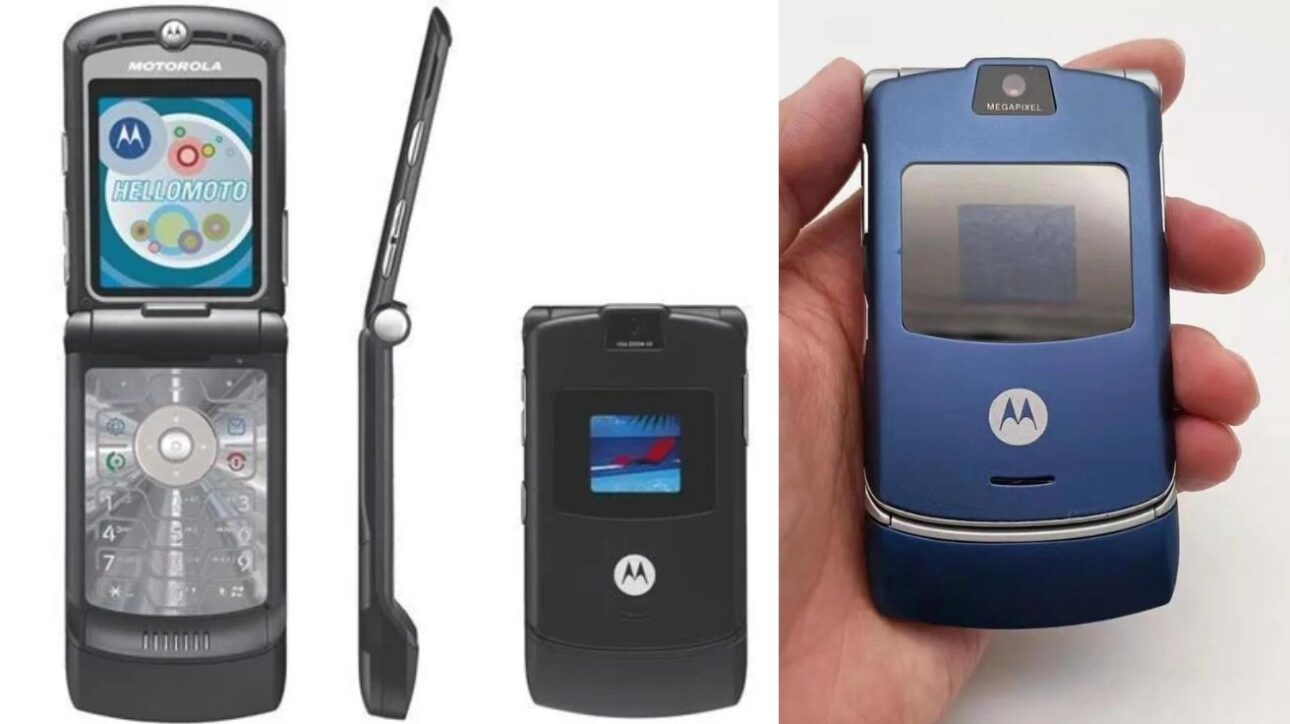
Motorola V3 And Its Legacy In The Mobile Phone Market
Still, the Motorola V3 maintains an important legacy in the history of cell phones.
The device was a global sales phenomenon, with over 130 million units sold until its discontinuation, being one of the few models from the pre-smartphone era to reach this milestone.
Anyone looking today for a phone with reasonable performance in the same price range adjusted for the V3 could invest in premium mid-range models.
Among the examples are the Motorola Edge 60 Fusion, with high-resolution display and drop resistance, the Samsung Galaxy S24 FE, known as a more accessible version of the brand’s premium line, and the Redmi Note 14 Pro Plus, which includes a main camera of 200 megapixels and high graphic performance.
All cost between R$ 2,900 and R$ 5,000 in the national retail market.
Access To Technology Has Evolved Over Time
It’s worth noting that, in addition to the evolution of components and performance, access to technology has also become democratized.
What was once a product restricted to a portion of the population is now present in almost every Brazilian home.
According to data from the Brazilian Institute of Geography and Statistics (IBGE), the country currently has over 250 million active mobile lines, surpassing the number of inhabitants.
With so many advances, the Motorola V3 remains alive in memory as a symbol of an era.
The model marked the transition from basic cell phones to multifunctional ones, albeit in a limited form, and helped pave the way for the era of foldable smartphones that is regaining ground in 2025.
Did you ever have a Motorola V3 or dream of owning this iconic cell phone from the 2000s?




