






 Portuguese
  Spanish


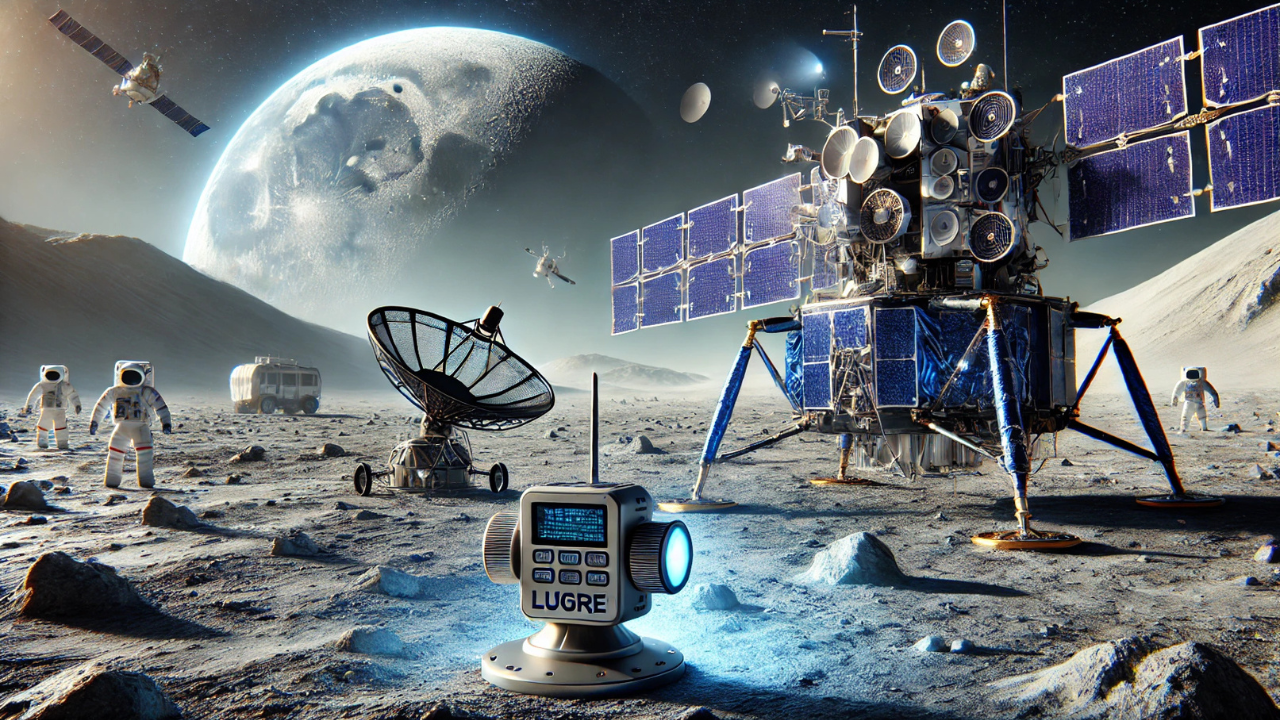

NASA And Italian Space Agency Make History With LuGRE, First Experiment To Capture GNSS Signals On The Moon.
NASA, in partnership with the Italian Space Agency, has achieved a historic milestone in space exploration. On March 3rd, the Lunar GNSS Receiver Experiment (LuGRE) successfully captured and tracked GNSS signals on the surface of the Moon for the first time.
This achievement paves the way for a future where spacecraft and exploration missions can utilize navigation systems similar to those used on Earth, ensuring greater autonomy and accuracy.
LuGRE And The Revolution Of Lunar Navigation
So far, spacecraft navigation has primarily relied on ground stations, which require constant communication with human operators. However, this approach presents challenges, especially for long-duration missions and autonomous operations.
-
Pigeons Trained to Detect Cancerous Changes in Medical Images Astonish Scientific Community

-
Mother and Daughter Convert Small Garage into Full Apartment to Save Money and Stay United
-
Woman Leaves Restaurant Job to Become a Builder in Brazil, Launches Her Own Construction Brand “Construcida”

-
Mother and Daughter Turn Abandoned Warehouse Find into Million-Dollar Business in the U.S., Uncovering 25,000 Caps, 10,000 Sneakers, and Rare Apparel from Nike, Adidas, and Puma


Given this limitation, scientists developed the LuGRE mission to test whether GNSS signals, from the GPS and Galileo satellite constellations, could be acquired and tracked from the lunar surface. If successful, future space missions would have a more efficient solution for navigation without solely depending on Earth.
Fortunately, the results were promising. With the success of LuGRE, NASA demonstrated that spacecraft can utilize GNSS signals even at 225,000 miles from Earth. This advancement will allow future missions, including those of the Artemis program, to become more independent and precise in their navigation.
How Did LuGRE Capture GNSS Signals On The Moon?
The experiment began on March 2nd, when the Blue Ghost lunar lander, from Firefly Aerospace, touched down on the lunar surface carrying LuGRE as one of NASA’s 10 payloads.
Shortly after landing, scientists at the Goddard Space Flight Center began operating the GNSS receiver. The anticipation was high: would it really be possible to capture and process GPS and Galileo signals directly on the Moon?
The answer came in the early hours of March 3rd, at 2 AM EST. To the surprise and excitement of the team, LuGRE acquired and tracked GNSS signals on the lunar surface. This achievement confirmed the possibility of autonomous navigation at previously unimaginable distances.
Records And Impacts For Future Missions
In addition to becoming the first experiment to capture GNSS signals on the Moon, LuGRE also set important records throughout its journey.
Even before reaching the lunar surface, the equipment had already recorded the highest altitude at which GNSS signals were detected, reaching 209,900 miles from Earth on January 21st.
Shortly thereafter, on February 20th, LuGRE set a new record by capturing GNSS signals at 243,000 miles from Earth while orbiting the Moon.
These milestones demonstrate that GNSS navigation can be applied not only on the Moon but also in cislunar space – the region between Earth and the Moon – where many future missions will occur. This discovery significantly expands the possibilities for space exploration.
The Future Of Space Navigation With GNSS Signals
The successful acquisition of GNSS signals on the Moon represents an extraordinary advancement for space exploration. With this technology, spacecraft and astronauts will be able to determine their position with greater accuracy and independence, reducing the need for constant communication with Earth.
But the benefits do not stop there. This advancement paves the way for the development of a lunar navigation infrastructure, which will be essential for permanent bases on the Moon and for future interplanetary missions.
Looking to the future, NASA is already planning to expand this concept to Mars and other areas of deep space. As Kevin Coggins, Associate Administrator of NASA’s SCaN Program, emphasized: “On Earth, we use GNSS to navigate from smartphones to airplanes. Now, with LuGRE, we have proven that this technology also works on the Moon. This discovery represents an exciting advancement for lunar navigation.”
Thus, the success of LuGRE strengthens the evolution of space exploration. Autonomy in navigation makes long-duration missions more feasible and reduces reliance on communication with Earth.
With ongoing research and the refinement of technology, GNSS could become an indispensable tool for space exploration, including trips to Mars and beyond.
Without a doubt, this is just the beginning of a new era in interplanetary navigation, where GNSS signals will guide spacecraft across distances never before imagined.


