






 Portuguese
  Spanish
  5 min of reading
  1 comment


To shorten a crossing that currently takes up to five hours and transform it into a half-hour car ride, the Philippines is building a 32-kilometer bridge that will cross Manila Bay over the water, connecting the provinces of Bataan and Cavite in one of the largest engineering projects in Southeast Asia.
Some projects only make sense when you understand the problem they solve. Those who need to travel from Bataan to Cavite, two provinces almost directly across from each other separated by water, currently face a long detour by land or a lengthy ferry ride, a journey that can take five hours. The solution chosen by the Philippines is one of the boldest, drawing a straight line over the sea.
This line is 32 kilometers long with an estimated cost of around 3.84 billion dollars. Once completed, the bridge will reduce those five hours to about half an hour of travel. It’s the kind of leap that changes the lives of those who live there, because it brings cities closer, reduces freight costs, and opens up an entire region to trade and employment.
The challenge of building so far from the shore
Building a 32-kilometer bridge over the sea is one of those feats that seem simple on the map but are brutal in practice. Most of the structure is far from any solid ground, forcing engineers to drive foundations into the bay bed, erect pillars in the middle of the water, and launch the deck section by section, battling tides, wind, and constant salt corrosion. Every kilometer advanced is a logistical battle.
-
To halt the advance of the Sahara, the 8,000 km Great Green Wall in the Sahel relies on reforestation to combat desertification, but by 2026 it remains far behind the goal of 100 million hectares.

-
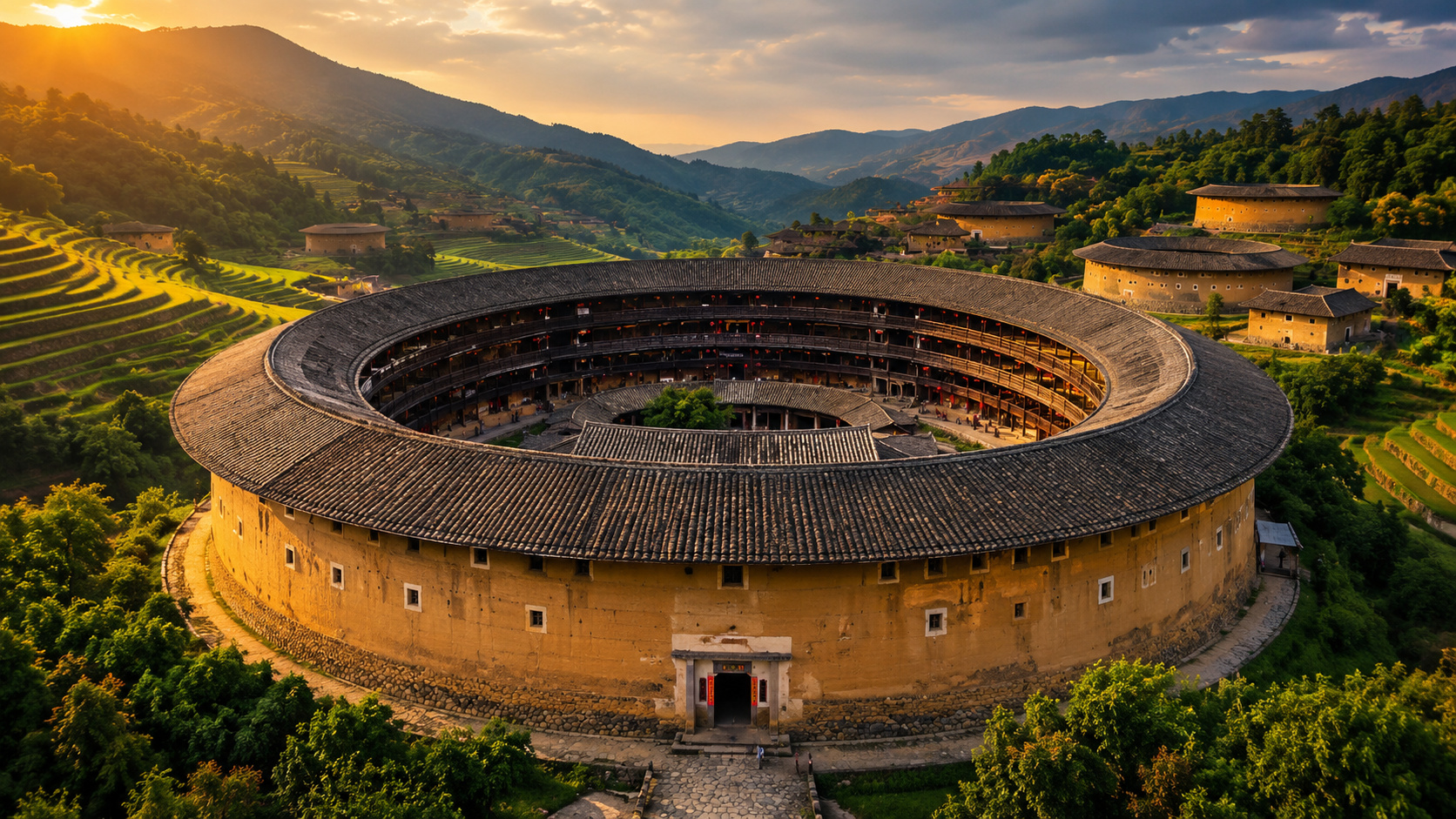
Long before sustainable construction became a trend, China built earthen fortresses with multiple floors, a central courtyard, and the capacity to house up to 800 people living in a community.

-
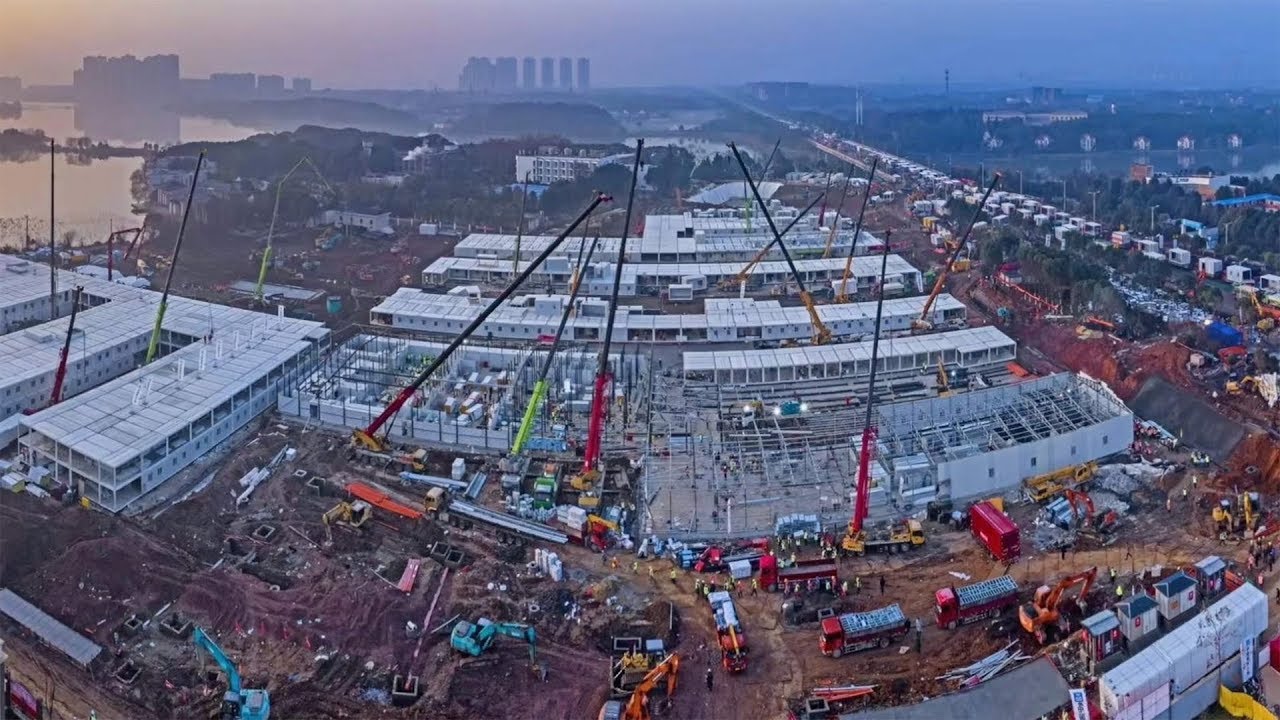
While in the rest of the world building a hospital takes years from design to inauguration, China erected the Huoshenshan Hospital from scratch in just 10 days, with 1,000 beds, foundation, structure, electrical installations, plumbing, and oxygen system ready to receive patients, mobilizing 7,000 workers.

-
Without mortar, grout, or traditional construction: the ClickBrick system assembles brick facades with ceramic pieces held by metal clips, eliminating the need for glue, speeding up installation, and even allowing everything to be dismantled later without turning the construction into expensive permanent debris.


To conquer these kilometers over water, the construction operates almost like a floating production line. Large segments of the bridge are manufactured on land, transported by sea to the exact point, and fitted onto the pillars already driven into the seabed, in a process repeated dozens of times along the bay. It’s a work of industrial patience, where each piece needs to arrive at the right time and fit with millimeter precision, even with the vessel carrying it swaying with the waves. When one of Asia’s major financial institutions decides to fund such a project, it’s a sign that it has ceased to be a dream and has become a schedule with a completion date. And the size of the investment, in the billions of dollars, shows how much the Philippines bet that connecting its provinces over water is worth every penny spent, even in one of the most challenging environments for construction.
I confess I have a special fascination for such projects because they expose how much modern engineering can bend geography. Where there was once just a stretch of sea separating two lands, a solid path is born. The Bay of Manila, which has always been a natural obstacle between these provinces, is about to become just another stretch of road.

What changes for those who live there
Behind the impressive number, what truly matters is the effect on daily life. A five-hour journey that becomes half an hour is not just convenience; it’s fuel savings, faster truck deliveries, and people who can live on one side and work on the other. Regions that were isolated by water suddenly gain the neighborhood that geography always denied them.
This type of project usually triggers a cascading effect. Where a quick and reliable connection arrives, so do investment, new neighborhoods, and services. The bridge ceases to be just concrete over the sea and becomes a development engine for both ends, bringing the metropolitan area of Manila closer to regions that were previously out of its practical reach.

The wave of giant maritime bridges in Asia
The Philippines is not alone in this race. Southeast Asia has become in recent years a laboratory for colossal maritime bridges, with countries investing in sea crossings to connect archipelagos and bays that have always divided their territory. It’s a region naturally cut by water, and engineering has become the tool to unite what the map kept separate.
For a country made up of thousands of islands, connecting pieces of land is almost a matter of economic survival. Each of these bridges reduces the reliance on ferries, shortens distances, and integrates markets that operated in isolation. The connection between Bataan and Cavite is another chapter in this transformation that is literally redrawing the circulation map of Asia.

Half an hour where it used to be five
I imagine what the first person to cross this bridge from end to end will feel, doing in half an hour what used to take five hours their whole life. It’s one of those moments when engineering delivers something almost magical, the sensation that the distance has truly shrunk. And it’s not magic; it’s calculation, concrete, and stubbornness combined over the years.
Once completed, the crossing of Manila Bay will cease to be a problem and become a detail of the journey, almost forgettable for being so quick and smooth. It’s the kind of project that you only realize the magnitude of when you understand how much time it gives back every day to millions of people who cross that stretch and regain precious hours for what truly matters.
Would you dare to cross a 32-kilometer bridge over the sea, or do you prefer to keep your feet firmly on the ground?






Wonderful project which enhances economic growth for the areas of Cavite and Bataan.