Portuguese
  Spanish


The Largest Bridge in São Paulo Is Under Construction Over the Tietê River, Will Be More Than Two Kilometers Long and Already Reports 60% Progress in the Works. The Investment Reaches R$ 373 Million and Its Delivery Is Scheduled for 2026.
The largest bridge in the state of São Paulo, under construction over the Tietê River on Dr. Mário Gentil Highway (SP-333), has delivery expected by the end of 2026, according to the São Paulo government.
The project, which will connect Novo Horizonte and Pongaí, totals 2,416 meters in length and involves R$ 373 million in investments.
The work has reached 60% completion, with over 100 beams launched and 1,000 meters of slabs already installed, a level that confirms the accelerated progress of the schedule.
-
How to Prevent Brown Recluse Spider Bites: Common Hiding Spots and Free Tips to Reduce Risks

-
Natto: The Unusual Japanese Superfood Gaining Popularity on Social Media and Driving Record Exports
-
Brazilian Mayor Goes Undercover as Homeless for 24 Hours to Assess Public Services

-
15-Year-Old Entrepreneur Malu Lira Publishes 20 Children’s Books on Financial Education, Earns $500,000, and Expands Her Project to the Amazon Rainforest




Technical Visit and Schedule Monitoring
On September 17, 2025, the work front received a technical visit from the Secretary of Partnerships and Investments, Rafael Benini, accompanied by representatives from Entrevias and Vinci Highways.
The inspection assessed the status of the concreting, reinforcement, and launching fronts, as well as the operation of the plant set up on-site to manufacture structural pieces.
According to the government, periodic oversight aims to prevent rework, ensure quality, and ensure that contractual milestones are met on time.
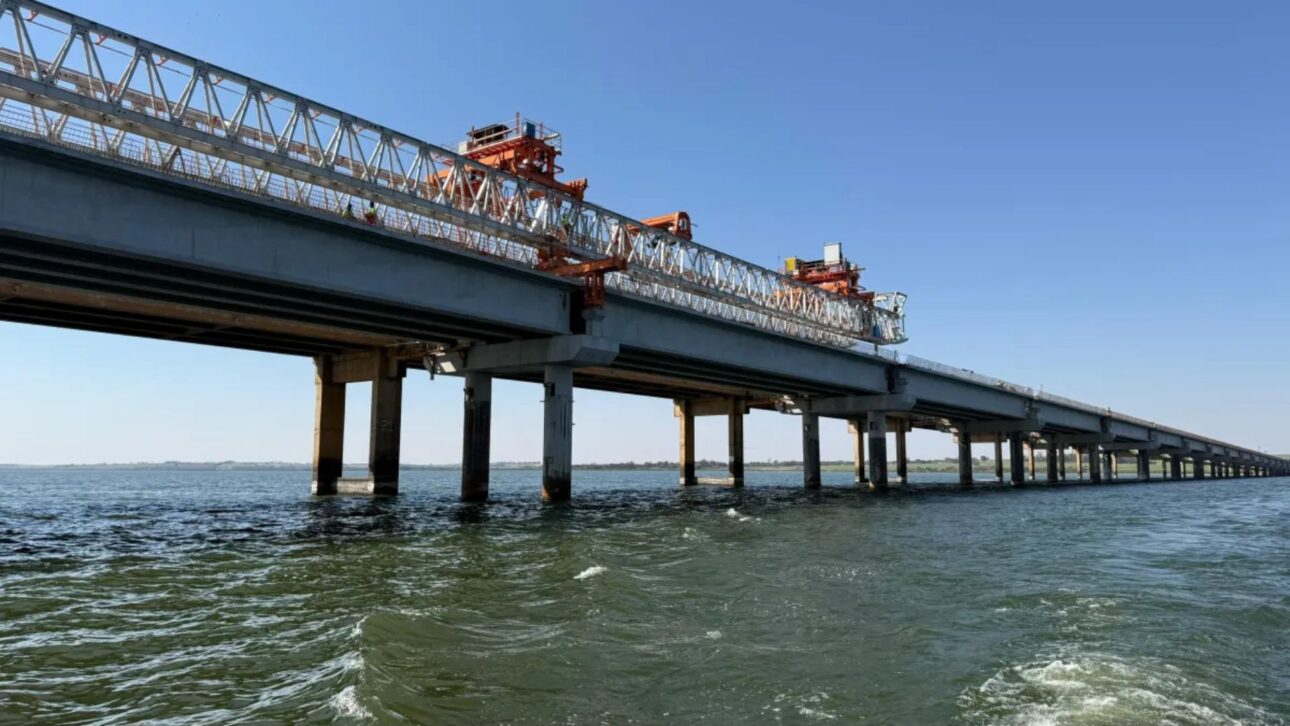
How the Tietê Crossing Will Be on SP-333
The new structure is being built next to the current structure, heading east on SP-333, between kilometers 229 and 232.
The future bridge will have two lanes, increasing the capacity of the highway at a historically sensitive point for regional traffic.
In parallel, the existing bridge will undergo revitalization and will be adapted for pedestrians and cyclists, with new lighting, a solution that separates flows and enhances the safety of the most vulnerable users.
Engineering and Structural Components
The project provides for a central span of 125 meters, a requirement that allows crossing the Tietê riverbed with less interference in the watercourse.
To compose the superstructure, 208 precast beams will be used, each 41 meters long and 74 tons.
These pieces are produced on-site, in a temporary plant installed to serve the project.
This strategy reduces movements of super-heavy loads on urban roads, facilitates quality control, and decreases logistical risks, in addition to allowing a more continuous rhythm of launches.
Still in the superstructure phase, teams are advancing in the assembly of forms, reinforcements, and concreting of slabs.
The fronts are working in a sequential and overlapping manner, a model that accelerates execution without compromising dimensional inspections and concrete strength.
As the beams are launched and prestressed, the slab is concreted in segments, releasing new stages of waterproofing and finishing.
Regional Mobility and Purpose of the Work
SP-333 is an axis that connects producing areas in the São Paulo countryside to service hubs and long-distance networks.
The new bridge has been designed to improve traffic flow in this stretch, with a direct impact on daily commutes between Novo Horizonte and Pongaí as well as on the travel times of cargo vehicles.
The separation of non-motorized flow, with the adaptation of the old structure for pedestrian and cyclist use, meets a local demand and raises road safety standards.
Deadlines, Goals, and Transparency
The schedule indicates completion by the end of 2026, aligned with the contractual goals of the concession.
The progress of 60% indicates that the milestones for beam production, assembly, and concreting are proceeding as expected for the current phase.
On-site, the industrialized production of the pieces and the use of large equipment for launching the beams are determining factors for maintaining the pace.
The presence of public and private management teams during technical visits reinforces the ongoing monitoring of costs, deadlines, and technical compliance.
What Changes for Those Passing Through the Stretch
While the work continues, the concessionaire maintains traffic operations to minimize impact on users.
The positioning of the new structure next to the existing one allows circulation to remain uninterrupted.
Upon completion of the work, drivers will have two lanes in each direction on the new crossing, and the old bridge will serve a complementary function aimed at active mobility, with modernized lighting to enhance nighttime visibility and circulation comfort.
Details That Explain the Scale of the Project
The 2.4 km of length and the central span of 125 m require long-term planning and logistics calibrated to the conditions of the river.
The solution with 208 precast beams standardizes processes, facilitates inspection, and reduces performance variations.
The on-site manufacturing also contributes to mitigating risks of transporting oversized loads and optimizes operation windows for lifting, which depend on weather, wind, and the level of the Tietê.
These factors help explain why, even in linear works, the progress curve tends to accelerate after the installation of the first dozen beams, when the process consolidates.
Local Context and Next Steps
The option to revitalize the current structure, instead of deactivating it, adds capacity to the system without increasing the occupation of the riverbed and creates a safe corridor for pedestrians and cyclists, which is relevant for integrating nearby neighborhoods and rural areas.
Following the schedule, the work should focus efforts on closing the last spans, completing the slabs, executing barriers and guardrails, as well as expansion joints, drainage, and paving of the new platform.
With the superstructure on track, final adjustments to signage, lighting, and load testing will be discussed before allowing traffic.
Essential Information for the User
For those using SP-333, the central message is that crossing over the Tietê is in advanced phase and with expected delivery by 2026, with anticipated gains in fluidity and safety.
The maintenance of two concurrent projects — the construction of the new bridge and the adaptation of the old one — is part of the plan to deliver additional capacity without halting circulation.
Authorities reiterate the technical oversight and commitment to deadlines, quality, and safety in execution.
Do you travel through SP-333 or live in the Novo Horizonte and Pongaí region: what else should be prioritized in the final phase of the work to improve your daily commute?