






 Portuguese
  Spanish
  4 min of reading
  0 comments


Have You Ever Been to One of the Most Touristed Cities on the Planet? A Scientific Study Just Revealed Who Tops the Global List
Have you ever imagined living in a city where the number of tourists per square kilometer far exceeds — by a long shot — the number of residents? Well, this is the reality in several tourist destinations around the world. A group of researchers decided to measure this objectively, with numbers: they mathematically calculated which cities are the most “touristified” on the planet. And the results are surprising.
The new international study revealed that places like Barcelona, Cancun, Porto, Dubrovnik, and Florence face levels of tourist saturation that already affect the daily lives of residents — and threaten the very future of these cities as sustainable tourist destinations.
In Brazil, the discussion is also relevant. Destinations like Rio de Janeiro, Florianópolis, and Jericoacoara are already facing similar dilemmas during high season.
-
He started with a jigsaw, his father’s screwdriver, and many drawings made during classes; years later, the young man who built a roller coaster in his own backyard went viral on the internet, was hired by Cacau Park, and now coordinates Brazilian and foreign professionals in the installation of an attraction weighing 737 tons, 55 meters high, one kilometer long, featuring moments of zero gravity and a speed of 120 km/h, in a journey that turned curiosity, calculations, and persistence into a professional career.

-
Between Egypt and Sudan, Bir Tawil is no man’s land that neither country wants on paper, but in practice has gold mining, nomadic tribes, and even fake “kings.”

-
Swimming champion Shavarsh Karapetyan dove about 40 times into a frozen lake in Armenia to rescue a sunken bus, saved 20 lives, and lost his career because of it.
-
Júlia Pimentel, an 11-year-old from Minas Gerais, independently invented a new formula to calculate the square root using simple addition and multiplication, and her method was published in one of the most important mathematical scientific journals in Brazil.


What is “Touristification”?
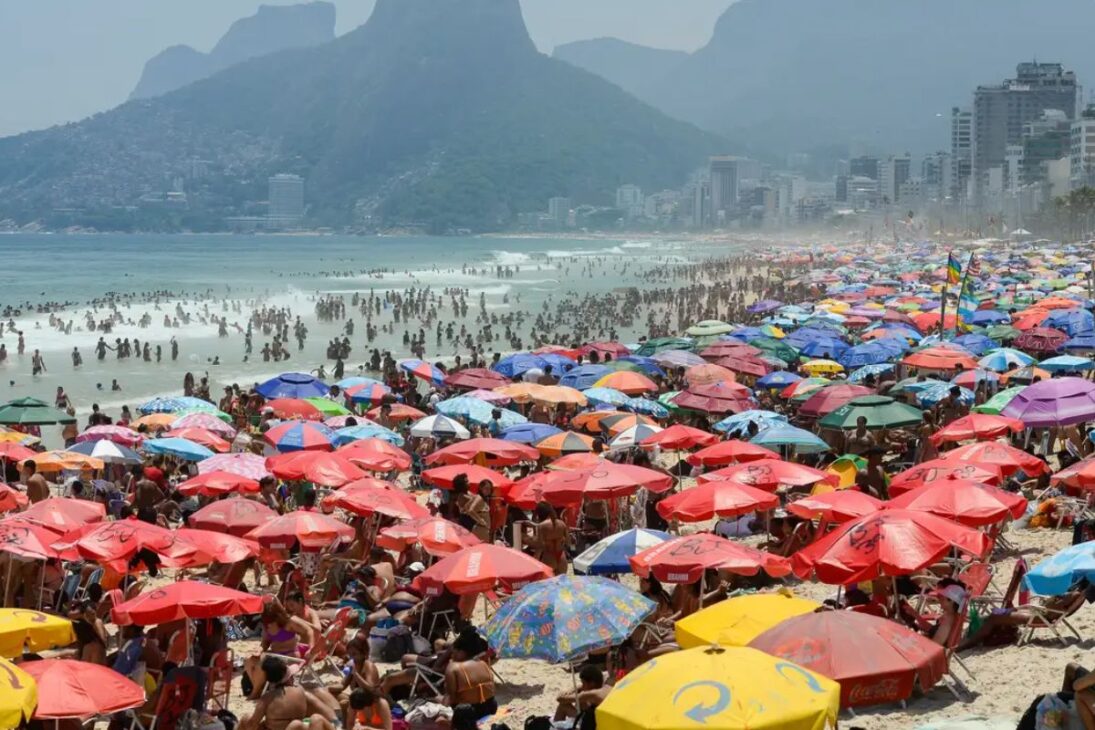
The concept of touristification has been discussed for years by urban planners, sociologists, and economists. In short, it describes the process in which a city becomes almost exclusively shaped to cater to tourists — often at the expense of the quality of life for its own residents.
Typical problems include rising housing costs, congestion, saturation of public transportation, loss of cultural identity, and even forced displacement of permanent residents.
Now, a team from the GetNomad platform created a mathematical index that measures tourist saturation in a clear and comparable way between cities.
How the Calculation Was Made
The study analyzed two main factors:
- Urban Area of the Cities (in km²)
- Annual Number of Foreign Tourists Received
With this, the researchers calculated the tourist density: the number of tourists per square kilometer.
Additionally, they cross-referenced the number of visitors with the local population, arriving at an index of tourist pressure per resident — that is, how many tourists each local resident “supports” on average throughout the year.
The methodology was applied to 40 of the most visited cities in the world. The result was a ranking that starkly shows where the phenomenon of touristification is most advanced.
The Most Saturated Cities on the Planet
The top of the list brought a name already well-known: Barcelona. According to the survey, the Catalan city receives around 20.37 million tourists crammed into an urban area of just 101 km². This results in an impressive density of 201,722 tourists per km² — the highest number in the world.
Next come:
- Cancun (Mexico): 147,887 tourists/km²
- Porto (Portugal): 144,000 tourists/km²
- New York (USA): 137,712 tourists/km²
- Dubrovnik (Croatia): 112,500 tourists/km²
- Florence (Italy): 107,843 tourists/km²
- Kyoto (Japan): 98,651 tourists/km²
- Lisbon (Portugal): 88,000 tourists/km²
Interestingly, cities that receive even more tourists in absolute numbers — like Paris, London, or Los Angeles — appear further down the ranking. The reason? Their much larger urban territory dilutes tourist density.
Pressure on the Residents
Another noteworthy data point from the study is the tourist pressure per inhabitant. Here, the leader is Orlando (USA), with an impressive 241 annual tourists per resident.
Other highlights include:
- Santorini (Greece): 220 tourists per resident
- Queenstown (New Zealand): 116
- Mykonos (Greece): 105
- Cozumel (Mexico): 94
- Barcelona ranks 24th, with 13 tourists per resident, still a significant number for a medium-sized city.
As noted in the GetNomad report, even if the methodology has limitations, it provides a clear portrait of something that residents of cities like Barcelona have been experiencing for years.
Protests in the Streets
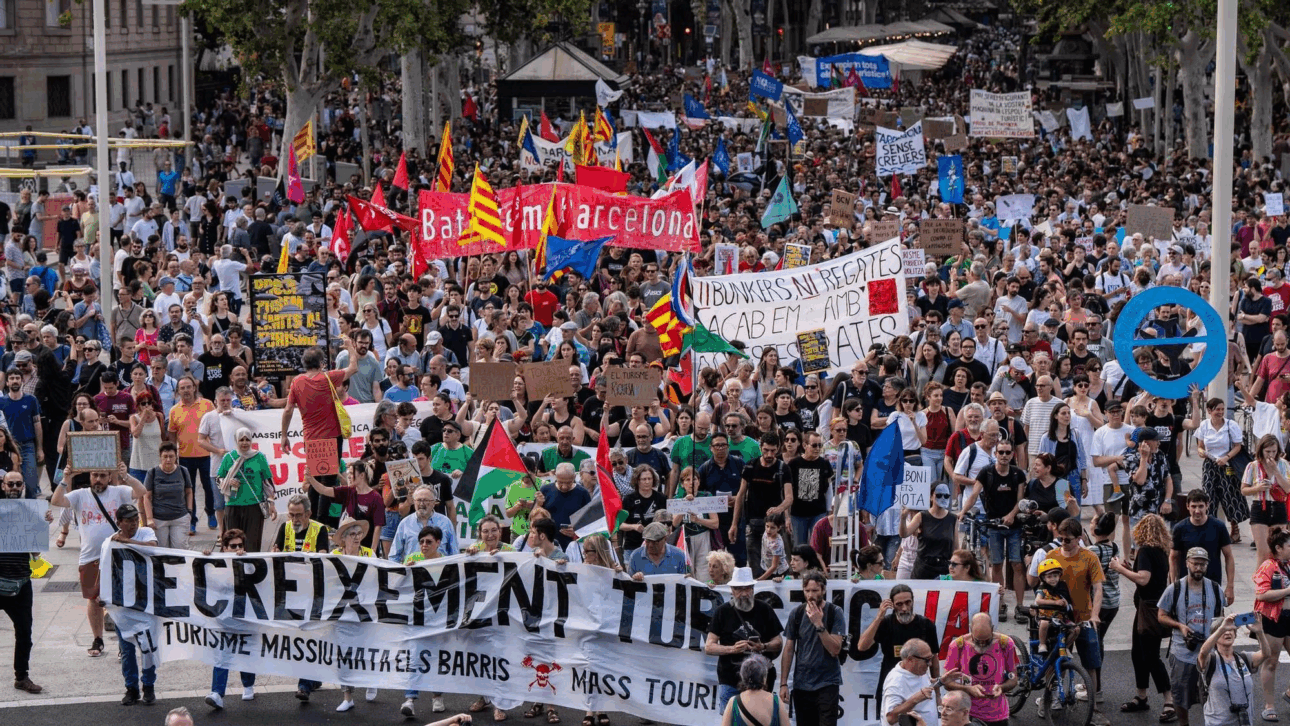
The discomfort with mass tourism has already reached the streets. In July 2024, a group of residents in Barcelona made headlines by organizing an unusual protest: they used water guns to “chase away” tourists in some overcrowded areas. Signs said “tourists go home.”
It was not an isolated case. In various European cities — from Venice to Lisbon — grassroots movements have been calling for limits on unrestrained tourism and policies that prioritize the quality of life of residents.
“Dying of Success”
The expression used by experts is strong: some cities risk “dying of success”. Saturation can end up compromising the tourist experience itself and making destinations less attractive.
The prestigious “2025 List” by Fodor’s travel guide already recommends that travelers rethink trips to places like:
- Barcelona
- Majorca
- Canary Islands
- Bali
- Venice
- Lisbon
- Koh Samui (Thailand)
- Agrigento (Sicily)
And Brazil?
Although the GetNomad ranking did not include Brazilian cities, the reflection is valid here as well. Destinations like:
- Florianópolis
- Rio de Janeiro
- Jericoacoara
- Fernando de Noronha
- Gramado
… already face, during high season, saturation problems that affect both residents and tourists. The discussion about sustainable tourism needs to advance in Brazil as well.
As highlighted by Natalia Petrou, a professor at the University of Barcelona:
“The balance between welcoming visitors and ensuring the quality of life for residents is essential. Otherwise, the city ceases to be authentic and becomes just a theme park.”


Be the first to react!