






 Portuguese
  Spanish


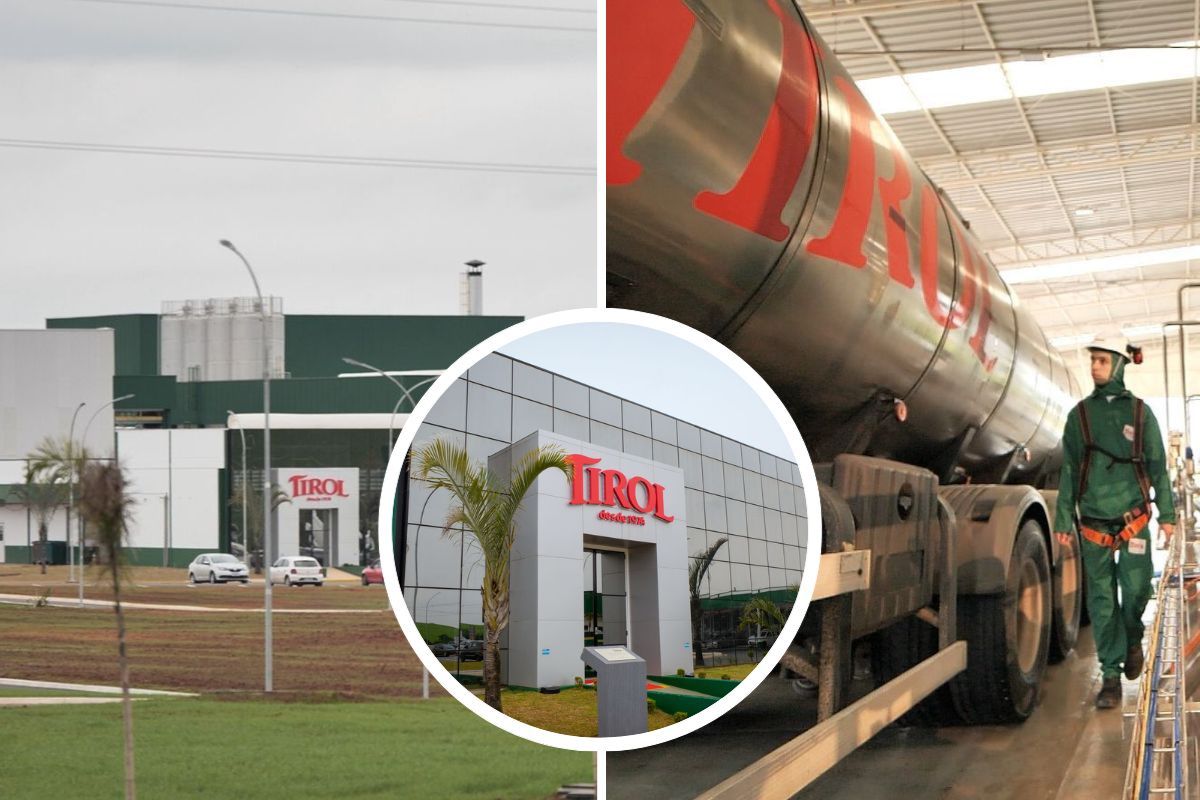


With its own investment exceeding R$ 26 million, Tirol implements a high-voltage line connected to the 138 kV substation in Treze Tílias, eliminates fluctuations that interrupted production, increases power by 7,500 kW, and prepares the regional economy for sustained industrial growth in the coming years with predictability.
The new investment by Laticínios Tirol, in Treze Tílias, in the Midwest of Santa Catarina, marks a concrete turning point for an operation that faced recurring electrical limitations. With its own resources exceeding R$ 26 million, the company initiated the implementation of a high-voltage line to connect its facility in Linha Caçador to the 138 kV substation constructed by the State Government in partnership with Celesc.
The connection, expected to be completed by May 2026, addresses a historical problem: voltage fluctuations and interruptions that, according to the company, could cause dozens of stoppages in a single day. When energy fails, the industry loses rhythm, predictability, and competitiveness; when energy stabilizes, the expansion scenario shifts to a new level.
What Changes in Practice with the New Electrical Infrastructure
The project’s central point lies in transitioning from a vulnerable operational condition to a more robust supply base.
-
Embraer Acquires Full Control of Mexican Aircraft Interiors Manufacturer EAI to Reduce Supplier Dependence and Protect Margins Amid Global Aviation Competition

-
Controversial Amazon Highway BR-319 to Receive $1.3 Billion for Road Upgrades and $570 Million for Territorial Governance in Brazil

-
Four Sanitation PPPs to Inject $4 Billion into 477 Brazilian Municipalities, Setting 2026 as a Record Year for the Sector

-
Brazil’s BNDES Approves $2.4 Billion for Major Urban Project Aiming to Serve 600,000 Passengers Daily and Reduce CO₂ Emissions by Over 200,000 Tons Annually


The new line, with an approximate route of 3.6 kilometers to the substation, was designed to support manufacturing demand with greater stability, reducing interruptions and fluctuations that impacted the flow of production. It is not just about “having energy”, but about having reliable energy to operate without jolts.
With the new connection, Tirol plans to increase its electrical capacity by 7,500 kW (7.5 MW). This technical gain is expected to reflect in fewer unplanned stoppages, greater regularity between processing stages, and better coordination between production, refrigeration, packaging, and shipping.
In industrial environments, energy predictability is often one of the factors that separates sustainable growth from risky expansion.
How Much the Bottleneck Cost and Why the Investment Changes the Industrial Design

Before the construction, the electrical bottleneck functioned as a structural brake. Even with market, portfolio, and intention to increase capacity, the limitation in supply restricted decisions on scale and technology. Without electrical stability, any expansion plan becomes a gamble, as daily operations start absorbing hidden costs with interruptions, restarts, and process adjustments.
By funding the project with its own investment, the company reduces an uncertainty that has blocked decisions for years.
The gain is not only evident in the installed power indicator: it appears in the reduction of operational risk, better utilization of equipment, and advancement of projects that depend on continuous energy. In industrial terms, solving the bottleneck means opening space for efficiency, and efficiency is the most direct path to competitiveness in the medium and long term.
Productive Expansion, Automation, and Jobs: The Chain Effect in the City
With the electrical obstacle being resolved, Tirol is already planning expansion in strategic areas such as dairy products, cheese spread, and sliced products, in addition to the incorporation of new industrial automation systems. This movement tends to elevate process control, standardization, and productivity.
Automation, in this context, does not replace human planning; it enhances precision and reduces variability in lines that demand technical consistency.
The reported expectation is around 30 new direct jobs, with indirect effects on commerce, services, and agribusiness in the region. In cities with a significant industrial base, the creation of formal positions often radiates income to logistics, maintenance, food, transportation, and local suppliers.
The expected result is a more dynamic municipal economy and potentially strengthened revenue, provided that the expansion cycle remains consistent.
Where Public Partnership Was Decisive in Enabling Private Advancement
Although the main funding for the line is private, the project’s viability depended on the 138 kV substation delivered by the public authority.
This connection shows how state infrastructure and business decisions can act complementarily. Without structuring networks, private capital finds a ceiling; with structuring networks, investment gains depth and horizon.
The company’s own management acknowledges this point by stating that, without the substation, productive expansion would remain unfeasible due to supply limitations.
In territorial terms, this means more than just serving a specific plant: it means raising the attractiveness level of Treze Tílias for new enterprises, with a better perception of energy security for those considering establishing or expanding operations in the municipality.
Licensing, Environmental Control, and Operational Safety
According to the company, the project is regulated with a Preliminary Environmental License (LAP) and an exemption from LAI No. 1665/2025.
The project also includes measures for fauna and flora control, continuous monitoring, and procedures to reduce environmental impacts and enhance community safety. Critical infrastructure needs to be established with clear environmental governance, especially when involving industrial capacity expansion.
This aspect is relevant because growth without compliance tends to generate liabilities and legal insecurity.
By incorporating licensing and monitoring from the outset, the investment aims to balance productivity and territorial responsibility. For the city, this means combining industrial advancement with implementation rules that preserve the surroundings and reduce future conflicts.
Company Scale and New Phase of Regional Positioning
Headquartered in Treze Tílias, with a mix of over 170 products distributed throughout the country, Tirol already operates at a significant scale and has a presence in other units, such as Ipiranga (PR), Pinhalzinho, and Linha Caçador (SC). The difference now is that the local energy base tends to align more closely with the size of the operation and the upcoming steps for growth.
When infrastructure matches the size of the industry, planning shifts from being defensive to being strategic.
In the context of Santa Catarina’s Midwest, the investment reinforces a long-term perspective: inland cities with consistent technical infrastructure can retain companies, attract suppliers, and expand production chains with more stability.
What was stalled due to electrical limitations is now entering a path of structured expansion, with impacts extending beyond the factory walls.
The investment of over R$ 26 million reposition Treze Tílias at a critical point for any productive hub: stable energy as a condition for efficient growth.
By combining private initiative, public infrastructure, and job prospects, the city enters a phase where production, technology, and competitiveness tend to go hand in hand, with broader economic effects in the interior of Santa Catarina.
In your region, what is the main bottleneck still preventing the industry from advancing: energy, logistics, skilled labor, or licensing? And, looking at this case, do you believe that projects of this nature should receive top priority in medium-sized industrial municipalities?







Calando a boca dos Bolsonaristas que dizem que ninguém mais investe no Brasil