






 Portuguese
  Spanish
  5 min of reading
  0 comments


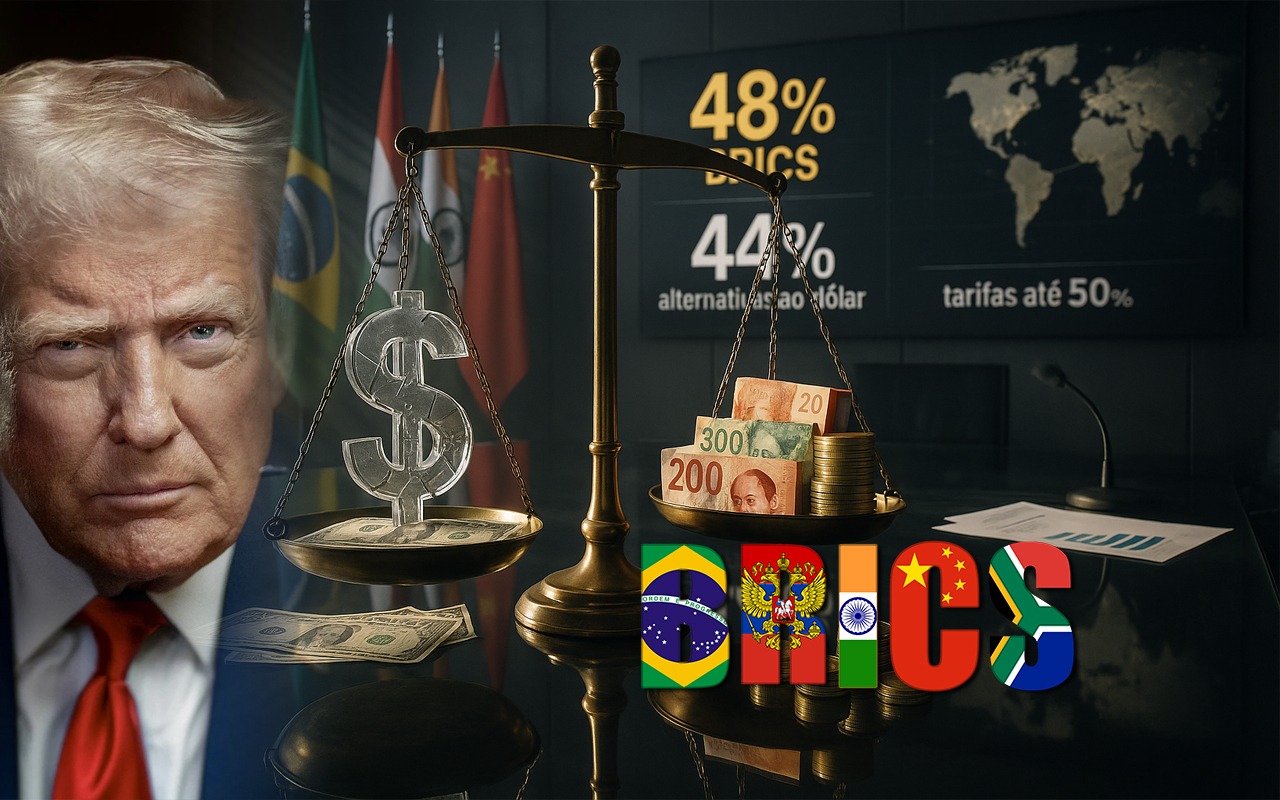
48% of Brazilians Support Strengthening Ties with BRICS and 44% Favor Seeking Alternatives to the Dollar in International Trade. See Who Else Supports It.
The debate about Brazil’s position in the world has returned to the center of public conversation. After the 17th BRICS Summit in Rio de Janeiro and amid the escalation of U.S. tariffs, a new survey from Nexus released this Monday, September 8, 2025, shows that almost half of the population wants closer ties with BRICS and that the idea of dollarization is already dividing opinions. The data helps to understand how Brazilians are interpreting the geopolitical moment.
According to the survey, 48% support strengthening political and economic relations with BRICS, compared to 33% who prefer distancing. On the currency issue, 44% support alternatives to the dollar and 43% want to maintain the U.S. dollar as the pillar of foreign trade. The survey interviewed 2,005 people in 27 states between August 15 and 19, 2025.
This sentiment comes right after Brazil hosted the BRICS summit, where leaders reaffirmed cooperation and payment methods among Global South countries. At the same time, the U.S. government has intensified the rhetoric and practice of high tariffs, with reports of rates of up to 50% affecting Brazilian exports, raising the political and economic cost of the issue.
-
Brazilian Joins Homeownership Consortium, Faces Decade of Dual Payments Totaling $141,000, Surpassing Traditional Mortgage

-
Land Rover to Halt Production in July, Putting 371 Jobs at Risk, as Chinese Automaker Negotiates to Convert Factory to 100,000 Vehicles Annually by 2027

-
Mexican Pest Threatens U.S. Cattle Herds at Historic Lows, Potentially Boosting Brazilian Beef Exports as Burger Prices Soar

-
Brazilian Freight Bill Progresses in Congress with $5,000 Minimum Wage, 70% Advance Payment, and Fines Up to $1 Million, as Agriculture and Industry Warn of Rising Costs and Legal Uncertainty


What the Nexus Survey Reveals About Support for BRICS in 2025
The bloc is gaining traction among Brazilians: 48% advocate for closeness, 33% prefer detachment, and 18% were unsure. Support is stronger among men (52%) and **young people aged 16 to 24 (53%). By income, the group earning above 5 minimum wages reaches 56% in favor. These demographics suggest a perception of economic opportunity and partner diversification as arguments for BRICS.
Regionally, the South stands out with 56% in favor, followed by Southeast (48%), Northeast (46%), and North/Central-West (46%). The interpretation is that states with export chains more integrated into Asian and commodity markets tend to see potential gains from sectoral partnerships and agreements within BRICS.
The institutional backdrop also weighs in: the 17th BRICS Summit held in Rio on July 6 and 7, 2025 brought themes like financing, trade, and payment systems back to the forefront of the agenda, generating wide coverage and reinforcing the topic in national news.
Alternatives to the Dollar: Dollarization Divides Brazil
On the currency stance, Brazilians appear practically divided: 44% support seeking alternatives to the dollar and 43% prefer keeping the dollar as a reference for its assumed security and stability. Among women, support for alternatives is increasing; among men and those with higher incomes, there is a preference for maintaining the dollar. Among those aged 16 to 24, there is a slight majority for retaining the U.S. currency, contrasting with older groups.
Beyond jargon, dollarization means diversifying payment methods in foreign trade, using local currencies or compensation platforms. The benefit would be to reduce currency exchange costs and exposure to sanctions; the risk is to increase operational complexity, volatility, and hedging costs for Brazilian companies.
This debate has gained traction with announcements and threats of new U.S. tariffs and with BRICS initiatives to facilitate transactions in local currencies. The public opinion, therefore, reflects a search for autonomy without giving up stability.
BRICS Summit in Rio and U.S. Tariffs of Up to 50 Percent
During Brazil’s presidency of BRICS, the summit in Rio addressed commercial and financial integration. At the same time, the United States intensified protectionist measures and indications of broad tariffs against BRICS countries. Reports of rates of up to 50% on Brazilian exports pressure sectors and raise an alarm over the Brazil cost in sales to the U.S. market.
These tariffs add to presidential speeches promising new surcharges on countries aligned with BRICS, which feeds the perception of an external shock and opens space for financing and payment alternatives within the bloc. For the reader, this translates to prices, jobs, and exchange rates.
In practice, tariffs of this magnitude can raise the prices of Brazilian products, reduce margins, and divert trade flows to other destinations. They also elevate the debate on market diversification and currencies as paths to resilience.
Practical Impacts on Foreign Trade, Exchange Rates, and Investments
If Brazil deepens its ties with BRICS, companies could access financing lines and sectoral agreements focusing on infrastructure, energy, agriculture, and technology. In payment methods, the chance of compensating in local currencies increases, reducing transaction costs on some routes. It is not a magic solution, but it could reduce specific dependencies.
In foreign exchange, any coordinated advance in alternative payments is likely to have a gradual effect. The dollar will remain relevant; however, the combination of external tariffs and South-South cooperation may broaden the use of local currencies in niches, especially where there are chains integrated with Asia and Africa.
For investors, the signal points toward volatility in the short term and rearrangements in the medium term. Companies with exposure to the U.S. may accelerate hedging and diversification, while sectors linked to exports to BRICS may gain traction if barriers in the American market persist.
Who Supports More and Who Resists: Age, Gender, Income, and Region
In the breakdowns, support for BRICS is higher among young people (53%), men (52%), South (56%), and income above 5 minimum wages (56%). Among women and those aged over 60, there is increased caution. This suggests that expectations of opportunity and views on global leadership influence the evaluation of the bloc.
On the dollar issue, men and those with higher income prefer keeping the American currency, while women and those aged 41 to 59 tend to support alternatives. In the Northeast, there is also greater support for options outside the dollar. It’s a snapshot of balance and fine adjustments by segment.
And you, do you think Brazil should invest more in BRICS and alternatives to the dollar to gain autonomy, or do you believe that the cost and instability might be more expensive than they seem? Share your opinion in the comments.





-

1 person reacted to this.