






 Portuguese
  Spanish


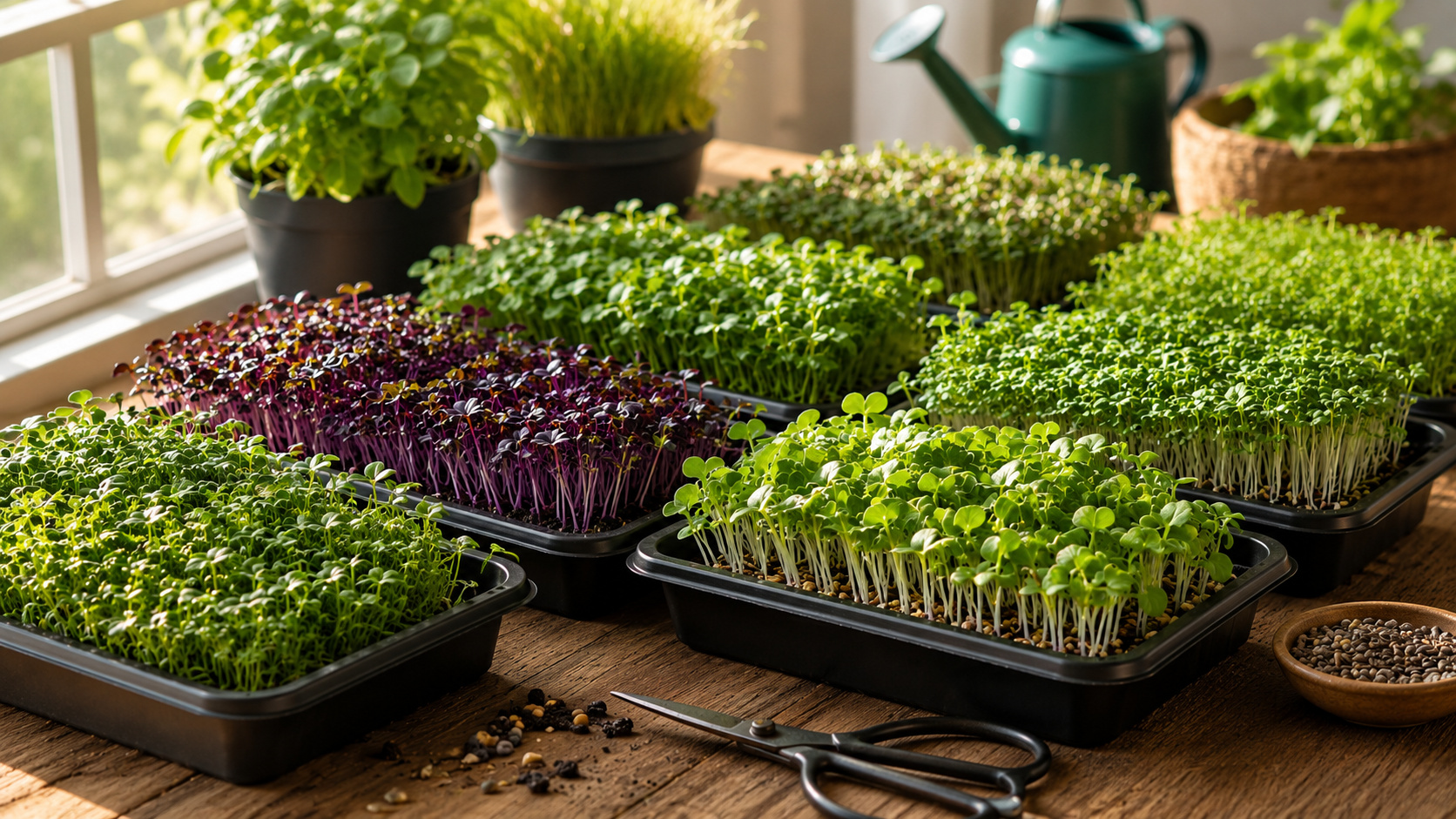

Microgreens are gaining more and more space among people who seek a healthy, practical, and sustainable diet. These small plants, harvested in the early days of development, can be grown in trays, shallow pots, or simple containers and are ready for consumption in a period that usually varies between 7 and 14 days, depending on the species.
Besides practicality, microgreens attract attention for their intense flavor, delicate appearance, and nutritional potential. Therefore, they have ceased to be exclusive to restaurants and have become part of the routine of many people who wish to produce fresh food even living in apartments or houses with little space.
What are microgreens
Microgreens are vegetables, herbs, and some cereals harvested right after the emergence of the first true leaves. They represent an intermediate stage between sprouts and the adult plant.
Unlike sprouts, which usually grow only in water, microgreens develop in a substrate and receive light during cultivation. As a result, they have more developed leaves, stems, and roots, as well as more pronounced texture and flavor.
-
AI is Transforming the Job Market, but Expert Highlights 5 Human Skills That Will Become More Valuable Over the Next Decade

-
Luxury 80-room mansion in São Paulo, once valued at $15 million, sold for just $5.3 million at auction, now faces abandonment and potential demolition.

-
São Paulo Opens 14th “Vila Reencontro” with 94 Housing Units to Support 468 Vulnerable Residents
-
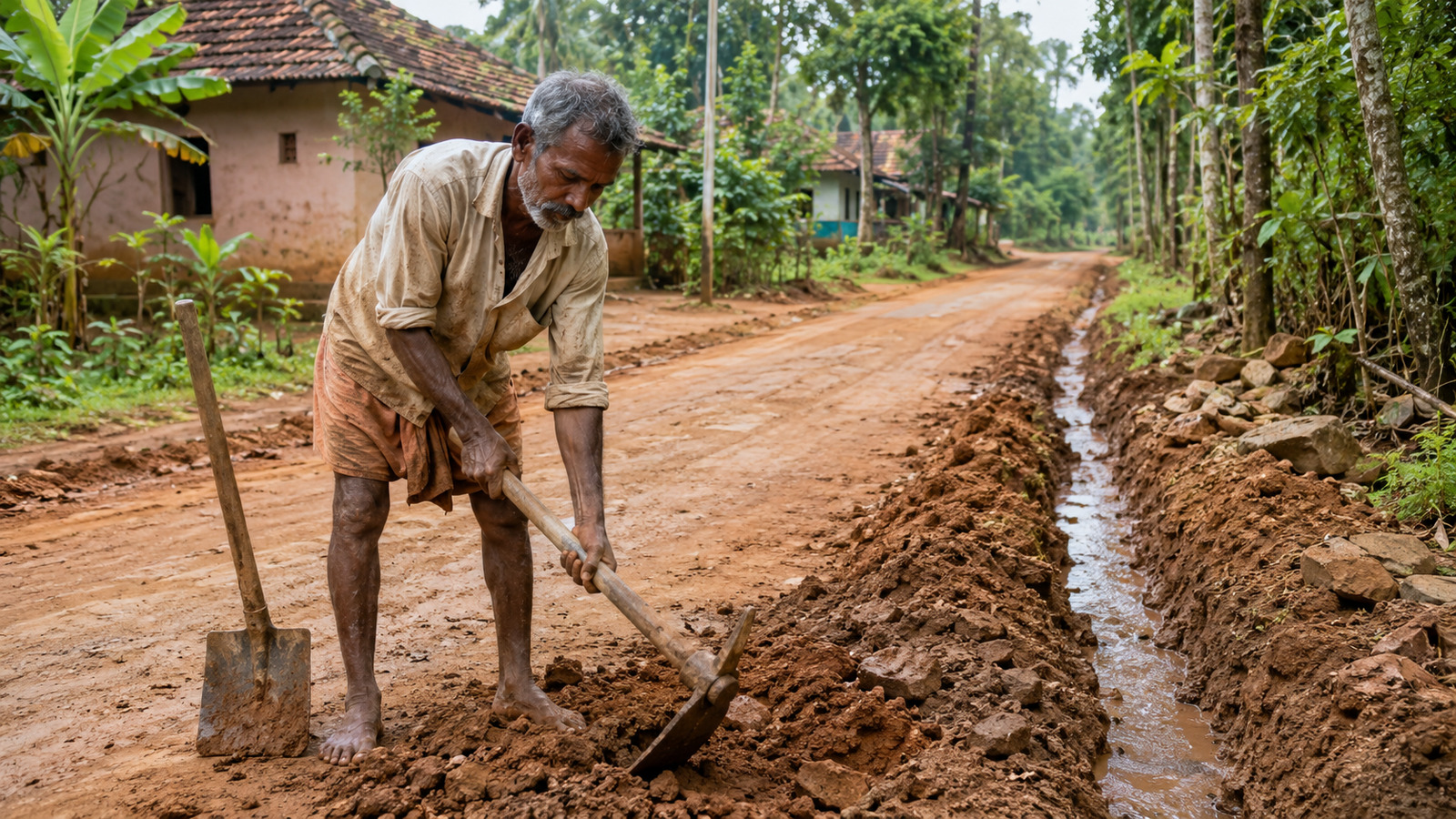
56-year-old Govinda, tired of waiting for government action, single-handedly built a dirt road with a pickaxe and shovel to aid 25 families in India


Why they have become so popular
In recent years, the demand for fresh and home-produced food has grown significantly. At the same time, interest in urban gardens and sustainable practices has encouraged the cultivation of microgreens.
According to a report published by Super Rádio Tupi, these small plants can transform simple trays into fresh harvests in a few days, making cultivation accessible even to those who have never had contact with gardening.
Moreover, the short cycle facilitates continuous production, allowing for new harvests practically every week.
Which species can be cultivated
There is a wide variety of species used as microgreens.
Among the most popular are:
- arugula;
- radish;
- broccoli;
- mustard;
- beetroot;
- sunflower;
- pea;
- basil;
- cilantro;
- kale.
Each species has its own flavor, aroma, and texture. While some have milder characteristics, others offer spicy or slightly sweet notes, enriching different culinary preparations.
How to grow microgreens at home
One of the greatest advantages of microgreens is the simplicity of cultivation.
Usually, you just need a shallow tray, suitable substrate, quality seeds, and a well-lit location.
After evenly distributing the seeds over the moist substrate, just maintain regular irrigation without soaking the container.
Additionally, good ventilation helps prevent the emergence of fungi and promotes healthy plant development.
Depending on the chosen variety, harvesting can occur between 7 and 14 days after germination.


Little space and great practicality
Unlike traditional gardens, microgreens take up little space.
Therefore, many people grow these plants in kitchens, balconies, laundry rooms, or near windows with good natural lighting.
Furthermore, reused containers, such as trays and pots, can perfectly serve to start cultivation.
In this way, even small environments can produce fresh food all year round.
Benefits for nutrition
Microgreens are not only appealing for their practicality.
Various studies indicate that these plants have a high concentration of vitamins, minerals, antioxidants, and bioactive compounds when compared to the adult versions of some vegetables. However, these values vary according to the cultivated species.
In addition, they help diversify the diet, adding more color, flavor, and texture to dishes.
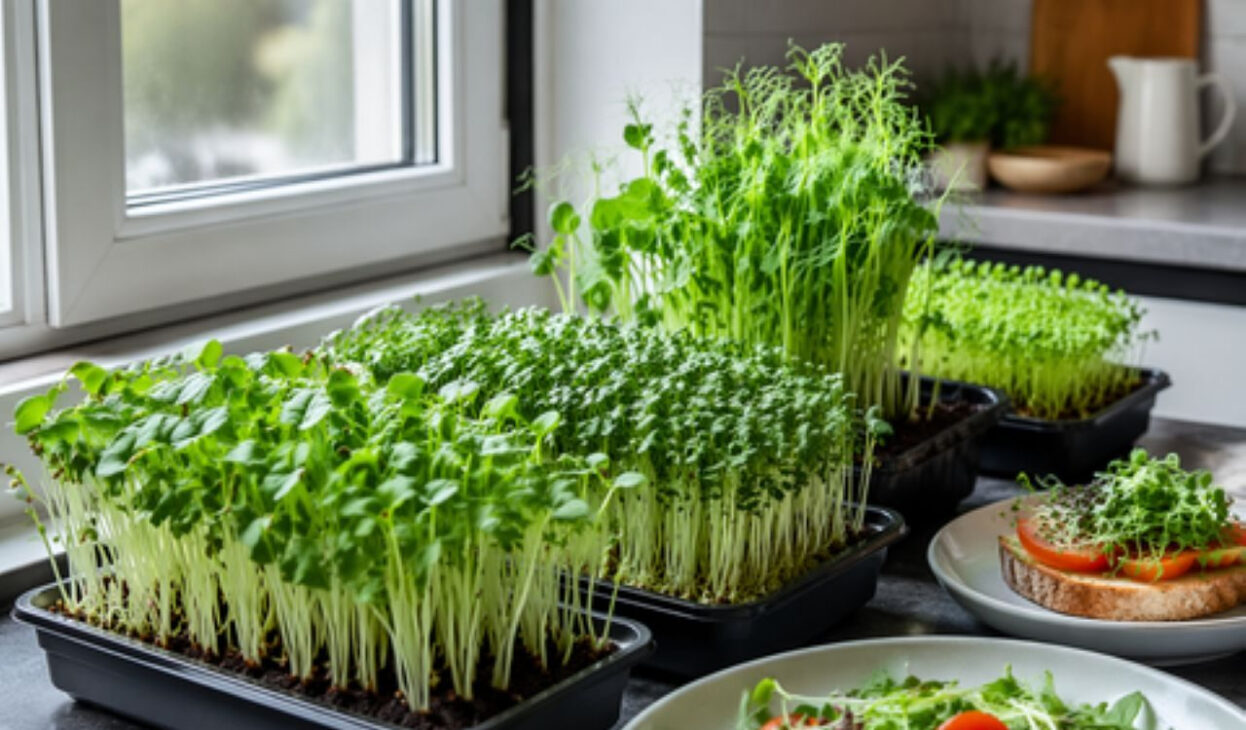
For this reason, chefs and nutritionists frequently use microgreens in salads, sandwiches, omelets, pasta, soups, and even smoothies.
Sustainability is also part of cultivation
Another important aspect is related to sustainability.
Since cultivation happens close to the consumer, it reduces the need for transportation, refrigeration, and prolonged storage.
Moreover, consumption occurs right after harvest, reducing waste and better preserving the food’s characteristics.
At the same time, many people reuse containers and adopt composting practices, making the process even more sustainable.
What care is important
Despite being simple, cultivation requires some care.
Firstly, it is important to use seeds intended for consumption and free from chemical treatments unsuitable for food.
Additionally, the substrate should remain moist but never waterlogged.
Another fundamental point involves lighting. Although many species do not need intense sun, they require good light to grow properly.
Finally, keeping the environment clean significantly reduces the risk of fungi and contamination.
A trend that continues to grow
The popularization of microgreens follows a global movement towards healthy eating, conscious consumption, and urban agriculture.
Furthermore, the low initial cost and quick return encourage more and more people to try this type of cultivation.
While restaurants use microgreens to add sophistication to dishes, home consumers discover a practical alternative to producing fresh food without relying on large spaces.

Small plants with great potential
Microgreens show that it is not necessary to have a large garden to grow food at home.
With few materials, a small space, and a few days of waiting, it is possible to harvest fresh leaves that enrich different recipes and bring people closer to food cultivation.
As interest in healthier and more sustainable habits grows, microgreens tend to occupy an even larger space in Brazilian kitchens, demonstrating that innovation, practicality, and quality food can go hand in hand.


