Portuguese
  Spanish


Former house of Edemar Cid Ferreira, founder of Banco Santos, the property of almost 8,000 m² left the center of one of the biggest financial cases of the 2000s and today draws attention for another reason. The mansion shows signs of abandonment, overgrown vegetation, and an uncertain future in one of the most expensive areas of São Paulo.
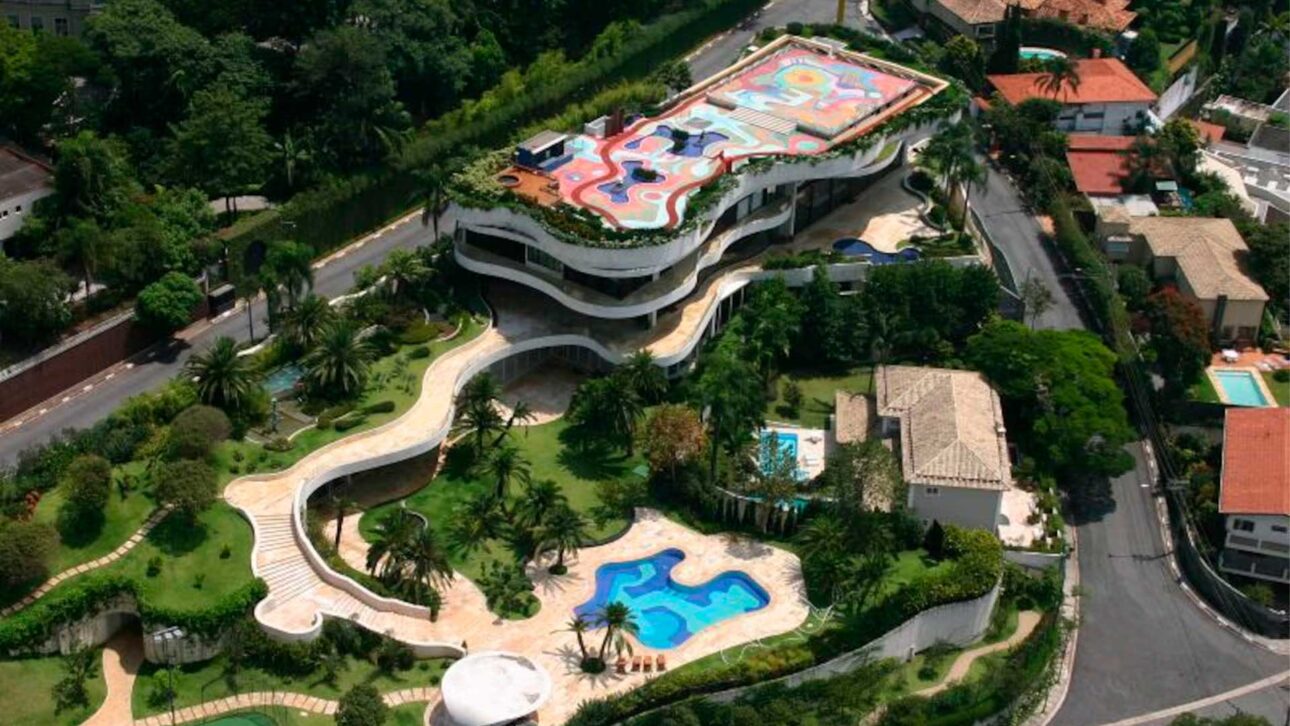
The mansion that belonged to Edemar Cid Ferreira, former controller of Banco Santos, has resurfaced on social media due to the contrast between its luxurious past and the current state of the property. Located on Rua Gália, in Morumbi, west zone of São Paulo, the building occupies a large plot in an elevated area of the neighborhood, surrounded by high-standard properties.
Designed by Ruy Ohtake, the house became known for its out-of-the-ordinary numbers. It has about 80 rooms, five floors, 34 bathrooms, a helipad, swimming pools, a library, a gym, and a wine cellar for thousands of bottles. As reported by São Paulo Secreto, the property was also marked by details such as a wall covered in gold and a mahogany table for 24 people.
The property no longer belongs to Edemar’s family. After the Banco Santos crisis, the house was listed among assets linked to the bankruptcy estate and went through a long sequence of sale attempts.
-
São Paulo Opens 14th “Vila Reencontro” with 94 Housing Units to Support 468 Vulnerable Residents

-
56-year-old Govinda, tired of waiting for government action, single-handedly built a dirt road with a pickaxe and shovel to aid 25 families in India

-
Cold War Secret Plane Lost Engine Mid-Flight, Forcing Six to Parachute in Darkness; Wreckage Remains in Death Valley Mountains 73 Years Later

-
Opened in 1980, Shopping Recife was Pernambuco’s first mall and helped transform Boa Viagem into a bustling and sought-after district in southern Recife.



Today, what draws attention is the deadlock. The mansion was auctioned, had plans to become a school, then appeared in a demolition project, but remains stalled. Outside, the vegetation grew to the point of transforming part of the land into a kind of green barrier.
The auction that dropped the price of a house valued at tens of millions
The sale of the mansion took place on February 18, 2020, after several unsuccessful attempts. According to a report by Estadão Conteúdo published by UOL, the property was auctioned for R$ 27.5 million after 16 bids at a D1 Lance Leilões event, which started with a minimum bid of R$ 10 million. The amount was well below the last expert appraisal cited at the time, of R$ 78 million.
The buyer was businessman José Janguiê Diniz, founder of Grupo Ser Educacional. At that time, the idea publicized was to transform the former banker’s house into a high-standard basic education school, taking advantage of the size of the construction and its location in Morumbi.
The proposal made sense due to the size of the property, but it also required heavy adaptation. A house designed for private use, with luxury environments, reinforced security, and its own internal circulation, does not become a school just by changing the furniture.
Furthermore, the address is in a valued residential area and subject to specific urban planning rules. This helps explain why the mansion’s fate remained stalled even after the purchase.
What was inside the mansion that became a symbol of the fall of Banco Santos
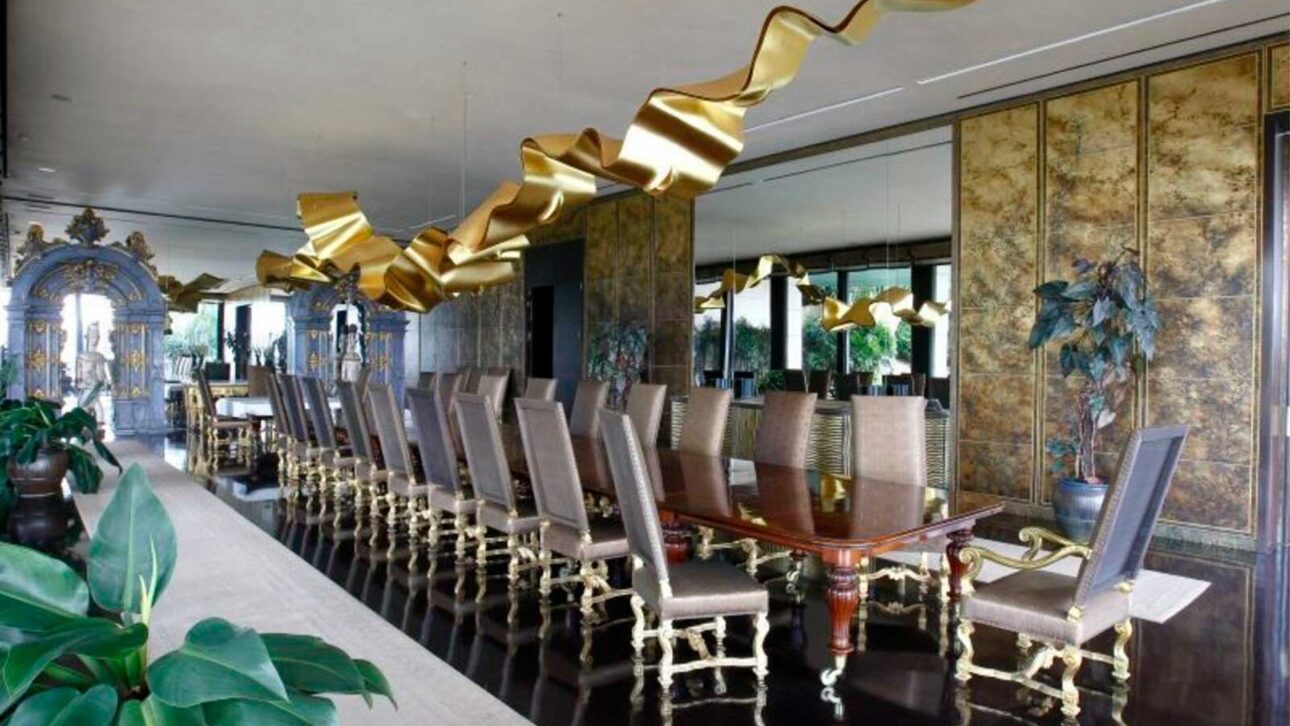
The house was built between 2000 and 2004, a period when Edemar Cid Ferreira was still moving among finance, art, and high society. Folha de S.Paulo reported that the property was acquired for R$ 140 million, had a project by Ruy Ohtake, and decoration signed by the American Peter Marino, who reportedly received R$ 8.86 million for the work.
The size of the structure explained the maintenance cost. The residence had elevators, security systems, large glass areas, indoor and outdoor pools, as well as spaces designed to house high-value artworks.
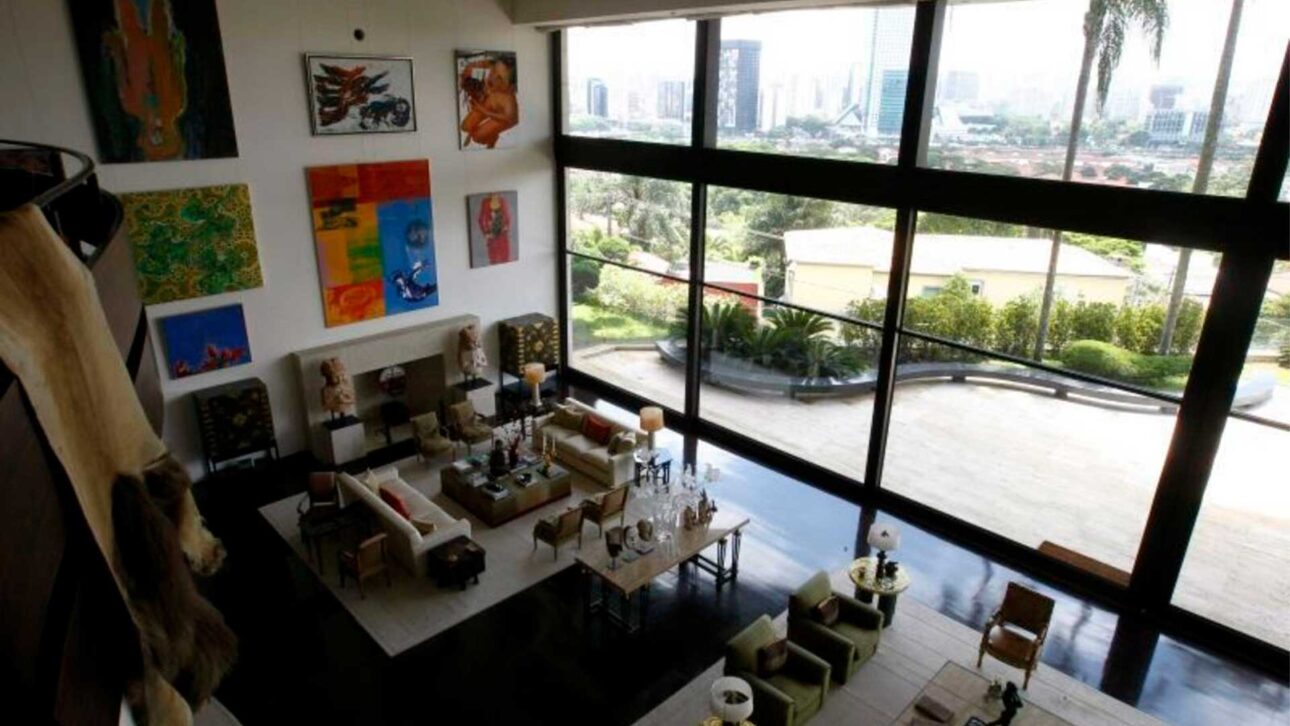
The mansion was also associated with Edemar’s art collection, which included names like Basquiat, Di Cavalcanti, and other highly valued artists in the market. Part of this collection was subject to legal disputes and auctions over the years.
In practice, the house ceased to be just a luxury residence. It came to represent, for many people, the peak and fall of a financial empire that ended up in court.
The Banco Santos crisis turned the house into a judicial asset
Banco Santos collapsed in the 2000s. The Central Bank published, on May 4, 2005, acts related to the extrajudicial liquidation of the institution, a stage that marked the formal advancement of the bank’s financial crisis.
Months later, the court declared the bankruptcy of Banco Santos. A report from Folha de S.Paulo on September 20, 2005, recorded the decision of the 2nd Court of Recoveries and Bankruptcies, which placed the institution at the center of a long dispute involving creditors, assets, and responsibilities.
As the processes advanced, the mansion in Morumbi came onto the court’s radar as one of the most valuable assets linked to the former controller. The property went years without a buyer, partly due to the high price and partly due to the cost of maintaining a structure of that size.
This is a central point to understand the apparent abandonment. A house of almost 8,000 m² requires a team, technical maintenance, cleaning, gardening, security, energy, and constant repairs. Without a defined use, the property deteriorates quickly, even in a prime area.
The forest within the land became an obstacle for demolition
In 2023, the hypothesis of demolishing the mansion gained momentum. The idea was to make room for a high-standard residential development, but the process encountered an environmental hurdle.
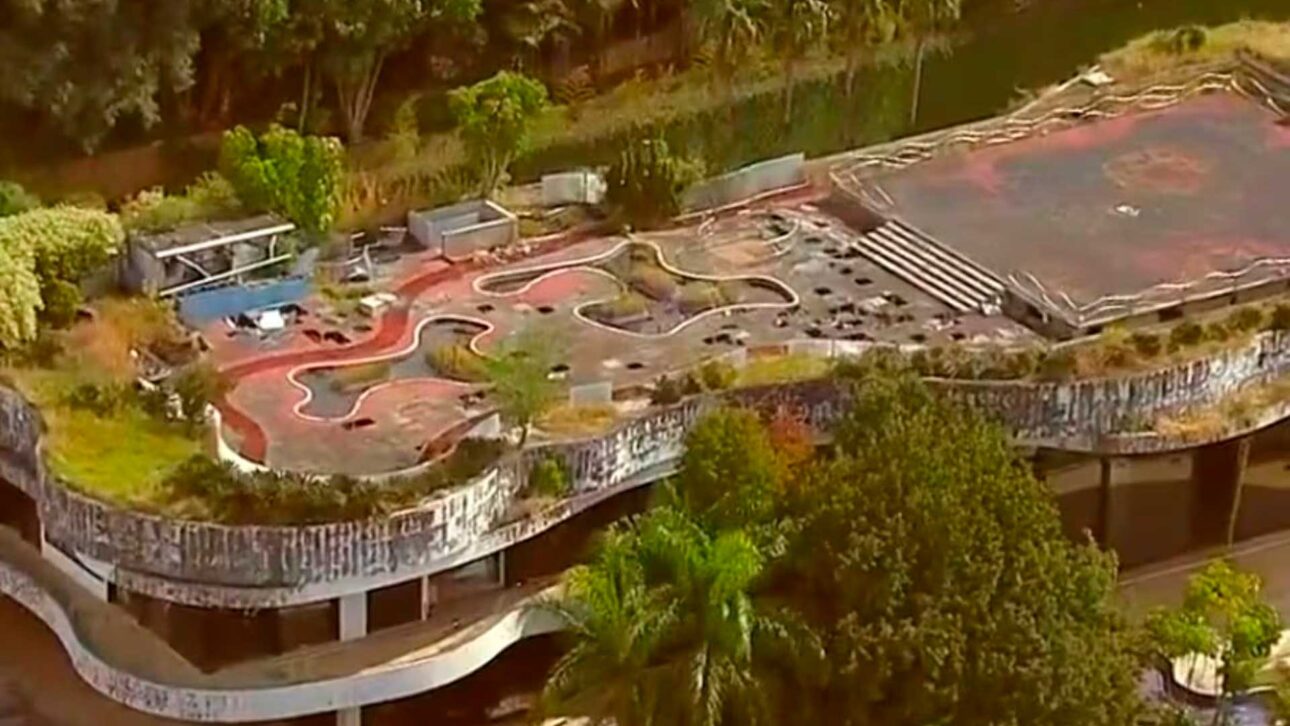
According to Metrópoles, a mini-forest with about 280 trees on the land halted the demolition. The Municipal Department of Urbanism and Licensing informed the report that the request was denied because the site is considered an environmental heritage and would require authorization from the Municipal Department of Green and Environment.
This does not mean that the mansion is automatically preserved forever. It means that any intervention needs to undergo technical analysis and specific authorizations, especially if there is tree management, vegetation suppression, or significant alteration of the land.
The vegetation, which to an outsider might seem just a sign of abandonment, has also become an important piece in the dispute over the property’s future.
The zoning of Morumbi limits what can emerge in the place
Another point that weighs in the case is the zoning. The Jardim Everest region, where Rua Gália is located, has residential characteristics and low density, with restrictions that reduce the range of possible uses for plots of this size.
The São Paulo City Council explains that, in Exclusively Residential Zones, non-residential uses are restricted, with few exceptions, such as some institutional uses and museums in specific situations. This makes any school project, condominium, or other use dependent on urbanistic analysis and legal framework.
Therefore, the case is not just about “demolish or preserve.” The land is in an expensive area but surrounded by rules, neighbors, protected vegetation, and urban memory.
The mansion may have lost some of its shine since it was built, but it remains a rare property in São Paulo. Few houses combine, in the same address, signature architecture, judicial history, significant green area, and enough size to spark real estate interest.
While there is no definitive decision, the former house of Edemar Cid Ferreira remains one of the most talked-about properties in Morumbi. From a symbol of financial power, it has become a portrait of an urban impasse involving money, heritage, the environment, and the limits for transforming a prime area of the city.
Do you think a mansion of this scale should be preserved, adapted for another use, or demolished to make way for a new project? Leave your opinion in the comments and tell us which destiny would make more sense for this land in Morumbi.