






 Portuguese
  Spanish


Researchers from Coventry University in the UK installed a solar stove with panel, battery, and electric pot in 20 homes in East Kayonza, Rwanda. In seven months, the clean energy-powered electric kitchen reduced wood use from 3.4 kg to 0.86 kg per day in each family.
Swapping wood smoke for sunlight changed the routine of 20 families in a Rwandan village, and the numbers prove the extent of the transformation. In a field study, researchers installed solar-powered kitchen systems in homes and measured everything for months. The most striking result: daily wood consumption plummeted from 3.4 kilograms to just 0.86 kilograms per family. The research was reported by Tech Xplore.
The experiment took place in East Kayonza, a community where most families still cook with wood and charcoal every day. There, each solar stove was not just a new appliance, but the gateway to clean energy in a region that relied on fire for the basics. And, unlike many technological promises, this experiment came with solid data, collected sensor by sensor.
What the study did in 20 homes in Rwanda
The initiative has an academic background. The project, called Solar Energy Transitions, was conducted by Coventry University in the UK, led by researchers Jonathan Nixon and Alison Halford.
-
AI Study Reveals Cognitive Debt Concerns: Users Writing with Assistants Show Reduced Brain Connectivity, Highlighting Long-Term Risks of Easy Productivity

-
Brazilian Researchers Develop Low-Cost Sensors to Detect Avian Flu in Minutes, Enhancing Global Health Security

-
545 Intact Amphorae Found 370 Meters Deep in Turkey Reveal Ancient Byzantine Trade Routes Connecting the Aegean and Black Sea

-
NASA to Send Astronauts Over 400 km Above Earth for 6.5-Hour Spacewalk to Repair Canadarm2 on the ISS


The team chose East Kayonza, Rwanda, precisely because it is a place where wood and charcoal cooking is the rule, not the exception.
The method was rigorous. For seven months, the researchers monitored energy use, air quality, and cooking habits of the 20 families using more than 100 sensors spread throughout the homes.
It wasn’t a one-day test for the photo, but a long-term follow-up, capable of showing how the electric kitchen behaved in real daily life.
This care is what gives weight to the result. Instead of just delivering the solar stove and hoping, the team monitored the before and after with constant measurement.
That’s why the reduction in wood usage is not an estimate or impression of the residents, it’s a number measured in the field, house by house, in Rwanda.
From 3.4 kg to 0.86 kg of wood per day
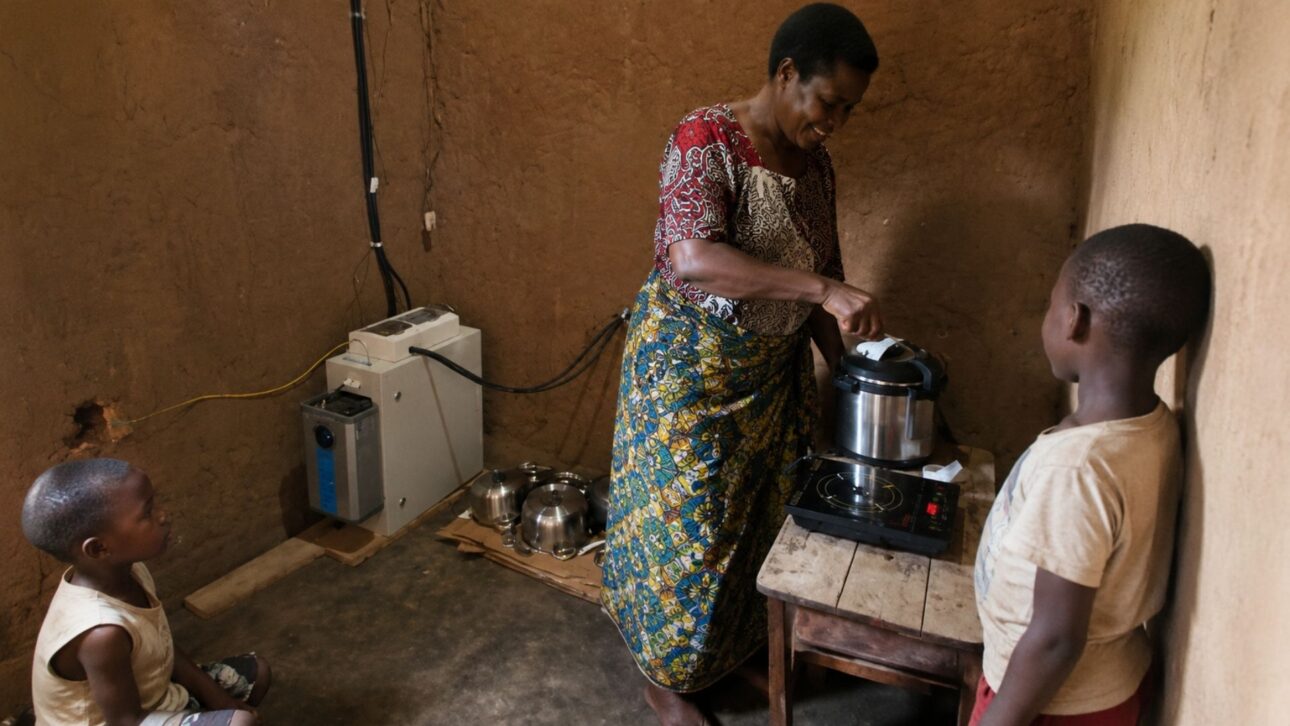
The central data is impressive. Before the arrival of the solar stove, each family burned an average of 3.4 kilograms of wood per day for cooking.
After the installation of the system, this consumption dropped to 0.86 kilograms daily, a reduction of more than 70%. It’s less tree cutting, less smoke, and less time spent searching for fuel.
It’s worth understanding what this cut means in practice. Reducing wood by more than two-thirds eases the pressure on local forests, which suffer from constant cutting, and reduces the cost and effort of each meal.
Clean solar energy started doing the work that previously required carrying bundles of wood every day.
The number also shows realism. Families haven’t completely stopped using wood; they still use a little, either out of habit or for specific dishes.
But going from 3.4 to 0.86 kilograms is already a huge transformation and indicates that the solar electric kitchen can take over most of the cooking in a real routine.
What’s inside the solar kit
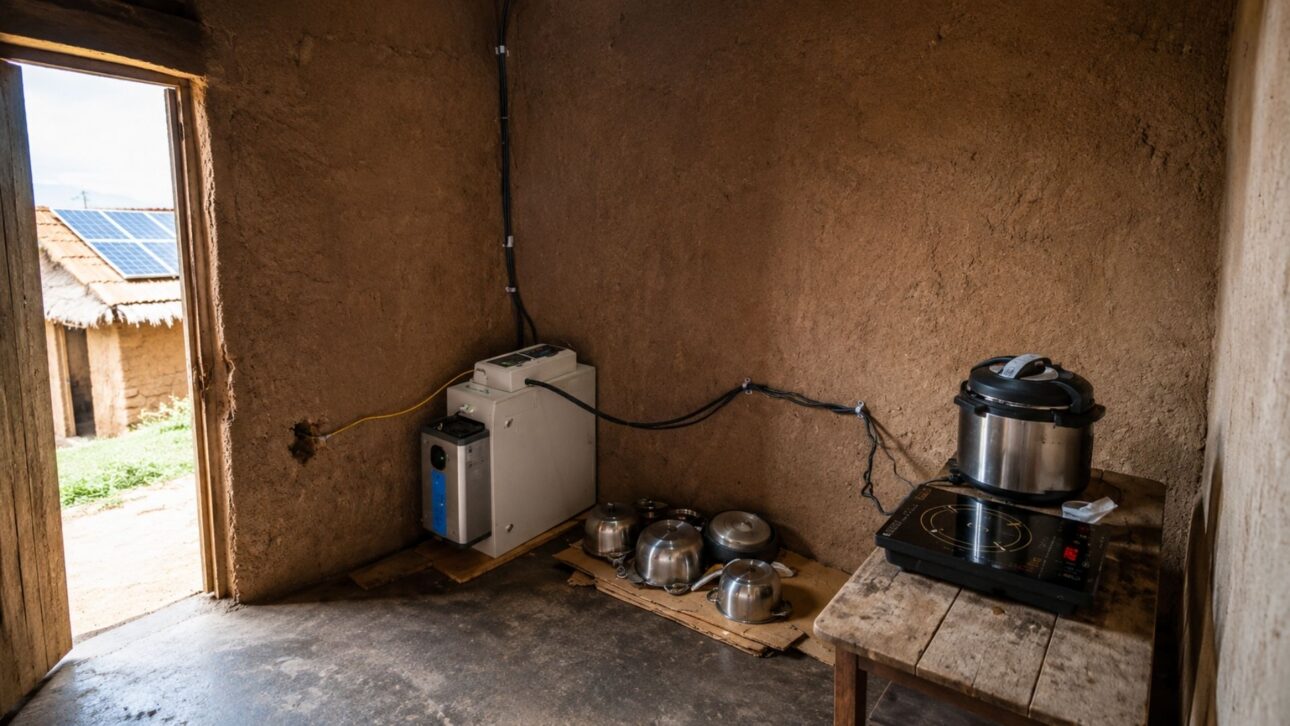
The engineering behind it is more complete than it seems. Each solar stove installed in Rwanda was not a simple panel, but a system with a solar panel, battery, charger, inverter, an induction cooktop, and an electric pressure cooker.
In other words, capture, storage, and two practical ways of cooking, all powered by clean energy.
The battery is the piece that solves the sun’s Achilles’ heel. The panel captures energy during the day and stores it, allowing the family to cook early in the morning, at night, or on cloudy days, without relying on the sun being at its peak during mealtime.
It is what separates this electric kitchen from a simple solar stove, which only works under strong sunlight.
The combination of induction and pressure cooker also speeds up the preparation.
The induction cooktop heats up quickly and efficiently, and the electric pressure cooker cooks beans, rice, and stews in less time and using less energy. For those who used to cook for hours on the fire, gaining speed changes the entire day.
Cleaner air and hours back in the day
The benefits went far beyond the wood saved. According to the study, the air quality inside the kitchens improved by more than 70% with the switch from fire to electric cooking.
This is very important for health: smoke from burning wood in an enclosed environment is one of the leading causes of respiratory disease in the world, especially among those who cook.
There was also a silent gain of time. Collecting wood, a task that mainly falls on women and young people, dropped by an average of three hours a day, reaching more than five hours in some homes.
With the solar stove, this time plummeted to less than an hour daily, freeing up hours that can go to study, work, or rest.
The researchers themselves summarize the scope of the change. “Our findings demonstrate the tangible health, economic, and environmental benefits that solar electric cooking can bring,” said researcher Alison Halford from Coventry University.
In one sentence, she ties together the three areas that the use of wood usually harms at once.
Why this matters for clean energy
The case of Rwanda points to a giant and global problem. Billions of people still cook with wood, coal, or kerosene, burning fuel indoors and breathing the smoke.
This dependency costs forests, health, and time, and is one of the major hurdles in the transition to clean energy in developing countries.
The strength of the study lies in showing feasibility. It’s not enough to say that the solar stove looks good on paper: it was necessary to prove that it works in a community that relies on coal and wood, with people cooking real food.
The numbers from East Kayonza say yes, the solar electric kitchen gets the job done and still delivers measurable benefits.
This type of evidence is what unlocks policies and investments. When research shows, with sensors and data, that clean energy can replace most of the wood in a poor household, it becomes easier to convince governments and financiers to take the solar stove far beyond 20 homes.
What Brazil has to do with this
Here, the conversation also makes sense. Brazil is full of sunshine and there are still many people cooking with firewood in the countryside, especially in poorer regions, while the price of cooking gas weighs on family budgets.
An electric kitchen powered by clean energy speaks directly to this reality.
The idea of combining a solar panel, battery, and stove to cut fuel dependency has appeal in a country with so much solar irradiation.
Not surprisingly, there are already Brazilian solar stove projects aimed at low-income families. The experiment in Rwanda reinforces that the path is promising and, more importantly, measurable.
In the end, the message is encouraging and practical. Replacing firewood with the sun is not a distant dream; it is something that has already reduced smoke, cost, and time in the lives of real families.
Each solar stove that replaces fire is a concrete step towards clean energy that fits in the kitchen of those who need it most.
And you, would you trade your stove for one powered by the sun?
The Rwanda study shows that a solar stove with a battery and electric pot can cut wood use from 3.4 to 0.86 kilograms per day, clean the kitchen air, and give families hours back in their day.
It’s clean energy solving very concrete problems.
And you, would you be willing to adopt an electric kitchen powered by solar energy to avoid gas and firewood? Share in the comments if you think this model could work in Brazil and what would still make you think twice before installing it.


