






 Portuguese
  Spanish


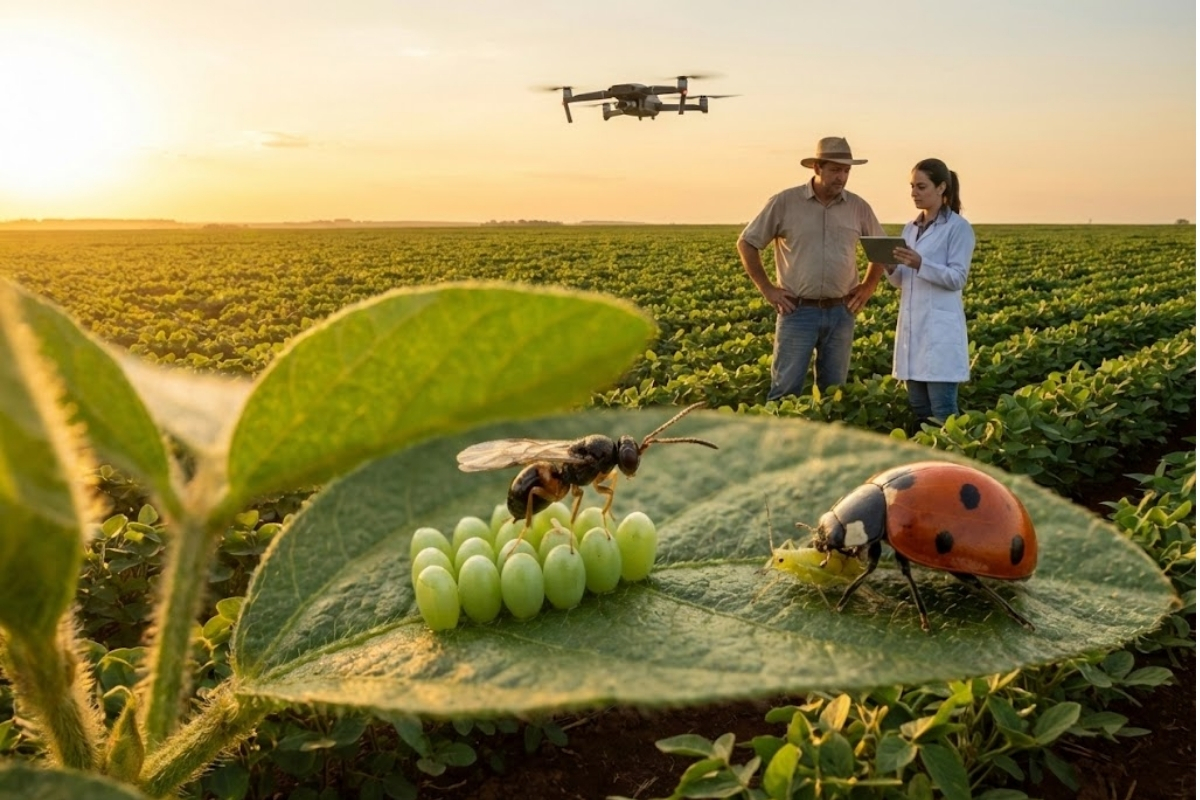

Brazil Advances in Developing a Sustainable Alternative to Traditional Pesticides Using Natural Enemies in Large-Scale Crops
Biological management focuses on combating stink bugs, a pest that causes millions in damages to rural producers annually. The initiative combines academic knowledge with practical fieldwork to ensure productivity without relying solely on chemical products.
Through a Brazilian university project, researchers use specific predators and fungi to keep insect populations under control. This strategy preserves local biodiversity and reduces the need for repeated applications of broad-spectrum insecticides on soybean and cotton crops.
What Changes in Practice for Agribusiness With Biological Control
The gradual substitution of chemicals for living organisms alters the protection dynamics of plants and reduces pest resistance to conventional remedies. Producers today face a scenario of high costs and soil contamination, making the transition to natural methods an economic and environmental priority.
-
China Develops Custom 140-Ton Electric Mining Truck with 770 kWh Swappable Battery, Deploys 290 Units in Xinjiang’s Largest Zinc Mine

-
Meta to Launch Arena, a New Prediction App Targeting 3.56 Billion Users, Competing with Polymarket and Kalshi

-
Scientist Challenges Famous Human Evolution Theory, Argues Homo Sapiens Evolved Gradually Over Thousands of Years
-
15-Year-Old American Builds Ocean Generator with PVC Pipe and 3D-Printed Propeller for $12, Wins National Prize, Presents at White House, and Makes Forbes 30 Under 30 List




The focus of the technology is not the total elimination of insects, but rather keeping the infestation below the level of economic damage. This way, the ecosystem remains balanced, and production costs decrease due to less frequent mechanized spraying on the properties.
Rules and Criteria That Define Natural Enemies of the Pest
The selection of biological agents involves strict laboratory criteria to ensure that only safe and effective species reach the field. Among the main allies are parasitoids, small wasps that prevent the birth of new stink bugs by laying eggs inside the pests.
The project also employs entomopathogenic fungi, such as Beauveria bassiana and Metarhizium spp, which infect and eliminate insects in a targeted manner. Additionally, generalist predators like ladybugs are introduced to consume eggs and nymphs, ensuring protection at various life stages of the pest.
How the Process Works Step by Step on the Farm
The implementation of the technology in pilot areas occurs cyclically and starts with systematic monitoring of the crops. Technicians use traps and sampling methods to identify the precise moment when biological intervention will yield the best financial results.
When the population of stink bugs reaches the critical threshold, the producer applies the formulations of fungi or releases the batches of natural enemies produced in biofactories. In parallel, areas with conventional chemical management serve as a comparison to measure harvest performance and actual resource savings.
Expected Results and Financial Impact for the Producer
The expectation is that the use of biologicals will drastically reduce the volume of pesticides applied without affecting the final yield of grains and fibers. The economic evaluation of the project accounts for savings in fuel, lower maintenance of machinery, and market appreciation for products with lower chemical loads.
The stability of the agricultural system increases with the presence of more beneficial insects, generating prolonged natural protection. These data are crucial for attracting investors and convincing large producers that biotechnology is viable for managing thousands of hectares.
What May Happen From Now On With the Expansion of Management
The validation of this technology in pilot areas allows knowledge to be transferred to other farmers through training and capacity-building modules. The goal is for the strategy to be replicated on a large scale, increasing the area managed with bioinputs in various regions of the country.
The success of this initiative opens doors for the biological control of other pests and consolidates a new paradigm for Brazilian agribusiness. The integration between universities and the productive sector accelerates the transition to more efficient and resilient agriculture in the face of climate change.
This model change promotes food security and meets the growing environmental demands of the international market. Strengthening public policies and partnerships with biotechnology companies ensures access to high-quality products for the field.
By consolidating these methods, the sector reduces its dependence on imported inputs and strengthens national innovation within farms. Monitoring the evolution of these protocols is essential to understanding the solutions that will dominate the debate on productivity and sustainability in the coming years.






