






 Portuguese
  Spanish
  5 min of reading
  9 comments


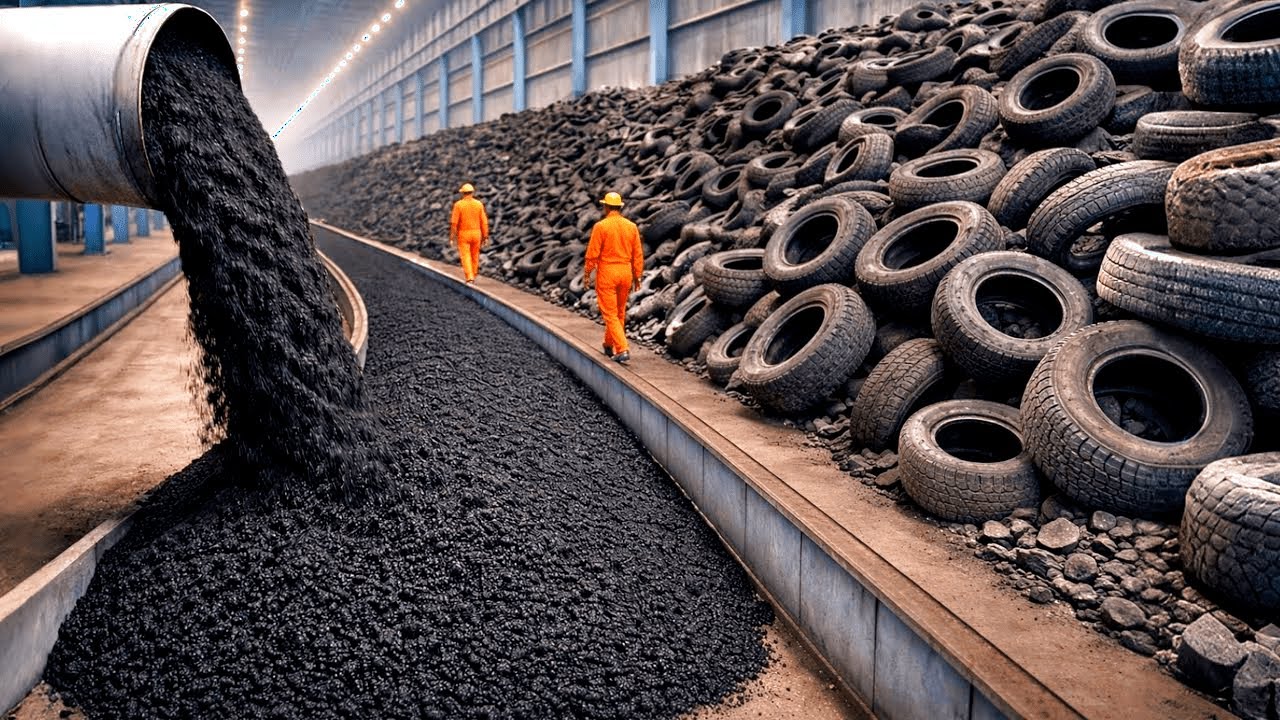


Millions of Discarded Tires Are Being Incorporated Into Asphalt in Brazil, Creating More Durable, Silent, and Sustainable Roads with Proven Environmental and Technical Benefits.
In Brazil, a country that discards over 450 thousand tons of tires per year, a historical environmental problem has begun to be addressed as a heavy engineering solution. Since the early 2000s, federal, state, and municipal highways have started to incorporate ground rubber from unusable tires into asphalt composition, creating the so-called rubberized asphalt. The technology has been progressively adopted by public agencies and concessionaries following regulations from the National Environment Council, the National Petroleum Agency, and technical guidelines from the National Department of Transportation Infrastructure.
The practical application occurs in several states, particularly São Paulo, Paraná, Rio Grande do Sul, Minas Gerais, and Ceará, involving documented public contracts, certified laboratory tests, and results monitored over the years. The reuse of tires simultaneously addresses three fronts: environmental management, structural performance of the pavement, and reduction of maintenance costs. This is not an experimental project, but a solution already integrated into Brazilian road engineering.
What Is Rubberized Asphalt and How Is It Produced

Rubberized asphalt is a modified asphalt binder that incorporates ground rubber from unusable tires into petroleum asphalt cement (PAC). The rubber undergoes industrial grinding, steel and fiber separation, fine grinding, and granule size control before being mixed with the binder.
-
With 1,415 m², a frontal view of the sea, and surrounded by skyscrapers, the mansion worth R$ 140 million bought by Luciano Hang is the last standing residence on the waterfront of the ‘Brazilian Dubai’ in Balneário Camboriú.

-
“Big Becky,” the 4,000-ton steel monster with the height of a four-story building, spent five years tearing through 10.2 km of solid rock beneath Niagara Falls to divert the river’s force and generate clean energy for 160,000 homes.

-
Luciano Hang buys for R$ 140 million the last mansion standing on the beachfront of the “Brazilian Dubai”: a 1,415 m² property with a front view of the sea, surrounded by skyscrapers in one of the most valuable square meters in the country, in Balneário Camboriú.
-
Goodbye, concrete in the backyard: the 60s trend is back in full force and has become an alternative in construction




There are two main processes adopted in Brazil. In the wet process, the rubber is incorporated directly into the asphalt binder at high temperatures, altering its physicochemical properties. In the dry process, the rubber acts as an elastic aggregate added to the asphalt mixture. Both methods are regulated by technical standards from ANP, ABNT, and specifications from DNIT.
The result is a pavement with increased elasticity, lower susceptibility to cracking, better fatigue resistance, and significant reduction of noise generated by tire-asphalt contact.
How Many Tires Are Used and What Is the Actual Environmental Impact
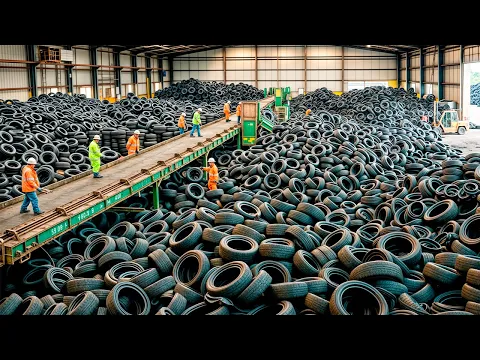
Each kilometer of highway paved with rubberized asphalt can reuse between 1,000 and 2,000 car tires, depending on the thickness of the applied layer and the structural design. In urban areas or high-traffic sections, this number can be even higher.
Summing the projects executed since the adoption of the technology, Brazil has already reused tens of millions of tires, removing a critical environmental liability from landfills, rivers, vacant lots, and health risk areas. Discarded tires are known to accumulate water, promote the proliferation of Aedes aegypti, and pose a high risk of toxic fires when improperly stored.
Disposing of tires for paving provides a definitive solution to the problem: the tire is incorporated into the road structure and does not return to the environment.
Why Does Asphalt with Tires Last Longer than Conventional Asphalt

From an engineering perspective, the major advantage of rubberized asphalt lies in the viscoelastic behavior of the mixture. The rubber absorbs and dissipates stresses generated by heavy traffic and thermal variations, reducing structural failures common in traditional pavements.
Technical studies conducted by Brazilian universities, concessionaries, and accredited laboratories indicate:
- 30% to 50% increase in pavement lifespan
- Significant reduction of fatigue cracking
- Lower permanent deformation (wheel rutting)
- Greater grip on wet surfaces
- Reduction of up to 5 dB in traffic noise
These gains are particularly relevant in logistical corridors, agricultural outlets, and urban roads with high volume, where the cost of recurring maintenance tends to be high.
Where the Technology Has Been Applied in Brazil
The use of rubberized asphalt in Brazil is documented in public and private works. Among the most well-known examples are:
In São Paulo, sections of the Anhanguera, Bandeirantes, Castelo Branco, and Imigrantes highways received layers with modified binder, as well as urban roads in the capital and the metropolitan area.
In Paraná, the DER applied rubberized asphalt on state highways and urban accesses, with performance monitoring over the years.
In Ceará, pilot projects evolved into permanent contracts for urban roads and highways, integrating the state solid waste policy.
In Minas Gerais and Rio Grande do Sul, concessionaries adopted the technology in critical segments, mainly in areas with intense thermal variation.
These projects feature continuous performance measurements, which eliminates any experimental or improvised character.
Cost: More Expensive at the Worksite, Cheaper Over Time
One of the most discussed points is the initial cost. Rubberized asphalt can cost 10% to 25% more to execute, depending on the region and the logistics of ground rubber. However, life cycle analysis shows a different scenario.
With less need for repairs, resurfacing, and emergency interventions, the total cost over 10 to 15 years tends to be lower than that of conventional pavement. For public managers, this means fewer maintenance contracts, less impact on traffic, and savings in budget resources.
Moreover, part of the cost of rubber is offset by reverse logistics programs, mandated by law, that involve tire manufacturers and importers.
Legal and Regulatory Framework Supporting the Technology
The use of tires in paving in Brazil is not an isolated decision by engineers or mayors. It is anchored in a solid legal framework.
The CONAMA Resolution No. 416/2009 established the responsibility for the environmentally appropriate disposal of unusable tires. The ANP regulated the types of modified binders accepted in the national market. The DNIT published technical specifications for use in federal works.
This regulatory set created legal security for states and municipalities to adopt the solution on a large scale, encouraging the creation of grinding plants, regional logistical chains, and technical standardization.
Comparison with Other Countries and Brazil’s Position
Although countries such as the United States, Spain, Portugal, and South Africa also utilize rubberized asphalt, Brazil stands out for its potential volume of raw material, the extent of the road network, and the integration of the technology into environmental policy.
In some U.S. states, the use is restricted to specific regions. In Brazil, the application occurs in both major highways and urban roads, industrial accesses, and rural roads, which amplifies the positive environmental impact.
Limitations and Challenges Still Existing
Despite the benefits, the technology faces challenges. The main limitation is the regional availability of ground rubber, which depends on nearby industrial plants. In remote regions, the logistical cost may make application unfeasible.
Another critical issue is the quality of execution. Inadequate temperature, incorrect dosage, or poorly controlled mixing compromise performance. Therefore, projects require skilled labor, strict technical oversight, and continuous quality control.
What Changes for Brazilian Road Engineering
The use of tires on roads represents a structural change in how Brazil deals with waste and infrastructure. The highway becomes not just a consumer of natural resources but a final destination for a problematic waste, with measurable technical gain.
This approach reinforces a broader trend in modern engineering: turning environmental liabilities into structural assets, reducing ecological impact without sacrificing performance.


Uma ideia renovadora dessa não pode ficar só nesse poucos estados do Brasil, aqui em Belém -Para , tem muito Descartes de pneus velhos, muito mesmo, já ontem vinha pela Avenida Independência e vi centenas de pneus velhos, jogados nas margens.
Aqui na Bahia na região de Candeias a Madre de Deus já tem mais de 20 anos , manutenção quase zero , a Petrobrás foi quem fez na época por conta das carretas, Deus muito certo .
Essa tecnologia foi feita experimentalmente aqui no RS há 15 anos atrás, entre a cidade de Guaíba e Porto Alegre. Minha opinião: Não deu certo. Por ser extremamente abrasiva, trava o veículo. Uma quinta marcha parece uma terceira. Gasta absurdamente os pneus dos carros, além de aumentar o consumo. Esse tipo de asfalto talvez possa ser utilizado em declive. Parece freio motor.