






 Portuguese
  Spanish


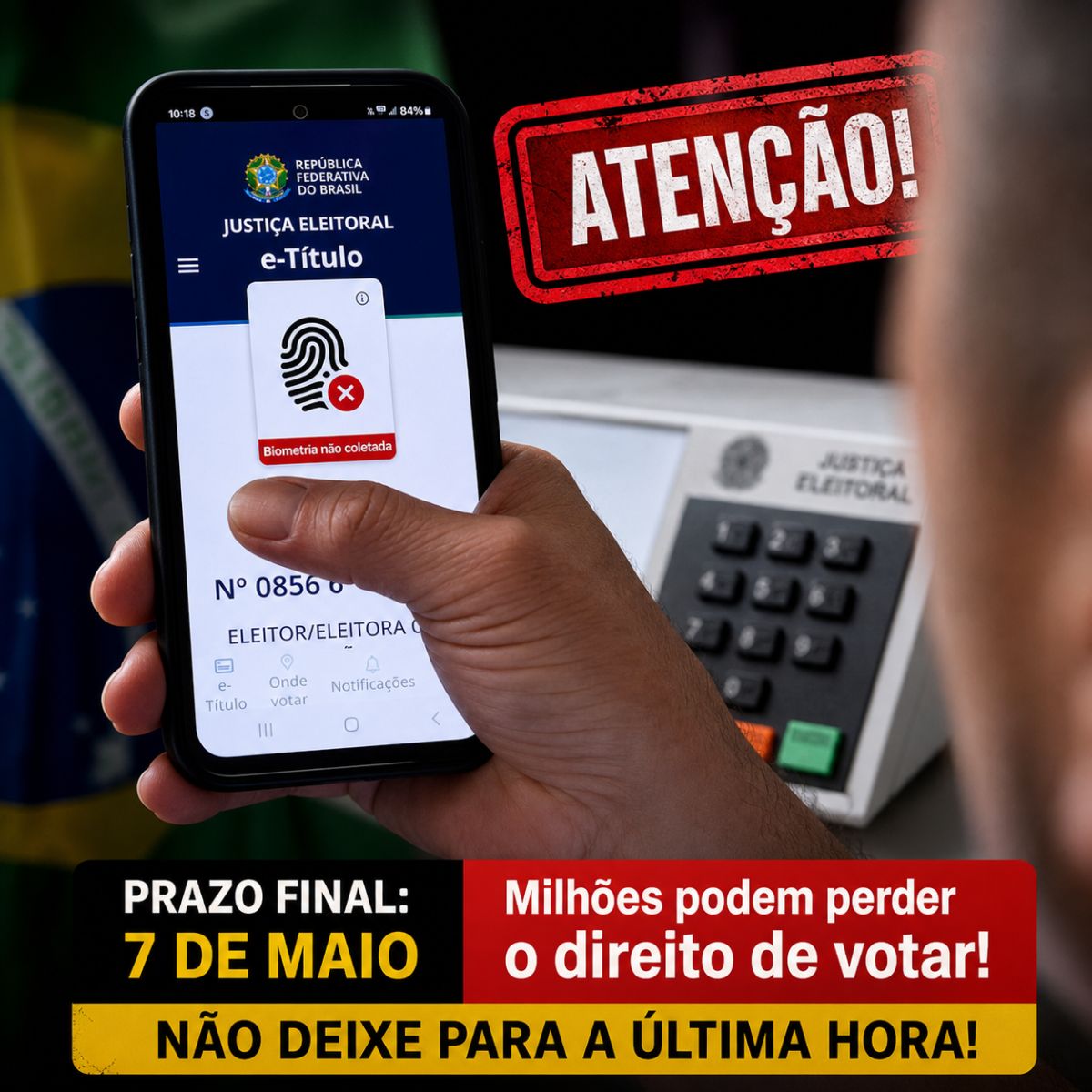
The deadline to regularize your electoral situation before the 2026 Elections is May 6th. Until this date, Brazilians can obtain their first voter ID, transfer their electoral domicile, update registration data, regularize pending issues, and register biometrics. After May 7th, the electoral registry will be closed by the TSE for the organization of the election, and most services will be unavailable until after the October elections. Services are available online through the TSE’s Electoral Self-Service or in person at electoral offices.
Millions of Brazilians are just days away from losing their right to vote in the October elections, and many don’t even know it. The final deadline to regularize your electoral situation is May 6th, and after this date, the registry will be closed by the TSE (Superior Electoral Court) for the organization of the election. Those who do not obtain their first voter ID, transfer their domicile, update their data, or resolve pending issues by Tuesday will be unable to make any changes and may be prevented from voting when all of Brazil goes to the polls to choose its governors.
The problem is that most people only remember they need to regularize their voter ID when it’s already too late. The TSE emphasizes the importance of not leaving it until the last minute, but the experience from previous elections shows that millions of Brazilians seek out electoral offices in the final days and encounter queues, congested systems, and deadlines that cannot be extended. Those who need biometric collection to obtain their first voter ID or for changes requiring biometric identification must attend in person, which makes the time even shorter.
What can be done until May 6th and how to access the services
According to information released by the ndmais portal, until the deadline of May 6th, Brazilians can perform five essential procedures with the Electoral Justice: obtain their first voter ID, transfer their electoral domicile, update registration data, regularize their situation in case of pending issues, and register their biometrics. All these services can be initiated online through the Electoral Self-Service, accessible on the TSE portal, where it is possible to fill in data, send documents, and track the request.
-
Major Brazilian Supermarkets, Including Carrefour and Assaí, May Close Earlier to Prevent Price Increases

-
Coca-Cola Shuts Down 100-Year-Old Factory in the U.S., Impacting 85 Workers and Shaking Local Community with Historic Consequences
-
Bianca Andrade Invests $30 Million of Her Own Money in Boca Rosa, Launches Over 100 Products in a Year, Aiming for $400 Million by 2026
-
Belo Horizonte Becomes First Brazilian City to Fund Housing, Utilities for 100 Homeless Families with $900,000 Initiative


For those who prefer in-person service or need to collect biometrics, the alternative is to go directly to an electoral office or service point, according to the guidelines of the TRE (Regional Electoral Court) of each state. In the case of the first voter ID or changes that require biometric identification, in-person attendance is mandatory for fingerprint collection, meaning that the online service alone is not enough for those who have never had a voter ID.
Who needs to regularize and why the deadline is so tight
The public that needs to act by May 6th includes young people who have turned 16 and want to vote for the first time, Brazilians who have moved cities and need to transfer their domicile, people who failed to vote in previous elections without justification and have accumulated pending issues, and voters who have never completed the mandatory biometric registration. The diversity of situations means that the number of potentially affected individuals reaches millions across Brazil.
The deadline is tight because the TSE needs time to process requests, validate documents, update the national registry, and prepare the electronic voting machines with the definitive voter base. The closing of the registry on May 7th gives the court five months to organize an election involving over 150 million voters distributed across thousands of municipalities. Any change made after the deadline will not be processed in time.
What happens to those who miss the May 6th deadline
Those who do not regularize their electoral situation by the deadline will have their registration frozen until after the elections. In practice, this means that voters with pending issues will not be able to vote in the first round on October 4th or in a possible second round on October 25th, and will only be able to resolve their situation when services resume after the election.
The consequences go beyond not voting. Brazilians with an irregular electoral situation face restrictions such as the inability to obtain a passport, take public office, get loans from public banks, and enroll in government-maintained educational institutions. Regularization is free and relatively simple, but it depends on the voter acting within the deadline, and those who miss the date will have to live with these restrictions for months until the registry reopens.
Step-by-step guide to resolving everything online
The online process is straightforward. The voter accesses the Electoral Self-Service on the TSE website, selects the desired service, and fills in the requested data. For domicile transfer and cadastral updates, the system allows you to send scanned documents and track the progress of your request without leaving home. Most procedures can be completed entirely online in less than 30 minutes.
The exception is biometric collection. Those who need to obtain their first voter ID or make any changes that require fingerprints must attend an electoral office in person, bringing an official photo ID, proof of domicile, and, in the case of 16 and 17-year-olds, parental authorization is not required. Service at electoral offices varies by state, and the TSE recommends checking hours and addresses on the local TRE website.
The 2026 Elections calendar and important dates
The May 6th deadline is just the first milestone in an electoral calendar that extends until October. In June, the Electoral Fund that finances campaigns will be announced. In August, electoral propaganda and free airtime begin. The first round is scheduled for October 4th, and a possible second round for October 25th. Each of these dates has legal implications that affect candidates, parties, and voters.
For Brazilians who want to participate in the 2026 elections, the message is clear: everything starts with a regularized voter ID, and the deadline to ensure this is May 6th. After this date, there will be no second chance, appeal, or extension. The registry closes, systems are shut down for changes, and those left out will watch the elections from home without being able to choose who will govern Brazil for the next four years.
Have you already checked if your voter ID is regular, or will you discover you have pending issues when it’s too late? Tell us in the comments if you’ve already resolved your electoral situation and share this article with someone who might be about to lose their right to vote.





Be the first to react!