






 Portuguese
  Spanish


Altona, a metalworks company from Blumenau, manufactured essential components for the Mobile Launcher 2, the base platform for launching the Space Launch System rocket used in NASA’s Artemis II mission. The century-old company from the Itoupava Seca neighborhood, specializing in cast steel, was discovered by the American space agency after supplying parts for The Sphere in Las Vegas. NASA engineers visited the Santa Catarina factory three times throughout the project, and Altona’s new president, Eduardo Vetter, reveals that the company needed to be as good as and cheaper than an American supplier.
NASA sent engineers to Blumenau, in the interior of Santa Catarina, to visit a century-old metalworks company that most Brazilians have never heard of, and what they found was impressive enough to hire the company for one of the most important missions in the history of space exploration. Altona, founded in the Itoupava Seca neighborhood and specializing in cast steel, manufactured essential components for the launch infrastructure of the Space Launch System rocket, used in the Artemis II mission that took four astronauts towards the Moon in early April.
The path between a factory in Blumenau and the Kennedy Space Center in Florida passed through Las Vegas. It was The Sphere, the world’s largest sphere inaugurated in 2023, that served as Altona’s “calling card” for NASA. The Santa Catarina metalworks company already supplied cast and machined parts for the company that designed the spherical structure, and when the American space agency needed a larger and more resistant launch base for Artemis II, it followed the same design approach as the sphere project and discovered that the components came from a city of 360,000 inhabitants in southern Brazil.
How NASA discovered a metalworks company in Blumenau
According to information released by the NSC portal, the story begins before the Moon. Altona already had a relationship with the American company that designed The Sphere, built to house an entertainment arena in Las Vegas. This same company had already worked on airport, gymnasium, hospital, and other projects in the USA, Canada, and Europe, and since it already knew the quality of the Santa Catarina metalworks company, it invited Altona to supply cast and machined parts for the sphere.
-
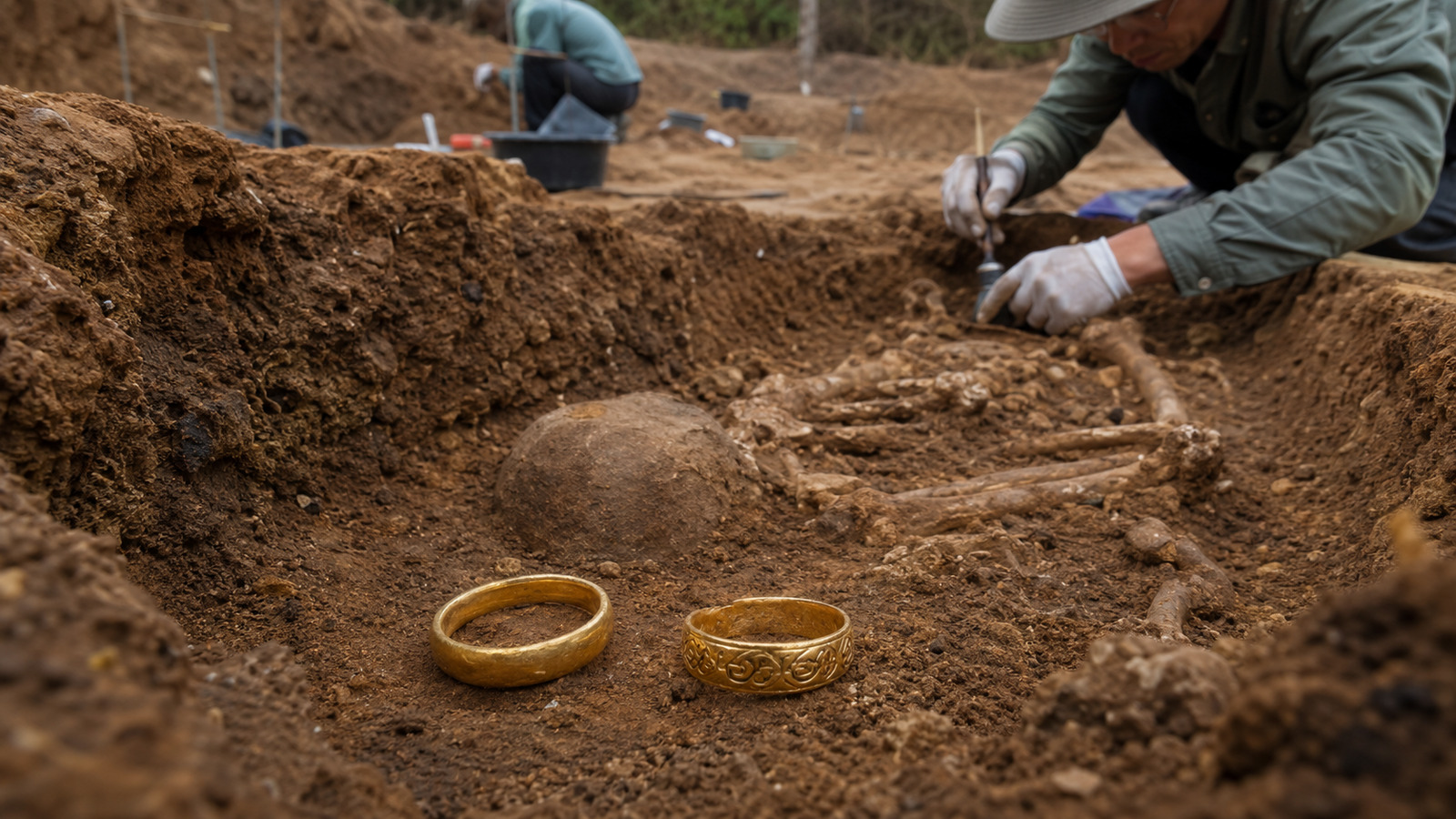
2,000-Year-Old Gold Rings Found with Human Bones in Thailand Reveal Rare Burial and Feature Ancient Indian Inscription

-
Lenovo Unveils Legion Y700 Tablet with RGB Backlighting, 5G, and SIM Card Support

-
World’s First Nuclear Hydrogen Unit Begins Operation: Copper-Chlorine Technology with Initial Capacity of 150 Liters per Hour, Aiming for 3,000 Liters per Hour
-
Mechanics Retrofit Old Fiat Uno with BYD Electric Motor for Silent, Low-Voltage Operation Reaching Nearly 60 km/h in Home Test


The result was so precise that it drew attention. Eduardo Vetter, Altona’s new president, said that the chief engineer of the Artemis II mission, responsible for 312 engineers, revealed that none of the 19,000 bolts used to connect The Sphere’s structure needed to be replaced. When NASA began designing the Mobile Launcher 2, the platform that supports the rocket at the moment of launch, it realized that the new base required much greater loads and resistance than the previous one. The solution followed the same engineering as the sphere, and Altona joined the project.
What Altona manufactured for the Artemis II mission
Due to the extremely high level of secrecy required by NASA, the details of what was manufactured have not been publicly disclosed. What is known is that essential components for the Mobile Launcher 2 came from the century-old factory in the Itoupava Seca neighborhood, the base platform that supports and directs the Space Launch System rocket during launch at the Kennedy Space Center in Florida. The technology employed was in the infrastructure that needs to withstand the extreme forces generated by a 98-meter-tall rocket.
The Mobile Launcher 2 is not a simple platform: it is an engineering structure that needs to withstand vibrations, heat, and pressure that few materials in the world can endure. The steel cast by Altona in Blumenau was subjected to quality standards that even American suppliers recognize as difficult to meet, and the fact that NASA accepted imported content in a government project that prioritizes national suppliers is a testament to the technical capability of the Santa Catarina metalworks company.
NASA’s three visits to Blumenau and what the engineers did
The Nasa delegation visited Altona three times throughout the project, including a visit in 2023. In addition to inspecting production and validating manufacturing processes, the American engineers made a point of gathering the company’s employees who participated in the process to explain the Artemis mission and the meaning of the components that were being manufactured in Blumenau.
Nasa engineers also gave lectures to students from schools in the city, bringing the universe of space exploration into Santa Catarina. Vetter revealed that he had lunch with the mission’s chief engineer and heard from him praise for the 19,000 screws of The Sphere, recognition he describes as “very gratifying” coming from an organization with Nasa‘s standards. For the president of Altona, seeing the successful launch of Artemis II was “the icing on the cake” of a project that lasted years.
Why Nasa accepted a Brazilian company in an American project
Nasa is an agency linked to the American government and requires a series of regulations that prioritize the use of national content in its projects. To be accepted as a supplier of imported content, Altona had to be, at a minimum, as good as an American supplier and still offer a more competitive price, a barrier that eliminates the vast majority of foreign companies that try to participate in space programs in the United States.
The fact that Altona overcame this barrier reveals something about Brazilian industrial capacity that rarely makes headlines. A century-old metallurgical company from Blumenau, with a tradition in cast steel, managed to meet quality standards that American suppliers consider difficult, and did so with a competitive price sufficient to justify the import in a national security project. The case opens doors not only for Altona, but for other Brazilian companies that possess cutting-edge technology in specific industrial niches.
What the Artemis II mission means and where it leads
The Artemis II mission took four astronauts to space in April with the objective of studying the feasibility of new crewed missions, including the return to the Moon and, possibly, trips to Mars. The Artemis program is the American response to the new space race involving China, India, and private companies like SpaceX, and the Mobile Launcher 2 is the infrastructure that makes it possible to launch the largest rockets ever built.
For Altona, participating in a program of this magnitude is more than a contract: it is the validation that the metallurgical company from Blumenau competes globally with the world’s best manufacturers of high-precision components. Vetter highlighted that the case helped open doors and demonstrate the company’s capabilities, and that even American suppliers recognize the difficulty of meeting Nasa‘s standards. From the factory in Itoupava Seca to the Kennedy Space Center, the distance is 7,000 kilometers, but the required precision is the same.
Did you know that a metallurgical company from Blumenau manufactured parts for the mission that could take humanity back to the Moon? Tell us in the comments if you know other Brazilian companies that participate in international projects of this magnitude and what you think about Santa Catarina being connected to Nasa’s space program.


