






 Portuguese
  Spanish


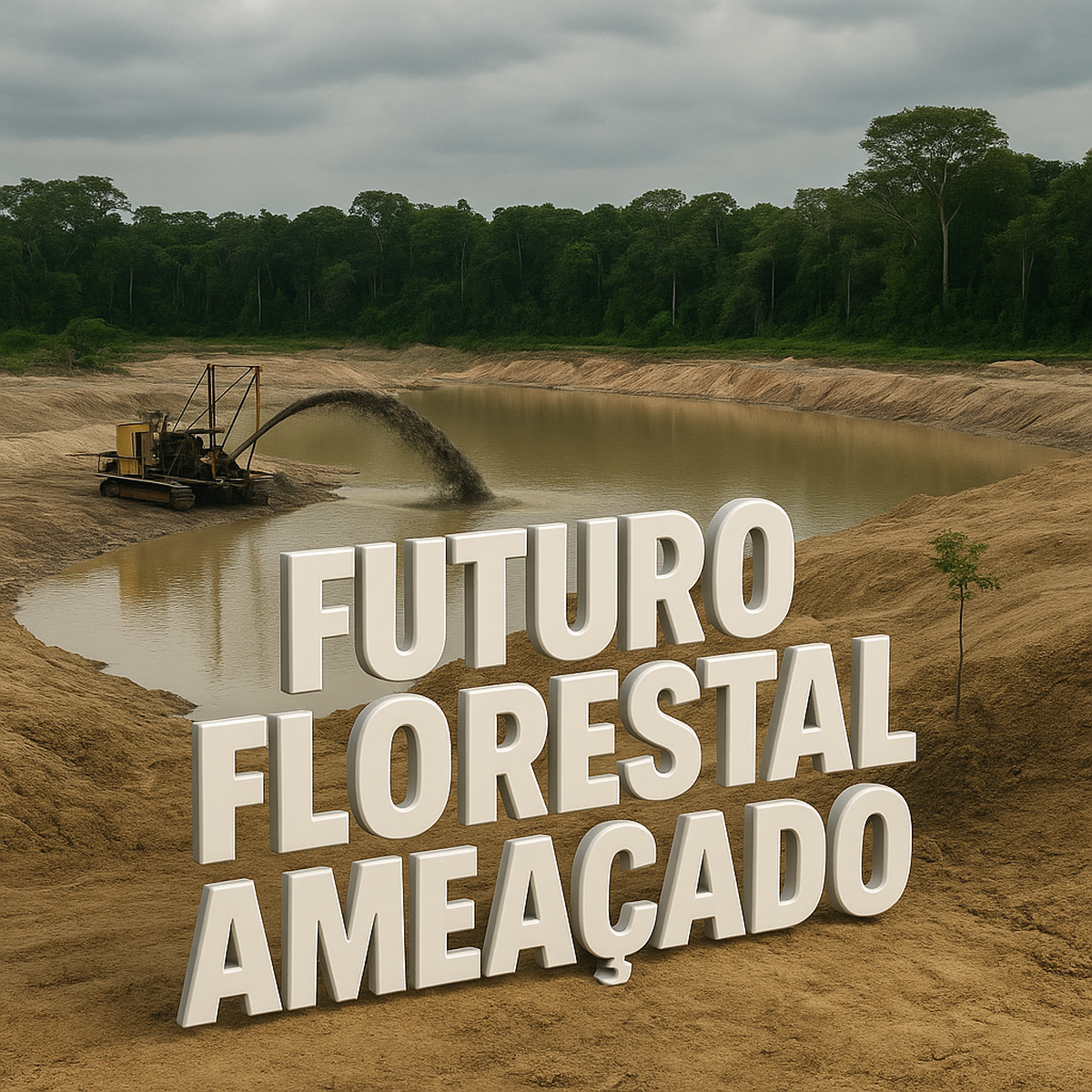

Destructive Technique Used in Peru Leaves Infertile Soil and Blocks Natural Recovery of Large Tropical Areas
Recent scientific studies warn of a serious environmental threat. The forests of the Peruvian Amazon, heavily impacted by gold mining, are not able to regenerate.
The revelation was made in early June 2025, with the publication of research from the Woodwell Climate Research Center, in partnership with the University of Southern California, Columbia University, and Arizona State University.
Technique Destroys Soil and Alters Natural Conditions
The practice of suction mining, widely used in Madre de Dios, in southern Peru, utilizes high-pressure water jets to disaggregate the soil. This technique is common to facilitate the separation of gold. However, the environmental impacts are devastating.
-
U.S. Invests $75 Million in Projects to Extract Rare Earths, Gallium, Germanium, and Aluminum from Coal Waste

-
Eni Acquires 25% Stake in Chilean Lithium Project, Plans to Invest Up to $225 Million in Eco-Friendly Extraction Method
-
Mexico’s Giant Crystal Cave: A Deadly 58°C Underground Palace with 11-Meter Crystals Formed Over Nearly a Million Years

-
China Dominates Over 90% of Rare Earth Refining, Prompting Global Concerns: Canada and Japan Launch Billion-Dollar Plan to Reduce Dependency and Safeguard Batteries, Semiconductors, and Defense


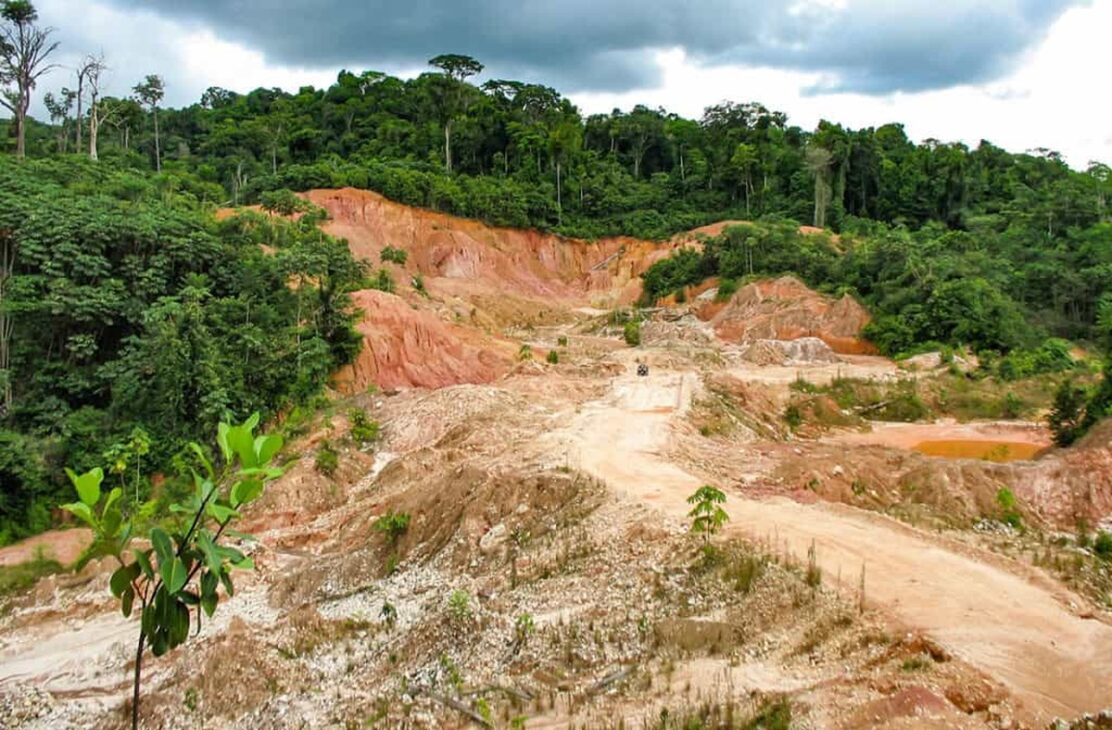
According to the research, the process removes the top layer of soil, which is responsible for retaining moisture and providing nutrients. Consequently, mined areas turn into piles of sterile sand and excavated ponds.
Surface temperatures on these piles can reach 60°C, creating an extremely dry and hostile environment for the growth of new trees. As explained by Abra Atwood, the lead author of the study, “these conditions make replanting impossible.”
Technical Study Shows Flaws in Environmental Recovery
The study analyzed areas with different mining histories between 2022 and 2024.
According to the researchers, even after years of abandonment, the soil cannot recover naturally.
Josh West, a geoscientist at USC and co-author of the research, stated: “It’s like trying to grow a tree in an oven.” The metaphor, while impactful, accurately illustrates the challenge faced by reforestation initiatives in the region.
Alternatives to Mitigate the Caused Damage
In light of the seriousness of the situation, scientists suggest some urgent measures. Among them are the leveling of sand piles, filling in the ponds formed by mining, and using structured soil techniques to improve water retention.
Experts consider these actions essential to recover at least part of the lost fertility and allow sapling roots to reach the groundwater.
However, even with these interventions, researchers warn that the return of original biodiversity may take decades, or even centuries.
Gold Mining Has Already Destroyed Over 95 Thousand Hectares
Between 1980 and 2017, small-scale gold mining devastated over 95,000 hectares of tropical forest in the Madre de Dios region, which is equivalent to more than seven times the size of the city of San Francisco in the United States.
Currently, according to data from the Woodwell Climate Research Center, this type of activity is already responsible for almost 10% of all deforestation recorded in the Amazon.
The situation is particularly concerning because, unlike other forms of degradation, suction mining deeply compromises the soil, making the recovery process even more lengthy and uncertain.
Experts Call for Regulatory Changes
In light of the scenario, environmental specialists emphasize the need to regulate mining activities more strictly in the region.
Additionally, they suggest that Peru revise its public policies aimed at forest restoration, focusing on sustainable practices, local community involvement, and international cooperation.
According to the technical report released in June 2025, without coordinated actions, the environmental damage could become irreversible.
Discovery Raises Debate on Mining in South America
The study had a strong impact on the scientific community and environmental agencies in Latin America. Soil degradation and the inability of the Amazon rainforest to regenerate naturally call into question the mining models adopted in various countries in the region.
The comparison with other environmental disasters, such as those caused by dams in Brazil, highlights the urgency in finding integrated and sustainable solutions for the exploration of natural resources.
What Does the Future Hold for the Amazon?
Based on data collected up to 2025, researchers indicate that the recovery of the forest depends on immediate and well-planned actions.
The challenge involves balancing economic development with environmental preservation, while preventing gold extraction from becoming a death sentence for tropical forests.
Do you believe that mining should be restricted or regulated more strictly? What would be the ideal model to protect the Amazon and its future generations?




I’ve been following your blog for some time now, and I’m consistently blown away by the quality of your content. Your ability to tackle complex topics with ease is truly admirable.