Portuguese
  Spanish


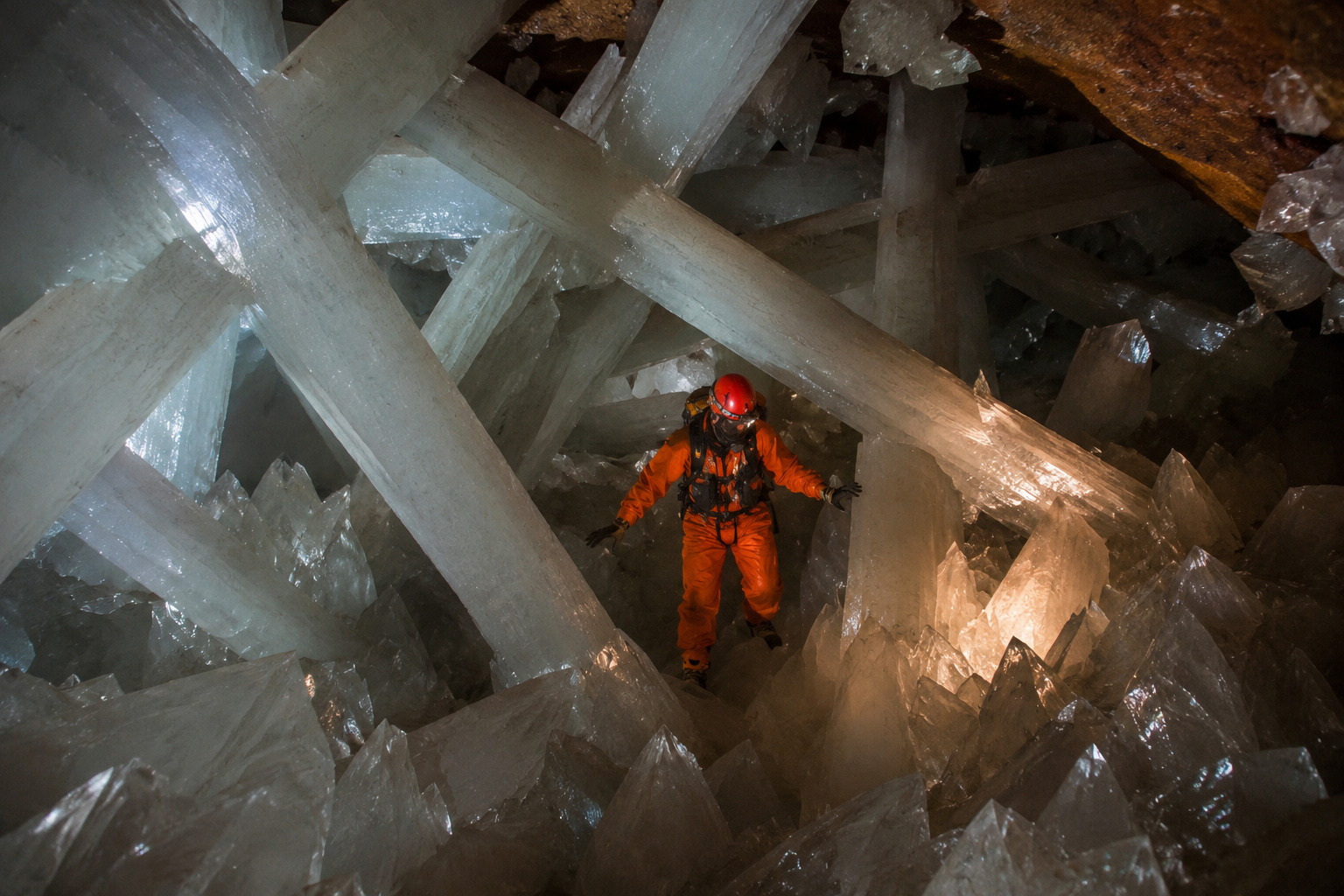

The Crystal Cave of Naica, in Mexico, houses gypsum giants up to 11 meters and an extreme environment of almost lethal heat and humidity.
The Cueva de los Cristales, in Naica, in the state of Chihuahua, Mexico, is one of the most extraordinary geological formations ever documented. Buried about 300 meters below the Naica mountain, it houses translucent beams of selenite gypsum reaching 11 meters in length and up to 55 tons, among the largest natural crystalline structures ever described.
The cave was discovered in 2000, when miners from Industrias Peñoles were excavating a new tunnel in the Naica mine, known for its silver, zinc, and lead deposits. What appeared before them was a chamber filled with giant crystals that had grown over an immense geological period, in extremely stable thermal conditions almost impossible to reproduce in nature.
Discovery of the Crystal Cave in Naica revealed an underground hall with some of the largest natural crystals on Earth
National Geographic described the cave as a horseshoe-shaped cavity, about 10 meters wide by 30 meters long, filled with crystalline blocks on the floor and huge gypsum beams projected in various directions. The scale is so unusual that a person next to the crystals looks tiny.
-
China Dominates Over 90% of Rare Earth Refining, Prompting Global Concerns: Canada and Japan Launch Billion-Dollar Plan to Reduce Dependency and Safeguard Batteries, Semiconductors, and Defense

-
Ancient Mines in Spain Reveal Tools and Metals That May Explain Bronze Age Trade with Scandinavia
-
XCMG Launches 240-Ton Mining Truck in Brazil, Promising Increased Productivity with Lower Fuel Consumption
-
Canadian Investment Transforms Remote Brazilian Amazon Town into Copper Hub for Global Electric Vehicle and AI Data Center Markets


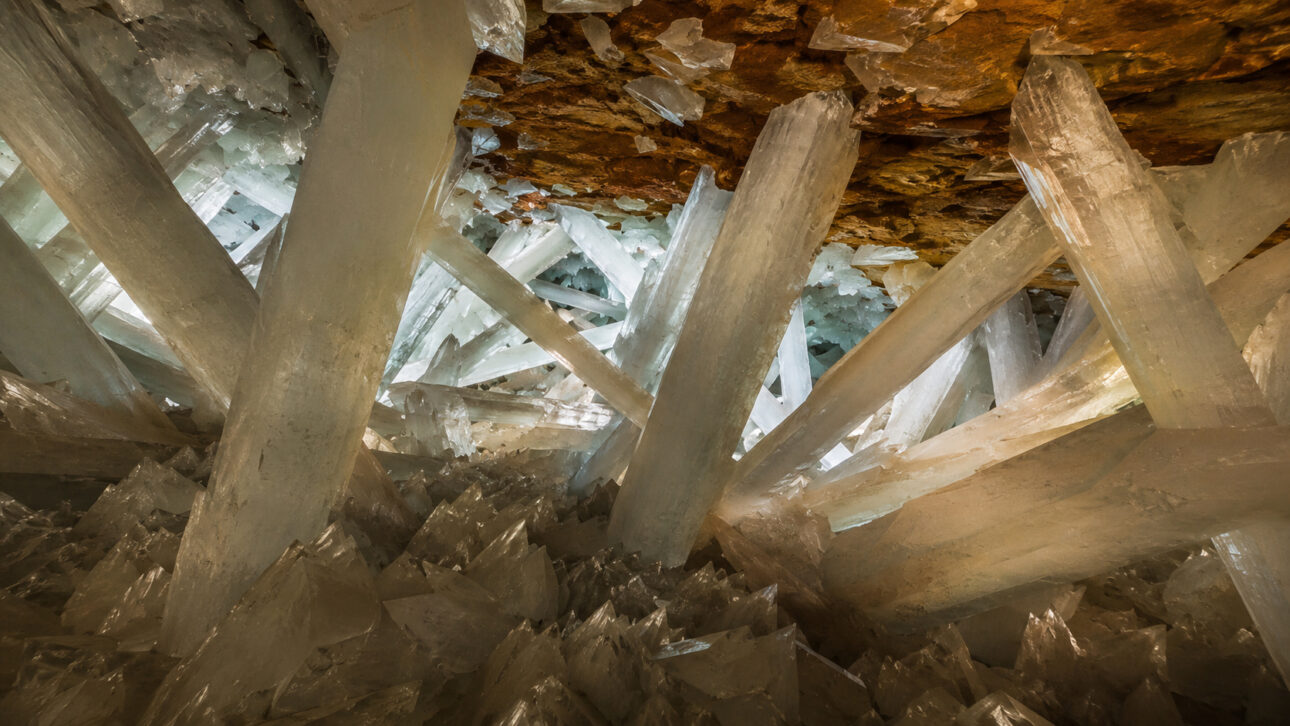
The revelation of this environment was only possible because mining activity artificially lowered the level of the underground water to allow the advancement of exploration. Without this drainage, the chamber would have remained submerged, as it did for most of its geological history.
Formation of the giant crystals of Naica required volcanic heat, mineral water, and stability close to 58 °C
The origin of these crystals begins with the volcanic activity that formed the Naica mountain about 26 million years ago. This process filled the region with anhydrite, an anhydrous form of calcium sulfate, in hot, mineral-rich groundwater.
The decisive point was the temperature. Above approximately 58 °C, anhydrite is the most stable phase; below this limit, gypsum becomes the stable form.
When the system slowly cooled to this critical range, the anhydrite began to dissolve and release calcium and sulfate at ideal levels for a few crystals to nucleate and grow without interruption.


This combination created a rare environment of minimal supersaturation, almost in equilibrium, the perfect condition to favor continuous growth instead of generating thousands of small crystals.
It was this extraordinarily stable equilibrium that allowed the giants of Naica to grow for hundreds of thousands of years.
Naica gypsum crystals grew so slowly that they took almost 1 million years to reach their current size
According to C&EN, studies conducted by Alexander Van Driessche, Juan Manuel García-Ruiz and colleagues measured in the laboratory the growth rate of gypsum with samples and water from the mine itself. The result indicated that the largest crystals would have taken almost 1 million years to reach their current dimensions.
The comparison used by the researchers helps to gauge the slowness of the process: the growth was equivalent to something like the thickness of a sheet of paper every 200 years.
In geological terms, it was a silent, continuous, and almost imperceptible construction, sustained by a temperature that remained for ages within the narrow ideal range for gypsum.
Extreme heat and humidity above 90% turned the Cave of Crystals into an almost lethal environment for humans
The beauty of the cave contrasts with the brutality of its microclimate. C&EN reports that the interior reaches about 50 °C, with relative humidity above 90%, while National Geographic describes the system around 58 °C during the crystal formation phase. In this moisture-saturated environment, sweat practically stops cooling the body.
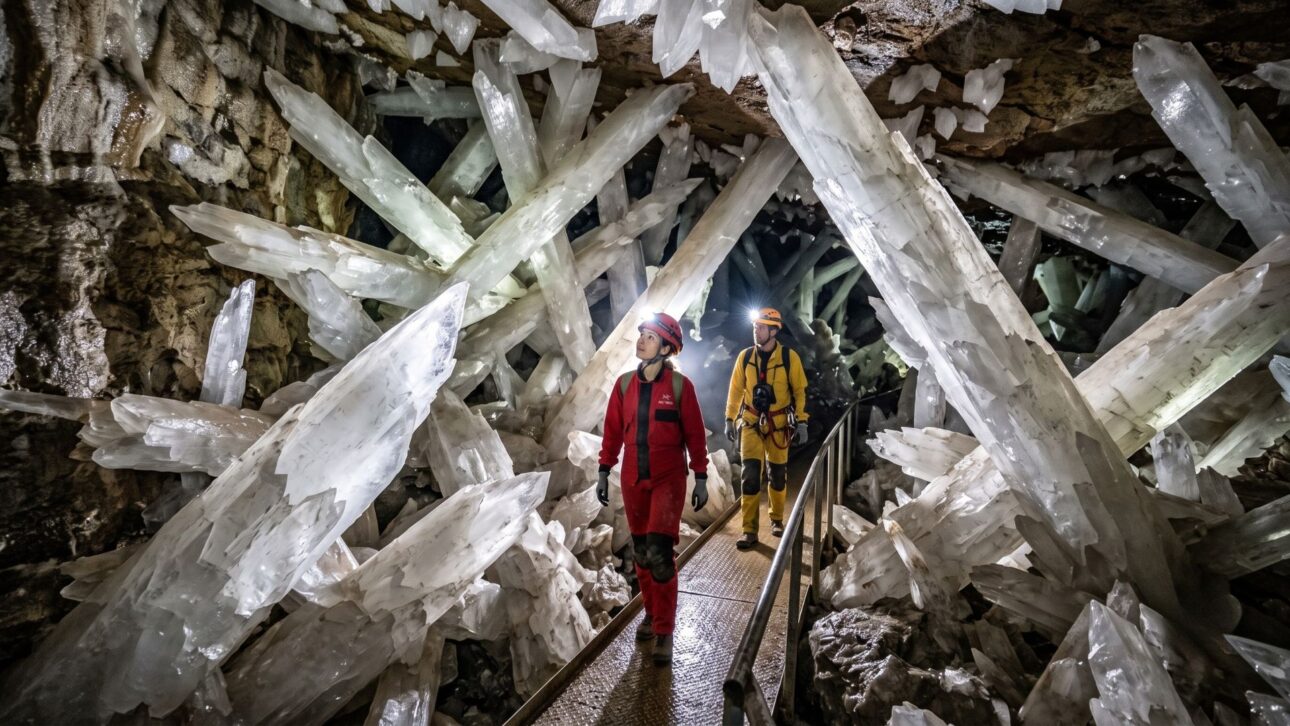
Due to these conditions, researchers could only stay in the chamber for 10 to 15 minutes at a time.
Access required strict protocols, medical checks, and special equipment to withstand the heat, condensation, and constant risk of disorientation or falling among the slippery gypsum beams.
Mine was flooded again and the crystals of Naica returned to the environment that allowed their growth
The exposure of the cave was always temporary because it depended directly on the continuous pumping of groundwater in the mine.
When this situation changed, the system refilled, and National Geographic reported in 2017 that the Naica mine was once again flooded by groundwater, leaving the crystals free to continue growing in their natural environment.

This return of the water has scientific and symbolic significance. The same hot and mineralized water that created the gypsum colossi is also the condition that protects and preserves them, preventing prolonged exposure to air and limiting human access to one of the most extreme geological wonders ever found.
Cave of the Crystals of Naica became a world reference in extreme geology and long-term mineral growth
The importance of Naica goes far beyond visual impact. The system has become a reference for studies on crystal growth, chemical balance in underground environments, transition between anhydrite and gypsum, and preservation of giant minerals in extreme conditions.
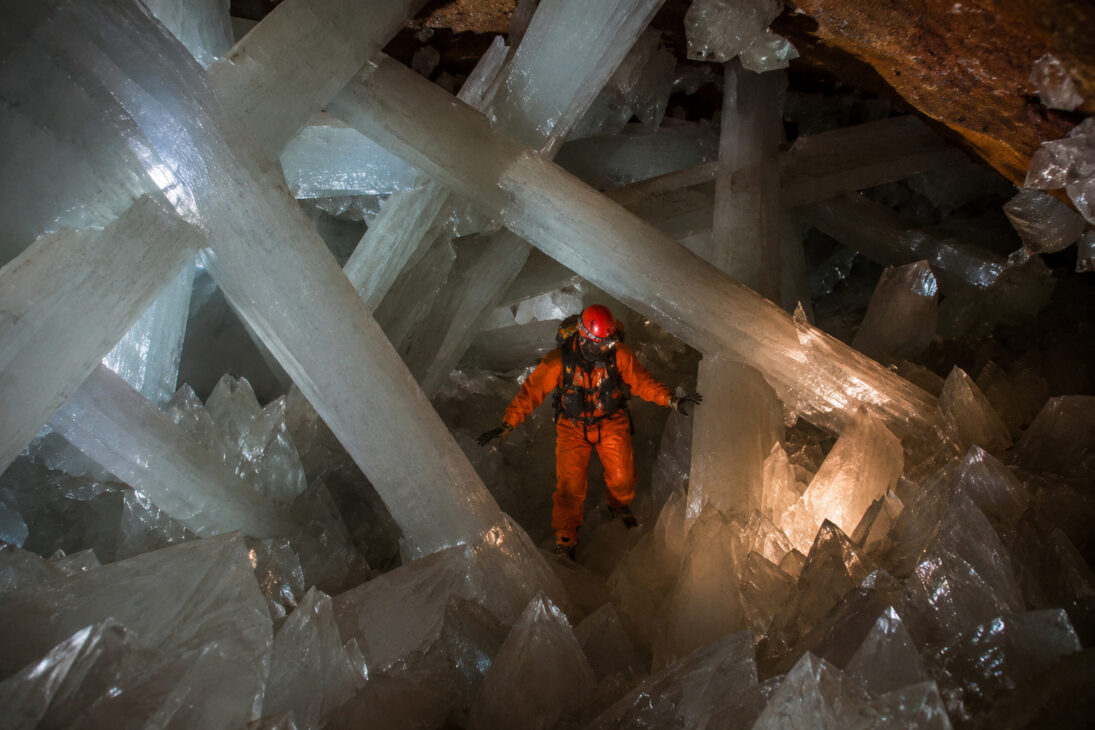
What the cave exposed was a natural process of almost absurd precision: volcanic heat, water rich in calcium sulfate, thermal stability near 58 °C, and sufficient geological time for crystals to grow to the scale of columns.
Few places on the planet simultaneously combine such colossal size, such a clear scientific explanation, and an environment so hostile to human presence.