Portuguese
  Spanish


The Bronze Age mines in Cabeza del Buey reveal copper, lead, silver, and stone tools, help reconstruct an ancient mining and trade chain, and reinforce research on the origin of Scandinavian bronze. The connection with Scandinavia is a hypothesis based on chemical and isotope analyses, not proof that all the metal used in that region came from Spain.
Six Bronze Age mines were identified near Cabeza del Buey, in the province of Badajoz, in southwestern Spain. The information was published by the University of Gothenburg, a Swedish public university focused on education and research. The survey took place between February 9 and 16, 2026, and the statement was published on February 20, 2026.
The mining areas had copper, lead, and silver, important materials for the production of objects and for trade among ancient European peoples. In one of the mines, archaeologists documented about 80 grooved stone tools, used to break and prepare the ore.
The finding helps to map a route that started with the extraction of the rock and could end far from there, after the smelting and transport of the metal. The analyses conducted on objects from Scandinavia create a possible link between southwestern Spain and part of the metal used 3,000 years ago.
-
XCMG Launches 240-Ton Mining Truck in Brazil, Promising Increased Productivity with Lower Fuel Consumption

-
Facing a housing shortage, Hong Kong uses prefabricated concrete modules to construct a 12-story public building with the help of massive cranes and trucks.
-
Brazilian City Innovates Waste Collection with Underground Vacuum System
-
Amsterdam Repurposes Retired Boats and Plants to Restore Contaminated Industrial Land Instead of Removing All Polluted Soil


Six Bronze Age mines show where the metal chain began
The marks on the dry ground reveal trenches opened to reach rocks with metal. This type of cut in the terrain indicates organized extraction, carried out by groups who knew the points where there was copper, lead, and silver ore.
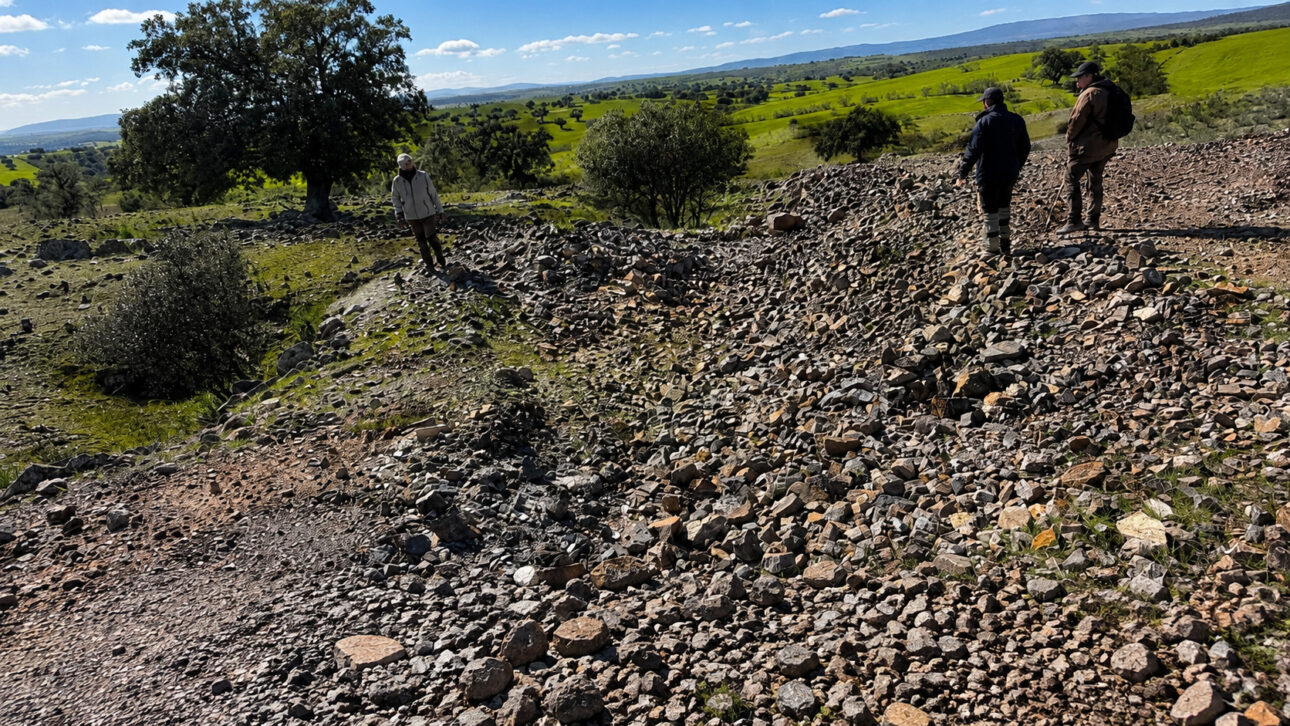
Ore is the rock that contains a quantity of metal inside it. Before becoming raw material for tools, weapons, or prestige objects, it needed to be extracted, broken, and separated from other stones.
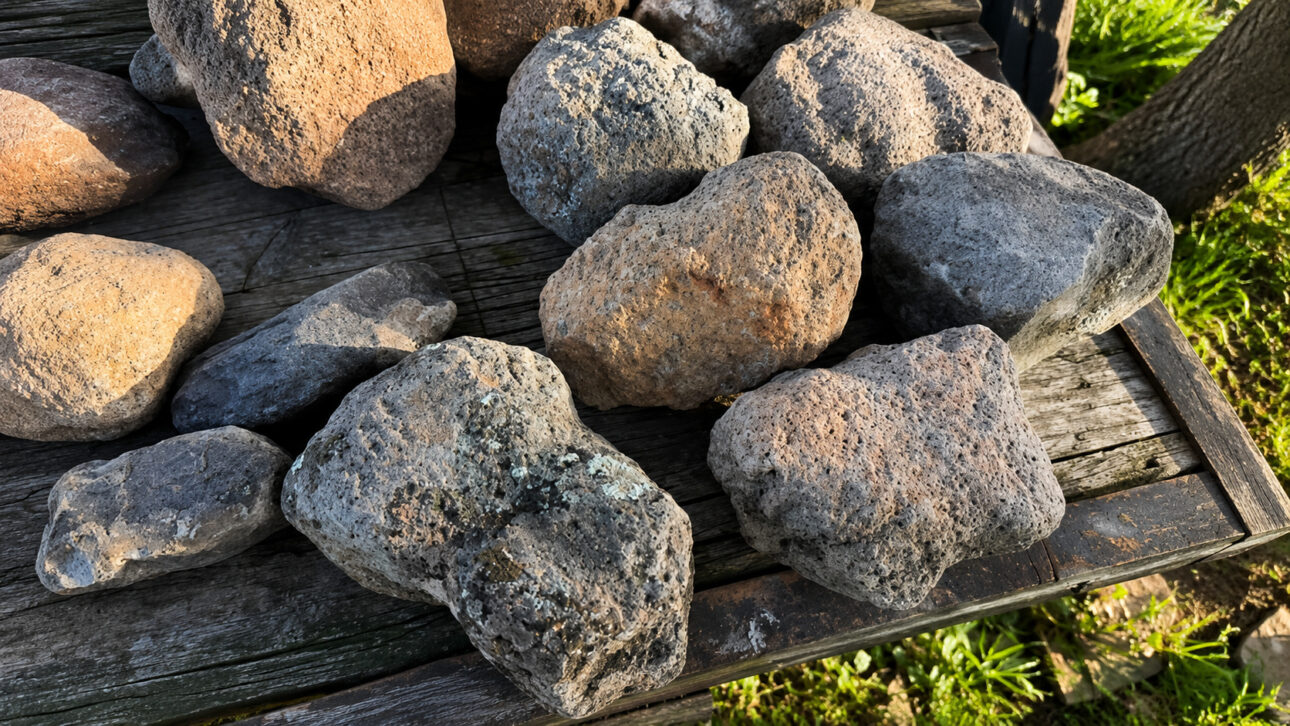
The stone tools found in one of the mines help visualize this work. They were used to crush and process the ore, an essential step to take the material to the foundry.
Copper, lead, and silver could cross Europe before becoming objects
Copper, lead, and silver had much greater value than the place from where they were extracted. These metals could be used in work objects, weapons, adornments, and items related to power and wealth.
Mining was just the beginning. After extraction, the ore went through breaking, preparation, transportation, and smelting. Smelting is the process of heating the metal so that it can be separated and molded.
This chain meant that a mine located in the interior of Spain could have an impact on distant regions. The metal did not need to remain near the extraction site to gain economic and social importance.
Chemical analyses bring Spain closer to Scandinavian bronze, but do not conclude the investigation
Researchers study the metal of ancient objects to find natural marks that help indicate their possible origin. Among these marks are lead isotopes, small differences present in the metal that function as a kind of signature.
Previous research found signs linking part of the metal present in Scandinavian artifacts to the southwest of Spain. The six now documented mines offer real locations to expand comparisons between rocks, ore, and ancient objects.
The most important caution is not to turn this clue into total certainty. The discovery does not prove that all Scandinavian bronze came from these mines, as other extraction areas may have participated in the Bronze Age metal routes.
About 80 stone tools show how the ore was prepared
University of Gothenburg, a Swedish public university focused on teaching and research, detailed that the survey brought together researchers from the University of Seville and archaeologists from the Provincial Archaeological Museum of Badajoz.
The group recorded six mining areas, with different sizes and signs of ore extraction. The mine with about 80 stone tools drew attention because these objects help explain how the material was broken before moving on to other stages.
The tools were not decorative items. They were part of the heavy work of opening the rock, reducing larger pieces, and preparing the ore. This detail brings the discovery closer to the routine of people who lived from mining thousands of years ago.
The current race for copper, nickel, lithium, and rare earths recalls the importance of ancient minerals
The comparison between the past and the present does not mean that the technology is the same. The difference lies in the equipment and uses, but the importance of access to mineral resources remains strong.
Today, copper, nickel, lithium, and rare earths appear in debates about batteries, electrical grids, engines, and energy equipment. Rare earths are elements used, among other functions, in magnets found in turbines and electric motors.
3,000 years ago, access to copper, lead, and silver could also influence production, trade, and relations between peoples. The new discovery helps show that the dependence on strategic minerals is not a recent topic.
The mines of Spain help reveal a more connected ancient Europe
The identification of the six mines reinforces the idea that ancient Europe maintained extensive trade networks. The metal extracted in one region could travel long distances before becoming an object elsewhere.
The trenches opened in the ground, the ore, and the stone tools allow us to trace the beginning of this route. From there, researchers can compare the materials found in Spain with artifacts from other parts of the continent.
The most important result is not a definitive answer about the origin of all Scandinavian bronze. It is the opening of new clues to understand how extraction, transport, and smelting connected peoples separated by great distances.
The six copper, lead, and silver mines reveal that mining already supported a broad chain of work and material circulation 3,000 years ago. The discovery also strengthens the investigation into the origin of some of the metal found in Scandinavia.
There is still much to investigate about these ancient routes, but the documented tools and mines offer a concrete starting point. Each new analysis can bring archaeologists closer to a larger story about trade, technique, and the circulation of wealth in Bronze Age Europe.
Did you imagine that the metal extracted in Spain could have traveled so far 3,000 years ago? Tell us in the comments and share this discovery with those who love history and archaeology.