Portuguese
  Spanish


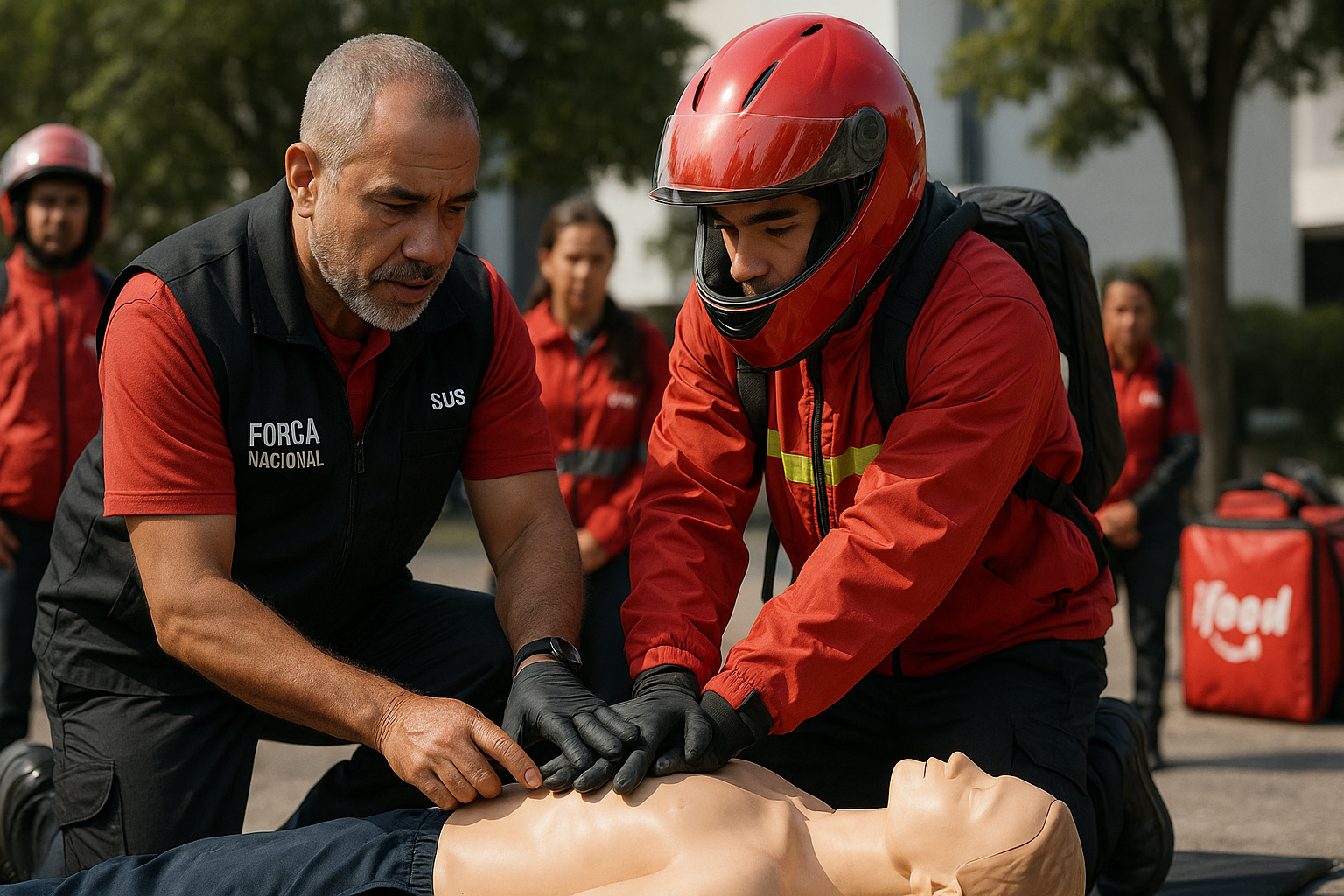


New Phase of the Anjos de Capacete Program Turns App Workers into Prevention Agents with Support from the National SUS Force.
The Ministry of Health and iFood have joined efforts to enhance safety on the streets of Brazil. On October 29, 2025, a pioneering training was held in São Paulo, training 100 delivery workers ready to act in emergencies. The goal was clear: to prepare professionals to provide first aid until specialized rescue arrives.
The event marked a new phase of the Anjos de Capacete Program, created by iFood in 2020 and now integrated into the Unified Health System (SUS). The action included the presence of the National SUS Force (FN-SUS) and took place on the campus of Zumbi dos Palmares University, which provided its facilities for theoretical and practical classes.
Practical Training and Delivery of Safety Equipment
During the course, participants learned resuscitation and immobilization techniques through real accident simulations. Thus, they could understand how to act quickly in critical situations. In addition, they received helmets, jackets, first aid kits, and certificates valid for two years. With this, they reinforced their commitment to prevention and the protection of life.
-
Mother discovers she may have won £12 million in the lottery but faces an agonizing wait after the shopkeeper threw the ticket in the trash.

-
A couple bought a house in Sheffield and, when removing the carpet from the hallway, found a trapdoor leading to a secret 23 m² basement with a 2-meter ceiling height, a discovery that eliminated the need for an expensive extension and, according to them, added £70,000 to the property’s value.

-
A nurse bought for 20,000 a 1955 house abandoned by a hoarder in Texas, and months later, rain revealed a buried pool in the backyard valued at $160,000, which he restored himself for about $10,000, a fraction of the cost of building a new one.
-
The United Kingdom is transforming dog feces left on trails into gas to light a streetlamp through an unlikely and surprising project that shows how even one of the most rejected wastes in cities can generate energy.




According to the Ministry of Health, this action is part of a national policy for citizen training and rapid response to urban emergencies. Thus, the program transforms delivery workers into multipliers of care, solidarity, and public safety.
Strategic Partnership Between SUS and the Private Sector
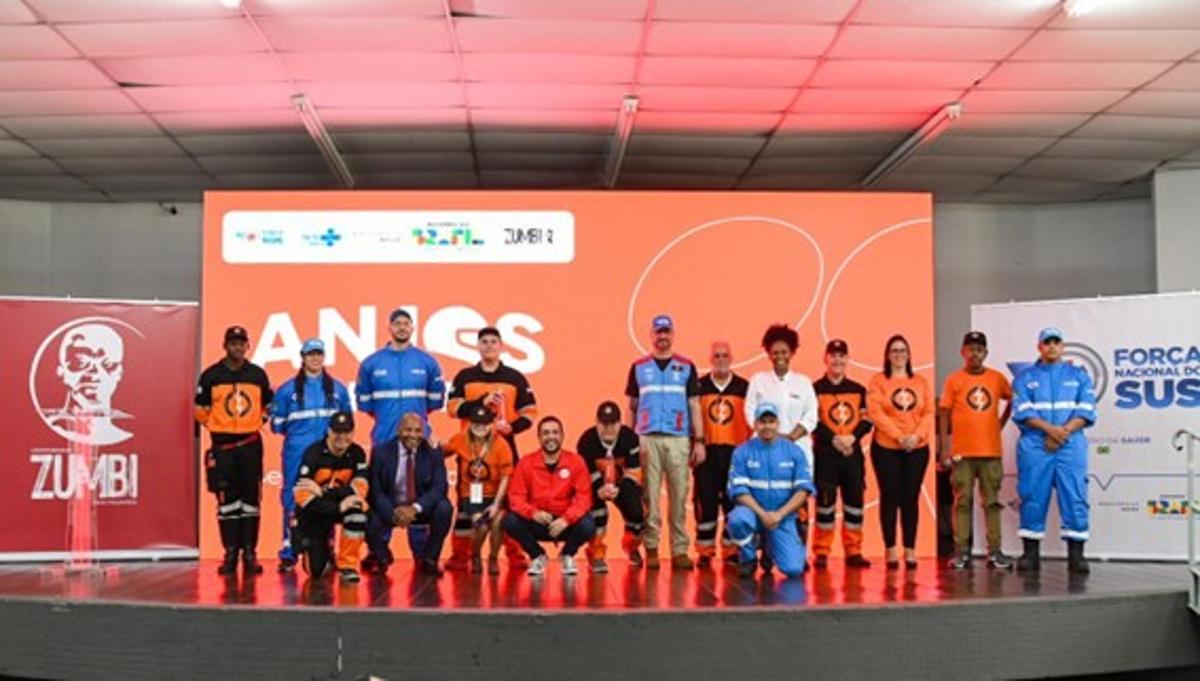
The Minister of Health, Alexandre Padilha, highlighted that the partnership enhances the role of SUS as an active network for protecting life. He stated: “This is a great day for training and valuing app workers. With the union between the Ministry and iFood, we strengthen the commitment to save lives on the streets and in communities.”
Additionally, Padilha emphasized that the National SUS Force operates in major events and disasters across the country. Now, it will also train ordinary citizens to act efficiently in emergencies, combining technology, citizenship, and public health.
Delivery Workers Celebrate Learning and Highlight Social Impact
For delivery workers, the learning represents much more than just training. The professional Pedro Júnior Roseno, who has worked for eight years on the streets of São Paulo, shared that he had never participated in anything like this before. “We see accidents every day. Now, with this course, we know how to act and help until the rescue arrives. This changes how we view work and the city,” he said.
This testimony summarizes the positive impact of the initiative, which reinforces the sense of solidarity and social responsibility among app workers. Furthermore, it enhances collective awareness about safety and prevention.
Anjos de Capacete Expands and Reinforces Commitment to Life
Since 2020, the Anjos de Capacete Program has already trained over 670 delivery workers in various regions of Brazil. The initiative promotes health education, traffic safety, and the value of life.
In August 2025, the Ministry of Health and iFood established a cooperation agreement to expand the program’s actions. Thus, the project began to integrate preventive education actions, emergency response, and strengthening the public healthcare network. This advancement represents an innovative partnership model that unites the public sector and private sector for the collective well-being.
Citizenship, Prevention, and Public Safety Go Hand in Hand
The union between iFood and the Ministry of Health symbolizes a structural change in the way safety and prevention are promoted. Through continuous training, the country creates a network of citizens prepared to act in critical moments. This way, it reduces risks and strengthens security in cities.
Moreover, this cooperation positions Brazil as a reference in innovative public policies, uniting technology companies, educational institutions, and health agencies. All this in favor of saving lives and ensuring safer traffic.
As new phases of the program are already being planned for other states, the expectation of national expansion grows. The Anjos de Capacete is expected to continue inspiring companies and workers to adopt the same commitment to life. After all, when each citizen learns to care for others, the whole society becomes stronger and more humane.
What do you think should be a priority for Brazil: expand training for delivery workers to save lives on the streets or extend the project to other urban sectors, such as drivers and community security guards?