






 Portuguese
  Spanish


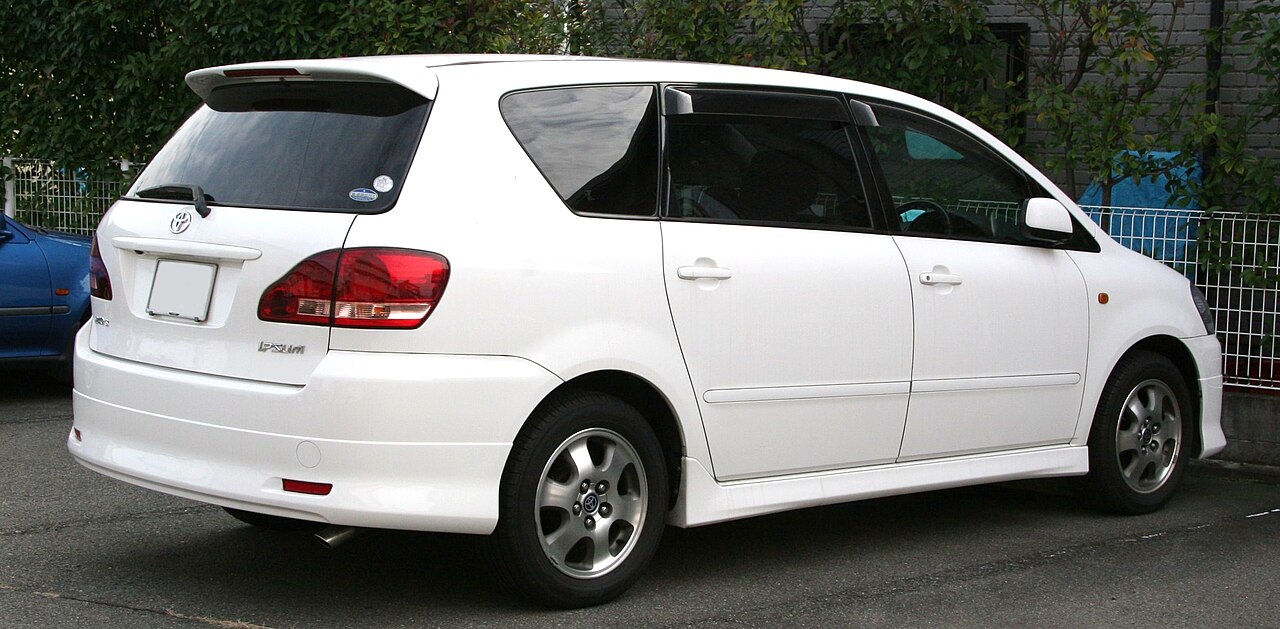


Get To Know The Toyota Ipsum, Japanese Minivan With 7 Seats And Refined Interior That Combines Comfort, Powerful 2.0 Engine, And Family Versatility, But Remains Outside The Brazilian Market
The Toyota Ipsum is a Japanese minivan with 7 seats that impresses with its balance between interior space, premium finish, and robust engine. While many consider it an ideal option for large families, long trips, and comfortable urban use, the model has never been officially sold in Brazil. This raises the question: why is such a complete and functional minivan like the Toyota Ipsum not available for purchase in our market?
Understand all the details of the Toyota Ipsum, from its technical specifications, available versions, to the reasons that limit its presence in Brazil. You will also see how the model positions itself in relation to other global minivans and what alternatives exist for those looking for a similar vehicle.
What Is The Toyota Ipsum?
Launched initially in 1995 and manufactured until 2009, the Toyota Ipsum is a Toyota minivan aimed at the Asian market, especially Japan. In some countries, such as Australia, it was sold under the name Toyota Avensis Verso, and in other markets, such as Europe, it gained the name Toyota Picnic.
-
London buses run on biofuel made from coffee grounds, turning café waste into sustainable public transport fuel without engine modifications.

-
Major Automaker Considers Closing 4 Factories, Putting 45,000 Jobs at Risk Amid Chinese Competition in Brazil

-
Formula 1 Drivers to Swap Million-Dollar Cars for Lego Karts with 28,000 Pieces and Electric Motors at Silverstone, Reaching Speeds of 25 km/h

-
Children Turn $600,000 Ferrari into Slide, Sparking Legal Dispute in China After Video Surpasses 60 Million Views



It is a mid-size model, capable of up to seven occupants, that stands out for its modular seating, onboard comfort, extensive equipment list, and reliable mechanics. During its production, it went through two generations:
- First Generation (1995–2001): 2.0 gasoline engine, versions with front-wheel drive (FWD) or all-wheel drive (AWD).
- Second Generation (2001–2009): new 2.0 and 2.4 engines, updated design, more safety and onboard technology.
Premium Finish And Comfort: The Great Differential Of The Japanese Minivan
Unlike many popular minivans in Brazil, such as the Chevrolet Zafira and Fiat Doblò, the Toyota Ipsum bets on higher quality materials and a more refined finish, reminiscent of the standard of the brand’s medium and large sedans.


Velvet upholstery, covered panels, wooden details, and ergonomic controls are just a few examples.
In addition, the model offers:
- Digital air conditioning with rear controls;
- Reclining and foldable seats in the third row;
- Sound system with steering wheel controls;
- Isofix for child seats;
- Front and side airbags (in newer versions);
- ABS brakes with EBD.
This set places the Japanese minivan at a level above average in comfort, especially considering the year of manufacture and the segment it belongs to.
Reliable 2.0 Engine And Balanced Performance Of The 7-Seat Minivan
The Toyota Ipsum was primarily equipped with the 2.0 16V engine from the 1AZ-FE family, also used in models like the RAV4 and Camry. This engine delivers about 150 hp and torque around 20 kgfm, with a four-speed automatic transmission.
Although not focused on sportiness, the 7-seat minivan manages to deliver honest performance, with smooth acceleration and adequate responses for family use.
Technical Specifications of The Toyota Ipsum (2nd Generation – 2001 to 2009)
| Item | Details |
| Manufacturer | Toyota Motor Corporation |
| Official Name (Japan) | Toyota Ipsum |
| Other Names | Toyota Picnic (Europe), Avensis Verso (Australia) |
| Segment | 7-Seat Minivan |
| Engine | 2.0 16V (1AZ-FE) / 2.4 16V (2AZ-FE) |
| Power (2.0) | Approximately 150 hp at 5,700 rpm |
| Torque (2.0) | About 20 kgfm at 4,000 rpm |
| Drive | Front (FWD) or all-wheel drive (AWD) |
| Length | 4,610 mm |
| Width | 1,775 mm |
| Height | 1,660 mm |
| Wheelbase | 2,820 mm |
| Passenger Capacity | 7 occupants (with folding seats) |
| Trunk | Variable (depending on seat use) |
| Airbags | Front and side airbags (in more equipped versions) |
| Brakes | Disc brakes on all four wheels with ABS and EBD |
Why Has The Toyota Ipsum Never Been Sold In Brazil?
Despite being a Toyota minivan praised for reliability, comfort, and interior space, the Ipsum has never been officially offered in Brazil. The main reasons involve:
Toyota Market Strategy
In the 1990s and 2000s, Toyota Brazil focused its production and importation on more mainstream models, such as Corolla, Hilux, and SW4. Niche vehicles, such as minivans, were not on the local brand’s radar, especially since the segment was already dominated by Zafira, Scenic, and Doblò.
Importation And Adaptation Costs
Importing the Ipsum would require adaptations to Brazilian regulations, such as emissions, safety standards, and compatibility with ethanol. This would significantly increase costs and make the model less competitive compared to local vehicles.
Low Demand For Premium Minivans
In Brazil, consumers looking for space and comfort typically migrate to SUVs or crossovers. Minivans with a traditional look, like the Ipsum, have low acceptance in the current market — a factor that discourages any attempts for an official launch.
Is It Possible To Buy The Japanese Minivan In Brazil?
Even without official importation, some units of the Toyota Ipsum have arrived in Brazil through independent importers, especially in São Paulo and Paraná. However, they are extremely rare, and finding parts or technical assistance can be a challenge.
Moreover, vehicles imported directly from other Asian countries or Oceania face difficulties in documentation, insurance, and maintenance.
Those wishing to import a used unit should consider:
- High shipping, tax, and nationalization costs;
- Legal limitations regarding the year of manufacture;
- Possible lack of parts in the national market.
Alternatives To The Toyota Ipsum In Brazil
For those looking for a 7-seat minivan similar to the Toyota Ipsum, there are some alternatives available in the national market, although few offer the same balance of price, space, and finish:
- Chevrolet Zafira: National model with seven seats and a 2.0 engine, but with a simpler finish.
- Toyota SW4: SUV with seven seats, more robust and expensive, but with Toyota reliability.
- Chrysler Town & Country: Imported, spacious and comfortable, but with more complex maintenance.
- Kia Carnival: Premium minivan with a V6 engine, closer to the Ipsum’s proposal, but less accessible.
None of them, however, deliver the exact package of the Japanese minivan from Toyota, which combines premium finish, reliable engine, and practical design for urban daily use and long trips.
A Complete Minivan That Brazil Lost
The Toyota Ipsum is undoubtedly one of the most complete minivans ever produced by Toyota. With 7 seats, refined finish, reliable engine, and comfort equipment, it provides an almost perfect set for those who need space without sacrificing quality.
Unfortunately, the model never officially arrived in Brazil, whether due to commercial limitations, lack of demand, or the brand’s focus on other segments. Today, the Ipsum has become a coveted rarity among collectors and enthusiasts of Japanese vehicles.
For those who value practicality, comfort, and durability, knowing the history and specifications of the Toyota Ipsum is more than curiosity: it is discovering the potential of a car that could have made history in the national market.





Minha Kia carens não mencionada e top Tb show de carro.
moro no japao e possui a primeira versão e a segunda gostei muito do conforto sim essa versão é a S esportivo luxuosa eu tinha igual pena que bebia demais na cidade uns 8 a 9 km por litro agora achar uma dessa é difícil