






 Portuguese
  Spanish


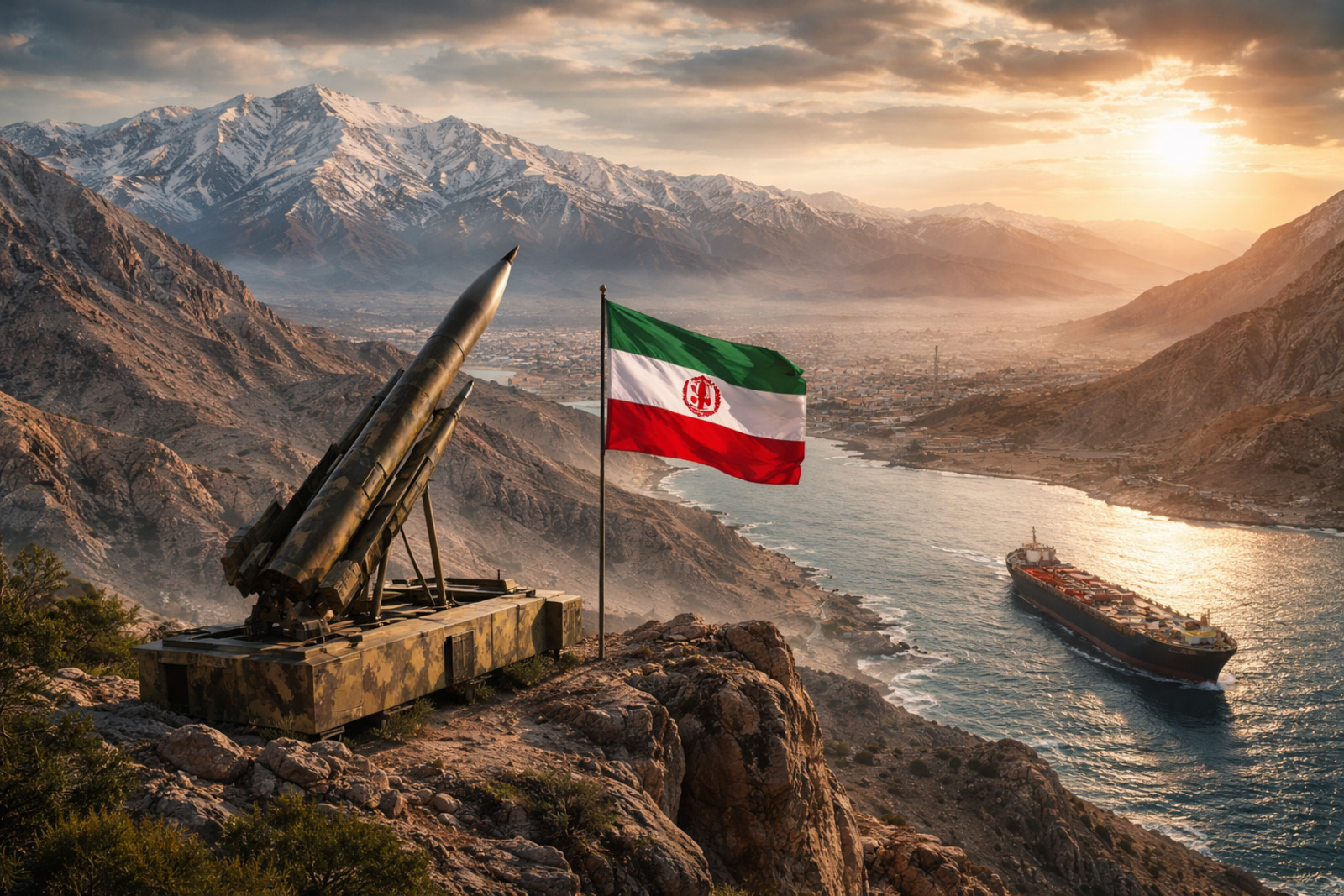

Mountains, extreme deserts, 90 million inhabitants, decentralized defense, and control of the Strait of Hormuz help explain why invading Iran would be so difficult
Iran combines mountains, extreme deserts, 90 million inhabitants, decentralized defense, and its position at the Strait of Hormuz, a combination that turns any land invasion into a high-cost operation, slow advance, and risk to energy, occupation, and economic stability.
Mountains that close the way
When talking about Iran, geography appears as a decisive factor. The country is at the meeting point of three tectonic plates, which have shaped a territory compared to a natural bunker.
Unlike flat areas, such as Iraq, Iran is surrounded by mountain barriers that hinder advances by land. Experts consider the country one of the most difficult to invade.
-
Chinese Nuclear Submarine Launches Simulated Warhead Missile in Pacific, Heightening Regional Tensions Amid Naval Drills with Russia Near Qingdao; New Zealand and Papua New Guinea Warn of Persistent Chinese Military Presence

-
Ayatollah Ali Khamenei’s Funeral Draws 15 to 20 Million in Tehran, Calls for Revenge Against Trump After Joint Israel-U.S. Attack

-
U.S. Establishes Permanent Embassy in Jerusalem, Reigniting International Debate Over Israel’s Capital
-
The world has nearly 12,000 nuclear warheads, with the majority held by the United States and Russia; see the figures for China, France, and the United Kingdom.


The Zagros Mountains, in the west and south, form an extensive barrier. Its narrow valleys would limit the movement of tanks and convoys, leaving invading forces confined and exposed to ambushes.
In the north, the Alborz Mountains reinforce the protection. With peaks over 4,000 meters, they defend access to the central region of the country and the Iranian political heart, where Tehran is located.
Bottlenecks and slow advance
These formations create natural bottlenecks. For armies, this would mean advancing slowly through winding canyons, under constant risk of attacks from local forces on high ground.
A land invasion of Iran, in this scenario, would become a logistical nightmare. In many cases, the advance would be deemed unfeasible due to the combination of terrain, distance, and operational wear.
Complicated geography: Deserts that become traps
The Iranian interior amplifies the difficulties. In the Dasht-e Kavir desert, there is a crust of salt that appears firm but can give way under the weight of heavy vehicles, causing tanks to get stuck in salty mud.
In the Dasht-e Lut, the challenge is the extreme heat. The surface has recorded temperatures up to 70 °C, a temperature capable of compromising equipment and troops in a few hours, as well as increasing pressure on the supply chain.
It would not just be a matter of human endurance. Fuel, water, maintenance, and spare parts would have to cross thousands of kilometers in a hostile environment, increasing costs, delays, and vulnerabilities.
The weight of occupation
Even with a successful initial offensive, maintaining stable control of Iran would be another challenge. With about 90 million inhabitants, military calculations indicate the need for 20 to 25 soldiers for every thousand civilians.
This would lead to something close to 1.8 million military personnel. The total exceeds the full active force of the United States today, showing the scale required for a prolonged occupation.
Distributed defense and global impact
The Iranian doctrine reinforces this natural protection. In the so-called mosaic defense, the country is divided into 31 provinces with relatively autonomous commands, preventing the fall of the capital from causing automatic surrender.
Iran maintains underground facilities. Arsenals and strategic centers are located beneath thick layers of rock, protected from most conventional bombs.
There is the Strait of Hormuz. Iran controls its eastern shore, through which about a quarter of the world’s oil passes. In open war, blocking the route could trigger a spike in energy prices and a global recession.
With information from Xataka.


