






 Portuguese
  Spanish
  3 min of reading
  1 comment


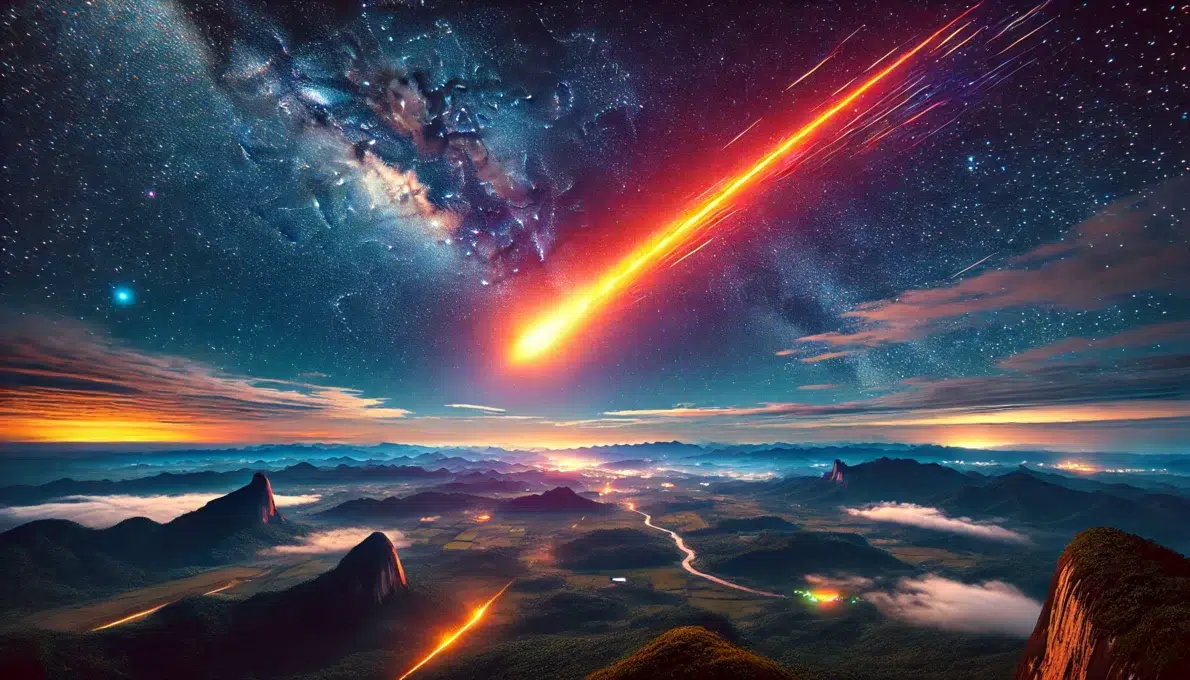

After Years Of Study, Scientists Have Finally Discovered The Origin Of Most Meteorites. Understand This Impressive Discovery And The Impact It Will Have On Our Understanding Of The Universe!
A surprising discovery may finally reveal the origin of most meteorites that reach Earth. Researchers have made impressive advances, but what is behind these space rocks that cross our sky? Continue Reading To Understand How This Investigation May Transform What We Know About The Mysteries Of Space.
This discovery was led by researchers from CNRS, the European Southern Observatory (ESO), and Charles University, and brings an unprecedented understanding of the origin of meteorites that hit Earth.
The Origin Of Meteorites
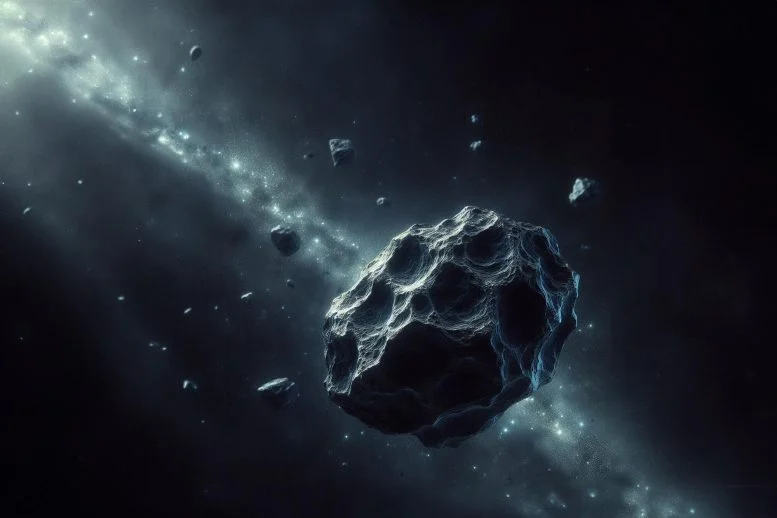
According to the study, 70% of meteorites originate from three families of young asteroids formed by large collisions in the main asteroid belt, which occurred about 5.8, 7.5, and approximately 40 million years ago.
-
Brazilian student creates a cheap formula that makes plants grow up to 90% faster and wins an award in a global scientific competition.

-
Europe unveils armored tank with remote turret, 1,500 horsepower, and 120-millimeter cannon

-
Old hard drives may hide neodymium, dysprosium, praseodymium, and terbium, and a United States company is expanding its network with a new 93,000-square-foot facility to recover rare earths used in electric cars, artificial intelligence, defense, and renewable energy.

-
Giant crane lifts up to 3,000 tons, requires special logistics to reach the site, and can transform 18-hour operations into just 3 hours, speeding up the hoisting of oil platforms, refineries, and plants in giant industrial projects.




These families, known as Karin, Koronis, and Massalia, have been identified as responsible for a large part of the space rocks that reach Earth. In particular, the Massalia family accounted for 37% of the meteorites.
Before this discovery, the origin of about 94% of meteorites was unknown. While it was known that 6% came from the Moon, Mars, or the asteroid Vesta, most meteorites—composed mainly of ordinary chondrites—had unknown sources.
Why Are These Families Important?
The reason these three families are the source of so many meteorites is linked to their youth in the astronomical context. These families of asteroids are characterized by an abundance of small fragments resulting from collisions. This large number of fragments increases the risk of new collisions, which can propel meteorites in the direction of Earth.
On the other hand, the families of asteroids formed longer ago have already undergone erosion and dynamic collisions, depleting themselves over millions of years. Over time, the remaining fragments have been eliminated, making these ancient families exhausted sources of meteorites.
Tracking The Genealogical Tree Of Meteorites
The identification of these families and their contributions to the meteorites that reach Earth was made possible through meticulous telescopic observation of asteroid compositions in the main belt, combined with computer simulations. These methods allowed scientists to trace the “genealogical tree” of meteorites and asteroids, revealing the origins of chondrites and achondrites, as well as clarifying the origin of meteorites from the Moon, Mars, and Vesta.
This research also allowed for tracking large asteroids with potential threats to life on Earth. Asteroids such as Ryugu and Bennu, recently sampled by the Hayabusa2 and OSIRIS-REx space missions, have been identified as belonging to the Polana family, another important group of asteroids.
Next Steps In Research
Although over 90% of meteorites already have their origins identified, research is far from over. Scientists are still seeking to understand the origin of the remaining 10% of meteorites and plan to focus on new families of asteroids that have emerged in the last 50 million years.
This quest for answers about the origins of meteorites not only helps science better understand the solar system, but it is also crucial for planetary safety. The possibility of predicting future impacts from dangerous meteorites can help prevent disasters on our planet, and new discoveries can emerge at any moment.
Discoveries about the origin of meteorites are a significant breakthrough for planetary science. With the use of advanced telescopes and computer simulations, scientists are increasingly close to unraveling the mysteries of space and their implications for Earth.
If you want to stay updated on the latest space discoveries and how they may affect the future of humanity, continue following the updates in astronomical science.









Excelente descoberta. Em breve poderemos eliminar as grandes rochas antes que cheguem no Planeta Terra com o poder do raio laser. ⚜️🙌🙏🙌🍷