






 Portuguese
  Spanish


European City Adopts Technology to Transform Pedaled Kilometers into Financial Rewards, Prizes, and Environmental Data, with Positive Impact on Urban Mobility and Public Health.
Residents of Utrecht, in the Netherlands, participate in an innovative program that converts pedaled kilometers into real benefits, including cash, prizes, and discounts.
The “Snuffelfiets” — or “Bike Benefit Program” — uses technology to monitor routes and reward cyclists for sustainable habits.
How the Cycling Credit Program Works
Cyclists install smart sensors on their bicycles that automatically record the route, time, air quality, road conditions, humidity, and temperature.
-
Heatwave in Europe Causes Drownings: France Reports 40 Victims as Temperatures Soar to 40°C, Experts Issue Surprising Warning

-
French Solar Mirror Array Concentrates Sunlight 16,000 Times, Reaching Temperatures Over 3,000°C

-
Brazil to Use Reinforced Concrete in $200.4 Million Mega Roundabout Project with Four Overpasses and Expanded Bridge, Set to Last 630 Days
-
China Builds Underwater Wall After Discovering Technology That Could Shift Military Balance in the Pacific, Study Reveals Why the Asian Power Reacted Now


The information is sent to an app and an open data dashboard, where users can track their routes and accumulated points.
In practice, for each section pedaled in specific areas, credits are accumulated.
These credits can be exchanged for discounts at local businesses, food, public transport reminders, or even donations to social causes.
The system is managed through an app, allowing for simple and transparent use.
Goals and Benefits of Urban Cycling Incentives
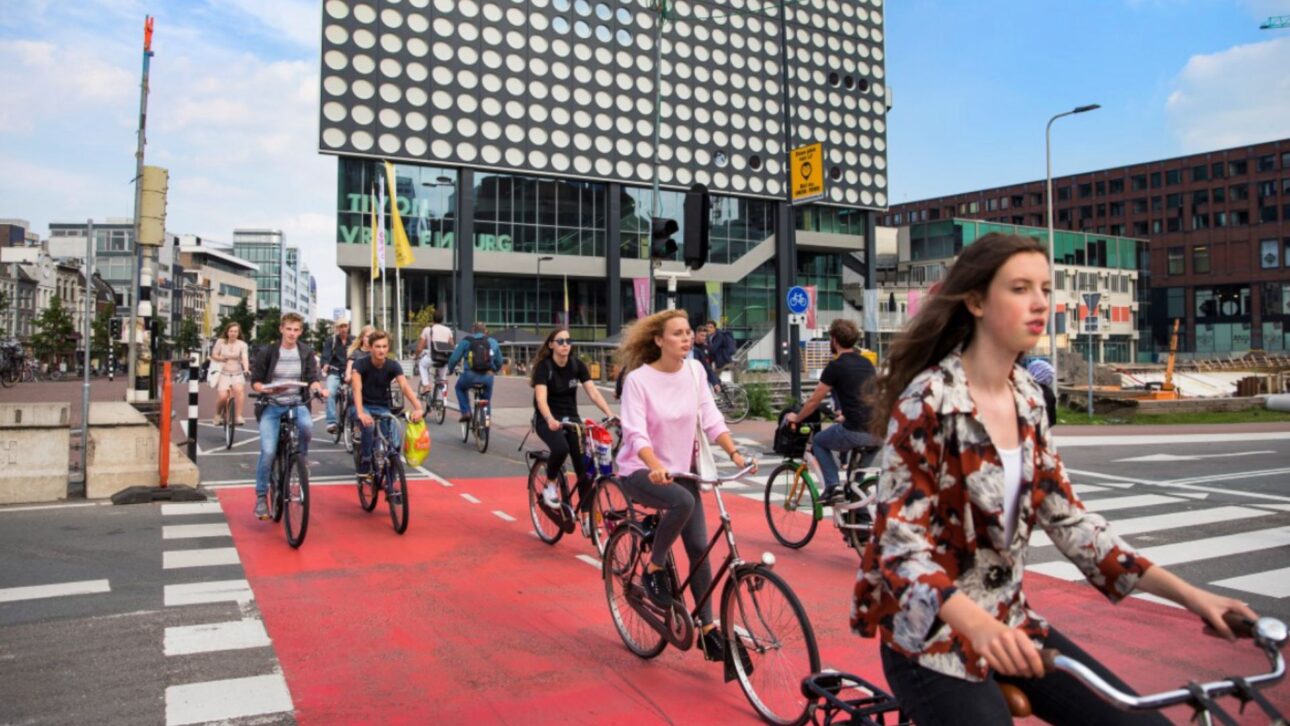
Utrecht created the “Snuffelfiets” with three main goals: reduce car traffic, improve air quality, and encourage healthy habits.
The incentive to cycle at alternative times also helps to dilute the flow during peak hours, integrating local economy and sustainable mobility.
The city invests in modern cycling infrastructure, with quality bike lanes, spacious bike parking — including the world’s largest bike parking, with over 12,500 spaces — and inter-neighborhood challenges among companies and schools.
Utrecht as a Reference in Sustainable Mobility
Several features highlight Utrecht as a global example of sustainable mobility:
- More Bicycles than Residents: there are about 1.3 bicycles per person in the Netherlands, with an average of 15 billion km cycled annually in the country, about 880 km per resident.
- The Largest Bike Parking in the World: located next to Utrecht’s central station, with over 12,500 spaces.
- Corporate Initiatives: companies offer incentives and reimbursements for employees who use bicycles for their commute.
- Real-Time Monitoring: data on the use of bike lanes are openly shared, based on sensors like the “Snuffelfiets”.
- Expansion of the Initiative: the model has already been replicated in other Dutch cities, like Eindhoven, and adopted in Brussels.
Expansion of the Snuffelfiets in Other Cities
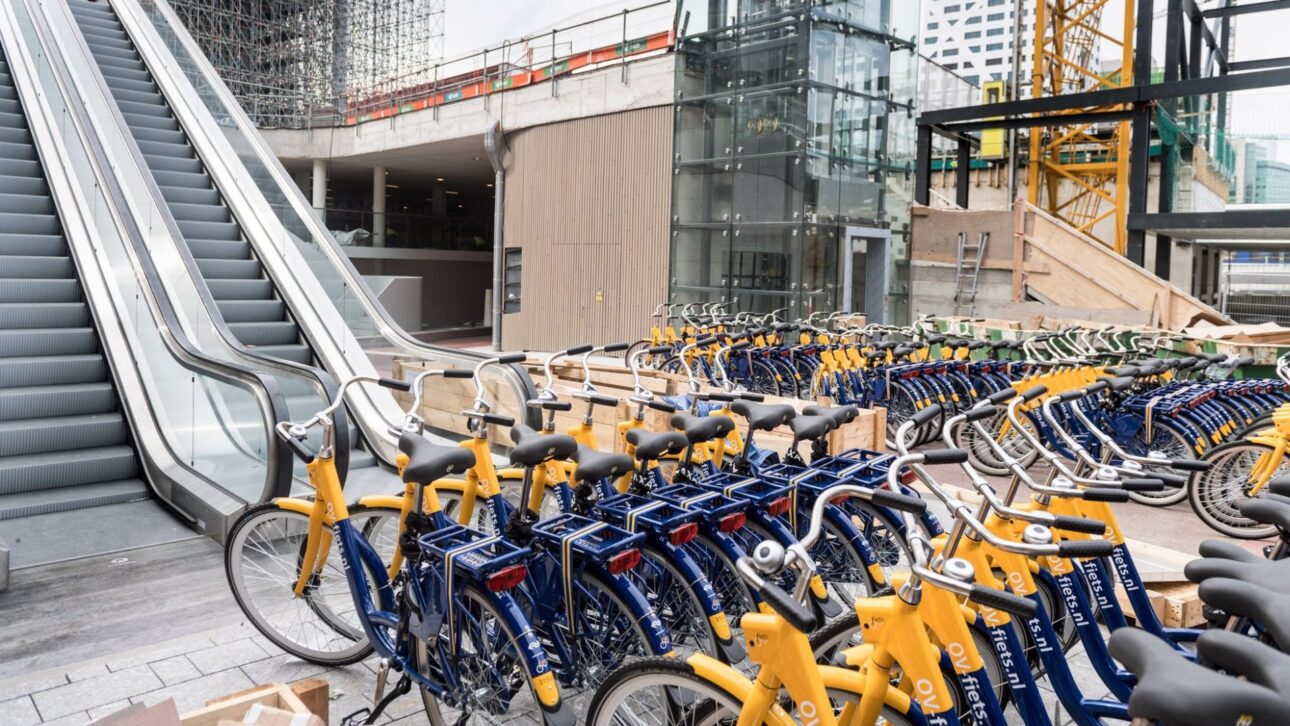
The pilot project started with 10 bicycles in the city of Zeist and quickly grew to 500 units in the province of Utrecht and another 50 in Gelderland.
The collaboration involves the province, the National Institute for Public Health and the Environment (RIVM), the sensor company SODAQ, and the data platform Civity.
The captured data — air particles, temperature, humidity ions, and road conditions — are validated by the RIVM, ensuring quality and reliability.
This information helps citizens choose routes with less pollution, public authorities to map “heat islands” in urban areas, and managers to monitor vibrations and potholes in bike lanes.
Positive Environmental and Social Impact
- Cleaner Air: mobile sensors allow for precise understanding of where and when pollution peaks occur. The mapping covers permanent locations ignored by fixed stations.
- Efficient Infrastructure: data on traffic conditions and road surface guides quick repairs and improvements.
- Health Impact: alternative and less polluted routes reduce risk for people with respiratory diseases. With the app, the cyclist can avoid critical locations.


Technology Behind the Cycling Benefit
The “sniffer bike” system integrates IoT devices with the FIWARE API and collects data through accelerometers, particle sensors (PM), temperature, humidity, and organic gases.
The novelty includes enhancements for nitrogen oxide detection, equipment size reduction, and the possibility of installation on shared bicycles — like those in the OV-fiets system — maintaining resistance to vandalism.
Challenges and Results of Utrecht’s Program
Utrecht has over 360,000 residents (700,000 in the metropolitan area) and aims, by 2023, to have 50% of trips up to 15 km made by bicycle.
By 2025, the program will compile data from over 500 volunteers, covering the entire bike lane network in the province.
However, there are currently no public data quantifying the average financial value of credits per pedaled kilometer — or the total volume of prizes distributed in 2025. This information is not available in open sources.


