






 Portuguese
  Spanish


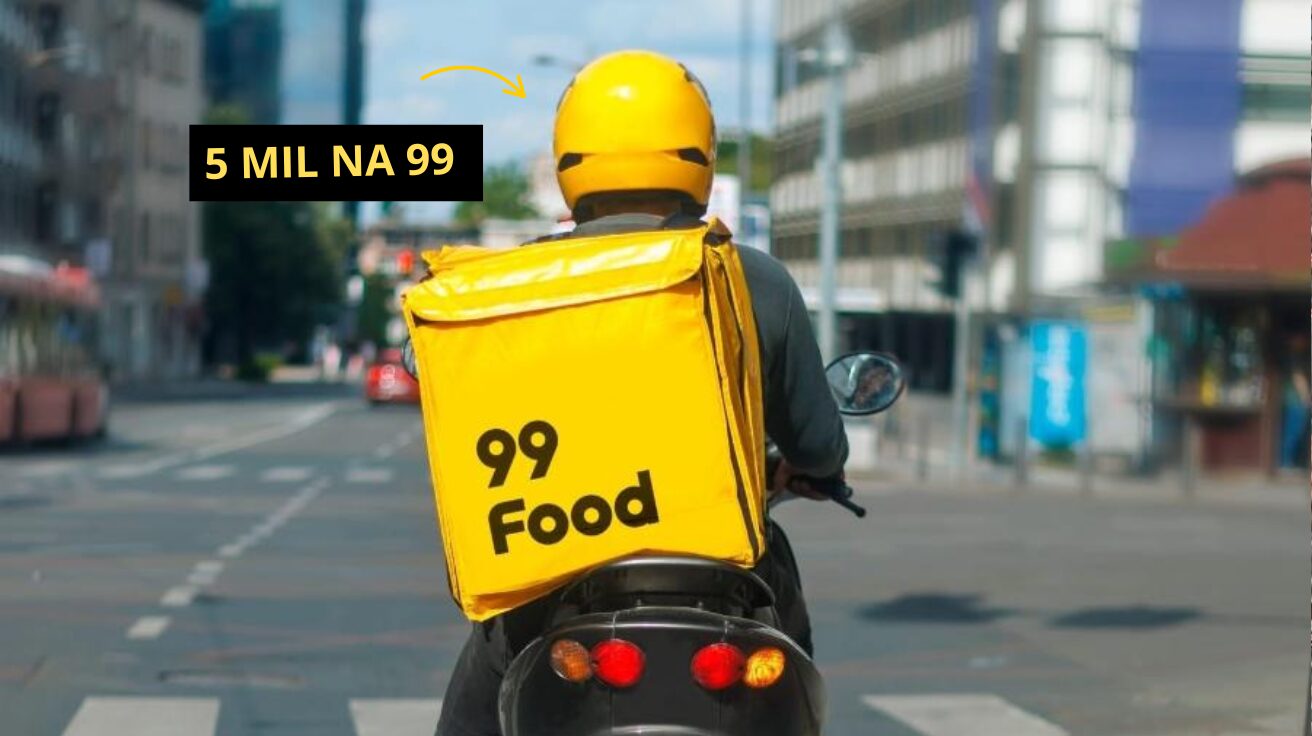
Discover How an Innovative Strategy from 99 Promises to Ensure Minimum Daily Earnings for Motorcyclists, Revolutionizing the Delivery and App-Based Transportation Market with Dynamic Goals and Billion-Dollar Investments in the Brazilian Sector.
99 announced an ambitious strategy to attract motorcyclists to its services ecosystem, promising earnings of up to R$ 5,000 per month.
The initiative is part of the relaunch of 99Food, scheduled for June 2025, and includes an investment of R$ 1 billion in Brazil.
The company aims to compete directly with iFood, offering financial and operational incentives for delivery drivers and restaurants.
-
Woman Turns Apartment into Storage with 158 Pairs of Shoes and 140 Pants, Accumulating $47,000 Debt Due to Compulsive Buying

-
Defying Medical Odds for 65 Years, 72-Year-Old Brazilian Acarajé Vendor Continues Family Legacy

-
Brazil’s Most Famous Fish Travels Over 600 km Against the Current, Overcomes Dams with Eco-Friendly Ladders, and Navigates Flooded Rivers in a Remarkable Migration for Reproduction
-
Coca-Cola Shuts Down 100-Year-Old Factory in the U.S., Impacting 85 Workers and Shaking Local Community with Historic Consequences



Guaranteed Earnings for Motorcyclists
99 has established a daily goal for motorcyclists: to complete 15 deliveries or combine passenger transport with 5 food deliveries.
By reaching this goal, the delivery driver will receive a guaranteed minimum payment of R$ 250 per day.
Considering a work period of 20 days per month, gross earnings can reach R$ 5,000.
According to Luis Gamper, Senior Logistics Director at 99, “this is a long-term campaign. We guarantee R$ 250 even if the total for rides does not reach this amount.”
The strategy aims to maximize motorcyclists’ earnings, taking advantage of the different peak hours of the services offered by the company.
Strategic Hours to Maximize Earnings
99 identified the following peak demand periods for each service:
Mototaxi: between 6 AM and 9 AM, and 5 PM and 7 PM.
Conventional Delivery: from 9 AM to 5 PM.
Food Delivery: from 12 PM to 2 PM, and from 7 PM to 10 PM.
This distribution allows motorcyclists to plan their activities efficiently, taking advantage of demand peaks at different times.
Billion-Dollar Investment and Return of 99Food
The relaunch of 99Food is part of a R$ 1 billion investment from 99 in Brazil, announced in April 2025.
The company, controlled by Chinese Didi, intends to expand its mobility, delivery, and financial solutions services in the country.
99Food, discontinued in 2023, returns to the market with a promise to offer more affordable rates and optimization of deliveries.
Stephen Zhu, Global Head of DiDi’s International Business Group, stated that “this investment reflects our long-term commitment to Brazil.”
The expectation is that 99Food will be available starting in mid-2025, serving consumers, restaurants, and delivery drivers throughout the country.
Fee Waiver for Restaurants
To attract restaurants, 99Food announced a waiver of service fees and monthly fees for two years for establishments that register on the platform.
The measure aims to include around 400,000 restaurants that currently do not use delivery apps due to high costs.
Bruno Rossini, Senior Director at 99, emphasized that “this proposal is not a promotion. It’s a new standard. And it shows our commitment to always offer the best deal for Brazilian restaurants.”
The expectation is that restaurants can increase their profits by up to 20% per order, making delivery a more significant source of profit.
Integration with 99Pay and Service Expansion
99 intends to integrate 99Food with 99Pay, its payment and financial solutions platform.
The integration will allow delivery drivers to receive instant payments and customers to enjoy cashback and exclusive discounts.
Additionally, the company plans to expand its fleet of partner motorcyclists, strengthening the delivery service.
The company also highlighted initiatives aligned with public policies, such as the transition to electric vehicles.
Since 2022, 99 has operated a fleet of electric motorcycles in partnership with the startup Tembici, reducing CO₂ emissions.
Another pillar is the inclusion of micro-entrepreneurs: 60% of the restaurants registered on 99Food will be small local businesses, according to the company.
Regulatory Challenges and Competition
Despite the initiatives, 99 faces regulatory challenges, especially in São Paulo, where the mototaxi service is suspended due to a court decision.
The company claims it has not been officially notified about the decision and continues to seek legal solutions to resume the service.
In the delivery market, 99Food will face strong competition, especially from iFood, which holds about 80% of the Brazilian market.
99’s strategy of fee waivers and service integration aims to offer a competitive alternative for consumers and partners.
Outlook for the Delivery Market
The delivery market in Brazil generated around R$ 40 billion in 2024, with a 15% growth compared to the previous year, according to Abrasel.
The entry of 99Food with a differentiated proposal could further boost the sector, providing opportunities for restaurants, delivery drivers, and consumers.
And you, do you believe that 99Food’s strategy can really transform the delivery market in Brazil? Share your opinion in the comments!


Be the first to react!