






 Portuguese
  Spanish
  3 min of reading
  0 comments


The Belgian Engineer Gerhard Schmitz, Born in the City of Svit, Belgium, Gains Visibility on the Internet with His Invention, the Five-Stroke Engine, a Quirky and Efficient Mechanism Dated 2000.
Innovation in the automotive world, often driven by visionary engineers, sometimes leads us to rediscover and enhance old concepts. This is the case with the five-stroke engine, an idea that dates back to the 19th century but was refined and patented in the year 2000 by Engineer Gerhard Schmitz.
Gerhard Schmitz, an engineer who graduated in the early 80s, worked tirelessly on the development of this engine. His mechanism is not a complete novelty, as 19th-century inventors like Nicolaus Otto and Rudolf Diesel had already explored similar concepts. However, Schmitz’s model has proven to be more effective than its earlier versions. This engine, contrary to what many believe, is not a two-stroke engine, but a true five-stroke engine.
Five-Stroke Engine
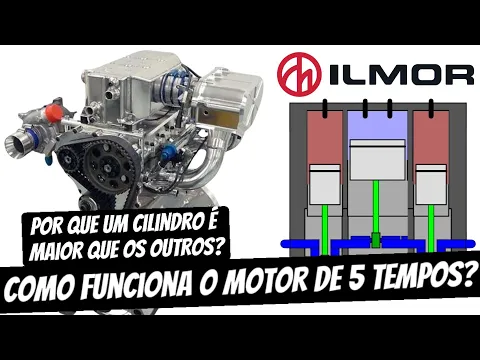

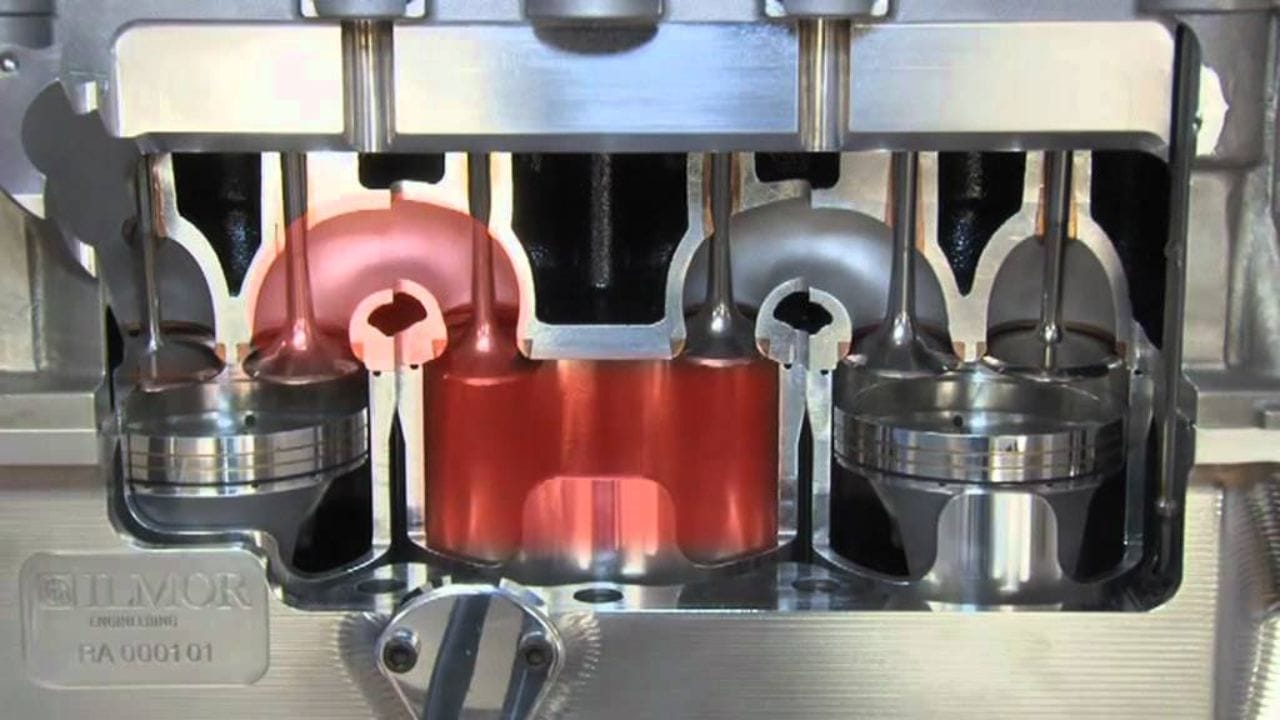
The engine developed by Schmitz has a three-cylinder layout, where the two outer cylinders operate like a conventional four-stroke engine, with the intake, compression, combustion, and exhaust cycles. The great innovation lies in the central cylinder, which carries out a fifth stroke: the final exhaust. This cylinder has no spark plug, operating exclusively to expel gases, which are filtered and released into the atmosphere.
-
Uber Faces Shareholder Scrutiny as Board Accused of Ignoring Safety, Compliance, and Harassment Warnings Amid Over 3,500 U.S. Lawsuits

-
Ferrari’s First Electric Car Divides Fans, Priced at $630,000, Amid Concerns Over Limited Editions; Brand Clarifies It’s Not Just for Future Perks
-
BYD Dolphin Mini: The Electric Car That Defies Depreciation, Losing Only 3.58% in a Year and Becoming the Best-Selling Retail Model Under $22,000

-
Electric Car JAC E-JS4 Loses $19,000 in Value in One Year, Leading Record Depreciation of Used Cars in Brazil Due to Expensive Battery and New Models


This mechanism resembles the triple expansion steam engine systems used in ships like the RMS Titanic. In Schmitz’s engine, the two outer pistons each have 350 cm³, totaling 700 cm³, while the central piston has 778 cm³, more than double that of the outer pistons. This engine has proven to be 10% more economical than a common three-cylinder engine, with a high compression ratio and greater mechanical efficiency.
Mechanical Efficiency
Schmitz’s invention represents a significant advancement in terms of mechanical efficiency. By using exhaust gases to generate more power, the five-stroke engine translates energy more efficiently, resulting in more complete combustion and reducing waste.
Ilmor, an English company famous for developing engines for Formula 1 and IndyCar, reproduced Schmitz’s invention for use in motorcycles. Equipped with a turbo, the engine develops 130 horsepower at 7000 RPM and torque of 16.9 kgf at 5000 RPM. These tests have demonstrated the engine’s effectiveness, offering hope for future applications in production vehicles.
Gerhard Schmitz’s five-stroke engine is a remarkable example of how innovation and the enhancement of old concepts can lead to significant advancements in automotive engineering. While it is still not widely known or utilized in mass production, its potential to improve the efficiency of internal combustion engines is undeniable. With the automotive industry constantly seeking greater efficiency and sustainability, Schmitz’s engine may very well find its place in the future of vehicles.





Be the first to react!