






 Portuguese
  Spanish


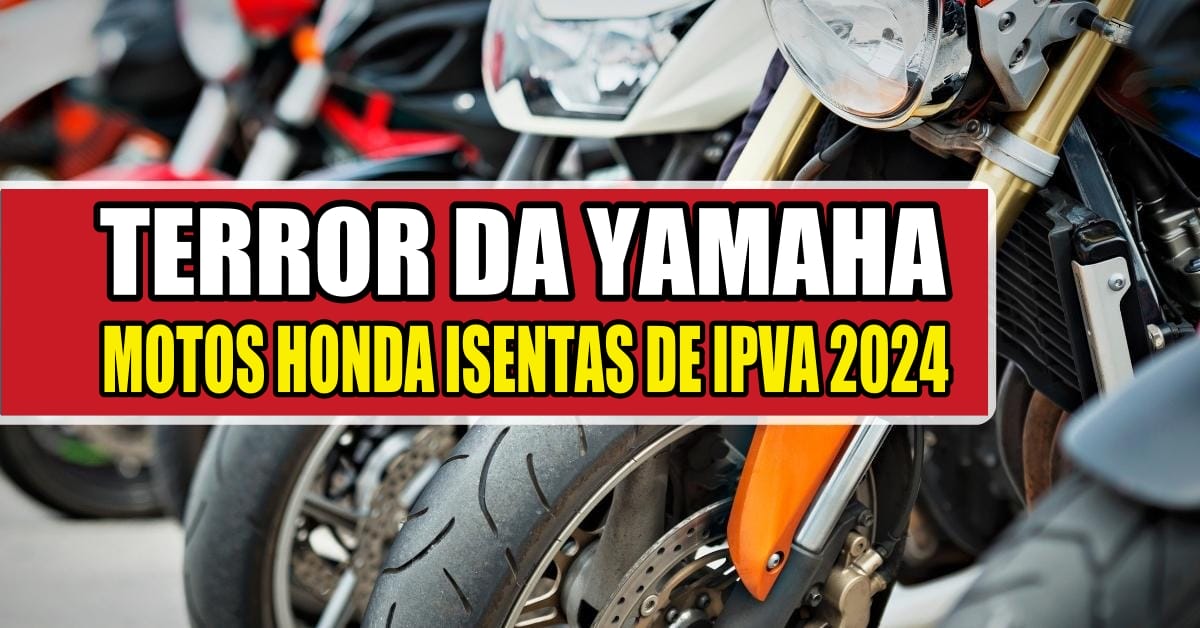

Honda Leaves Yamaha in Despair, with 5 Amazing Motorcycles Exempt from IPVA to Buy in February
A revolution in the two-wheeled market: Honda, known for its innovation and quality, is shaking up the motorcycle market and leaving Yamaha in despair. The giant of two wheels has launched a bold challenge with its economical motorcycles and exempt from IPVA. That’s right! Thanks to the new legislation, certain Honda models are free from this tax in 2024, a piece of news that is stirring the Brazilian market!
Honda hit the mark with its range of motorcycles eligible for IPVA exemption. Combining economy, efficiency, and an affordable price, these models are statements of freedom and financial intelligence. Yamaha has a challenge ahead, but for now, Honda is clearly in the lead, redefining the motorcycle market with its clever and customer-centered strategy.
Everything About IPVA Exemption for Motorcycles!


IPVA Exemption and Honda Models in the R$ 10 Thousand Bracket
The change began in 2022 when a bill blessed owners of motorcycles and mopeds up to 170cc with the IPVA exemption. This means that, in addition to saving on the purchase, the lucky owners of these machines can now enjoy more annual savings.
-
2027 Toyota Corolla Cross Unveiled: New Design, Enhanced Fuel Efficiency, Reduced Maintenance Costs, Advanced Technology, Connected Services, and Up to 10-Year Warranty

-
Fiat Cronos Precision 2018: Affordable Sedan with Spacious Trunk and Reliable Maintenance
-
Volkswagen to Cut Production by 1 Million Cars by 2030, Reducing Jobs and Platforms, Focusing on More Profitable Models

-
Toyota Launches First 100% Electric Car in Brazil: bZ4X with 343 HP, All-Wheel Drive, 361 km Range, Priced at $419,990 BRL, Limited to 99 Units



Honda, always ahead, offers a range of models that fit into this category. Imagine having a CG 160, Pop 110i, Biz 110 and 125, or even the stylish Elite 125, and not worrying about the IPVA? This is not just a saving; it’s a revolution!
And it doesn’t stop there! Honda, always attentive to its customers’ needs, has positioned several models, making them accessible and desirable. These models not only benefit from the IPVA exemption, but they are also known for their durability, fuel efficiency, and low maintenance costs. In other words, it’s the perfect combination of economy and performance.
Honda vs Yamaha? Honda Reigns Supreme
The battle between Honda and Yamaha has always been fierce, but with this IPVA advantage, Honda seems to be gaining ground. Consumers are clearly inclined to choose Honda, taking advantage of the IPVA exemption and the superior quality of its products. It’s a smart move that puts Honda in a prominent position, both in terms of sales and customer satisfaction. With models like CG 160 and Biz 125 leading the way, Honda is not just selling motorcycles; it’s selling a lifestyle.
This IPVA exemption is more than just financial relief; it is a catalyst for larger changes. Owners of Honda motorcycles can reinvest these savings in maintenance, accessories, or simply enjoy the additional financial freedom. This is not just good for consumers’ pockets; it’s good for the economy as a whole. The impact of this policy can be felt across the motorcycle industry, encouraging more people to choose motorcycles as their primary means of transportation.
Yamaha: Pressured to React
Yamaha, on the other hand, needs to react quickly. The IPVA exemption for Honda motorcycles up to 170cc places immense pressure on Yamaha to offer something equally appealing. Consumers are watching and comparing, and at this moment, Honda has the upper hand. The competition is fierce, and Yamaha will have to work hard to match or surpass this move from Honda.








