






 Portuguese
  Spanish


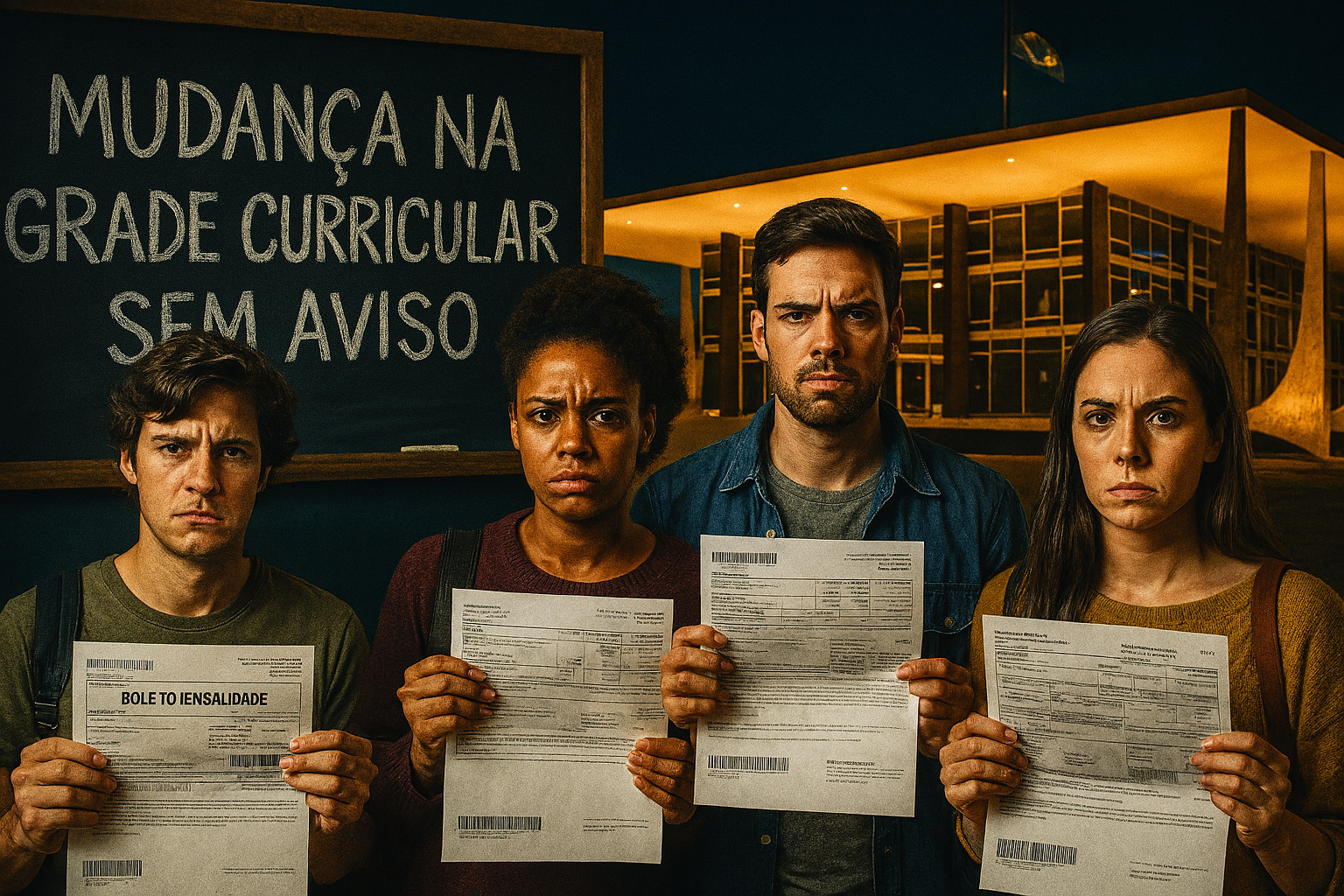


Sudden Change in Curriculum Without Notice Gives Right to Refund of Tuition Fees and Compensation of Up to R$ 10,000, Confirm Brazilian Courts.
The Consumer Defense Code (CDC) ensures that all service provisions, including private education, are clear, continuous, and transparent. The student who pays tuition is not just acquiring classes: they are hiring a set of subjects, schedules, and teachers previously offered by the institution.
When a college or school alters the curriculum without prior notice and without reasonable justification, it creates a situation of contractual imbalance. The student, who planned their academic and financial journey based on a set of subjects, is surprised by changes that may delay their graduation or reduce the quality of education promised.
That is why, increasingly, courts have recognized that sudden change without communication can lead to refund of tuition fees and even compensation for moral damages.
-
Seniors Over 60 Can Travel for Free Across Brazil: Elderly Statute Ensures Two Free Bus Seats and 50% Discount When Full for Low-Income Passengers

-
Detran RJ starts requiring a toxicological test for those obtaining their first driver’s license in the car and motorcycle category starting June 29; see who will be affected.

-
Florida takes TikTok to court and accuses the Chinese giant ByteDance of ignoring the law that bars minors under 14, while parents and authorities demand more protection for children on social networks.
-
Chamber approves constitutional amendment reducing the age of criminal responsibility from 18 to 16 years; what now?




What the Law and Jurisprudence Say
Article 6 of the CDC establishes as a basic consumer right the adequate and clear information about contracted services. Meanwhile, Article 20 states that in case of failure, the consumer may demand the re-execution of the service, a proportional price reduction, or a refund of the amount paid.
In the field of education, the STJ has already recognized that private educational institutions are subject to the CDC (REsp 802.832/RS). This means that unilateral changes in the curriculum, when detrimental to the student, constitute a failure in service provision.
State courts have followed this line:
- The TJSP ordered the refund of tuition fees to a group of students whose subjects were canceled without notice, delaying their course completion by a year.
- The TJDFT set a compensation of R$ 10,000 for moral damages to a student who had to delay graduation because the institution changed the curriculum without prior communication.
- The TJMG recognized that changes to the curriculum without justification constitute a contractual breach, requiring the college to compensate and refund part of the amounts paid.
Practical Impacts for Students
Sudden changes in the curriculum are not just academic inconveniences: they have direct financial and professional consequences. Among the main issues:
- Delay in graduation, resulting in additional tuition costs and postponement of entry into the job market;
- Loss of internship or job opportunity, when the curriculum makes the student incompatible with the requirements of companies;
- Financial overload, by forcing enrollment in more semesters than originally planned;
- Frustration of legitimate expectations, when promised subjects are no longer offered.
In these cases, the courts understand that the student is entitled not only to a refund of amounts but also to compensation for moral damages, since the failure goes beyond the patrimonial sphere and affects personal and professional life.
How the Student Can React
A student who feels wronged should:
Keep the service provision contract and documents that prove the initially offered curriculum;
Gather evidence that the change was sudden and without notice, such as emails, late communications, or absence of formal justifications;
Document losses, such as delay in graduation, loss of internship, or increased costs;
File a complaint with Procon and, if necessary, file a legal action requesting proportional refund of tuition fees and compensation.
In the Special Civil Courts, it is possible to file actions for up to 40 minimum wages without the need for a lawyer, which facilitates access to justice.
What Experts Say
According to lawyer and professor of Consumer Law Claudia Lima Marques:
“Private education is a consumer relationship like any other. Contractual changes that disrespect the student constitute a failure in service provision and can generate compensation.”
Judge of the TJDFT Carlos Alberto Martins Filho, in a decision that compensated a student, stated:
“The college cannot transfer to the consumer the risk of economic activity. If it announces a course with a specific curriculum, it must comply or be held accountable for the damages.”
Predictability Is a Right of the Student
Jurisprudence is clear: colleges and schools cannot abruptly change the curriculum without prior notice or plausible justification. When this happens, the student has the right to a refund of tuition fees and may also receive compensation for moral damages, which has reached R$ 10,000 in Brazilian courts.
More than just financially reimbursing, these decisions reinforce that education is a service subject to rules of transparency and balance. For the student, the message is clear: if the institution changes the rules of the game along the way, justice can correct the imbalance.


