






 Portuguese
  Spanish


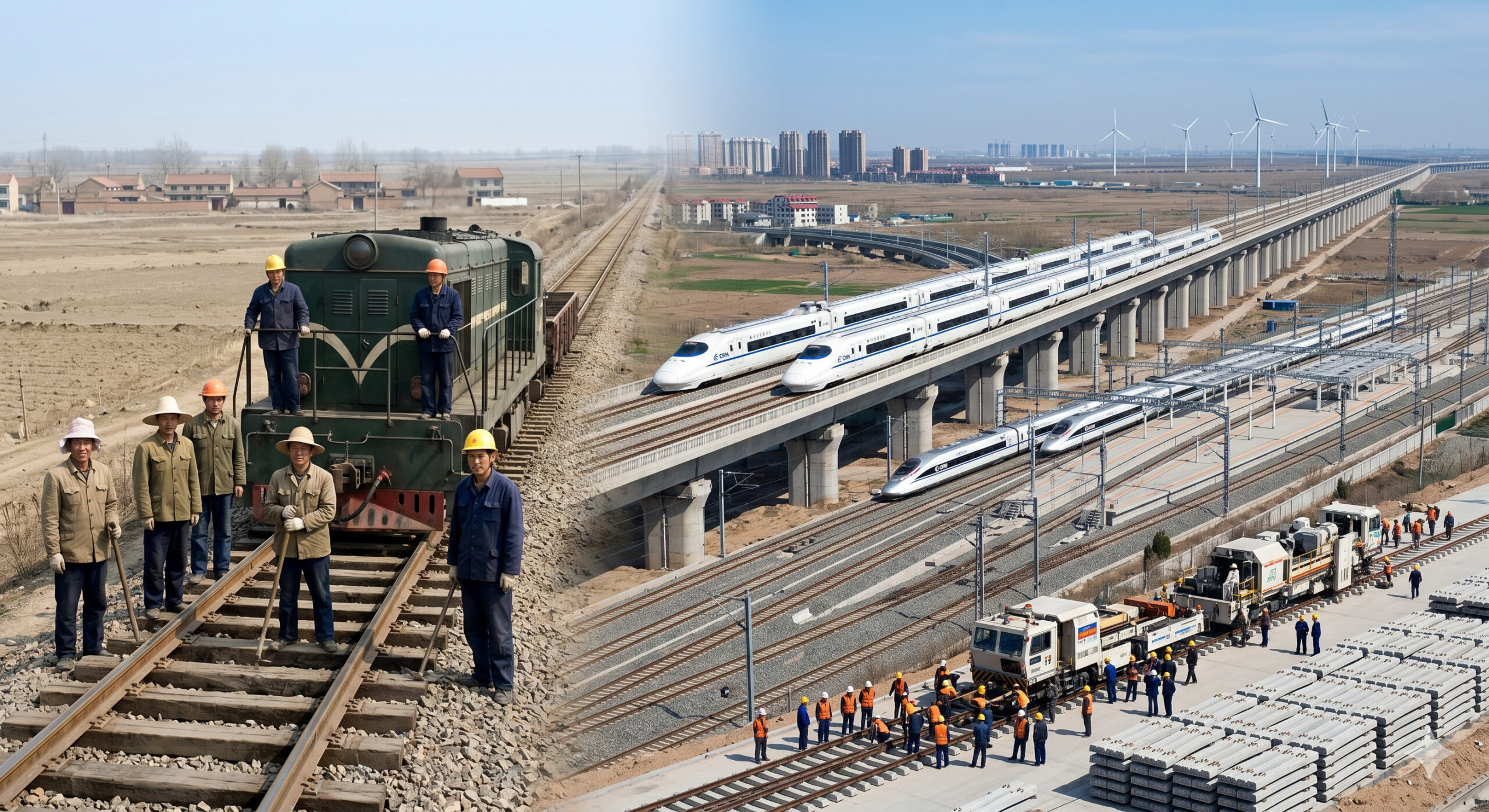


Understand how China built 50 thousand km of high-speed railways in 17 years, while the US still struggles with the California project since 2015.
When Chinese leader Deng Xiaoping rode the Japanese Shinkansen in 1978, he declared in amazement that the bullet train ‘seemed to fly’. That wonder germinated and, 25 years later, China inaugurated its first high-speed line, a stretch of 404 km between Qinhuangdao and Shenyang. What followed was a true revolution in infrastructure. Today, the country boasts a railway network that has already surpassed 50 thousand kilometers, exceeding the network of all other countries combined.
With aggressive goals to reach 60 thousand kilometers by 2030, China is cruising at full speed while the United States, on the other side of the Pacific, still does not have a single kilometer of railway of this standard.
The number of the Chinese railway that outshines the West
The Chinese high-speed network is three times larger than the entire European network combined. Spain, which has the largest network in Europe, operates about 3,400 km.
-
Brazilian Fishing Couple Spends 4 Years Building Solar-Powered Floating Home on the Paraguay River, Now a Navy-Approved Vessel with Leisure Area and Tour Demand

-
While the World Opens New Airports and High-Speed Trains, Brazil Rushes to Complete Projects Stalled for 40 Years
-
Brazil Invests in Massive Waterway to Transport Soybeans by Barge, Reducing Costly Truck Reliance
-
Bridge Rebuilt in Just One Year Reconnects Two Brazilian States


France has 2,800 km; Germany, 1,600 km. The entire European Union combined reaches the mark of 15 thousand km. China, on the other hand, already totals 50 thousand kilometers. And it built all of this in just 17 years — while Europe took more than four decades to reach its current level.
The contrast with the United States is even more brutal. The California high-speed railway — designed to connect San Francisco to Los Angeles at 350 km/h, has been under construction since 2015. The estimated cost has already exceeded US$ 135 billion.
The first segment, 275 km in the Central Valley, is expected to be completed only by 2030 and, to date, no passenger has boarded. In 2025, the US federal government canceled US$ 4 billion in funding. The line that was supposed to be the Shinkansen of the US has become synonymous with delays, budget overruns, and frustration.
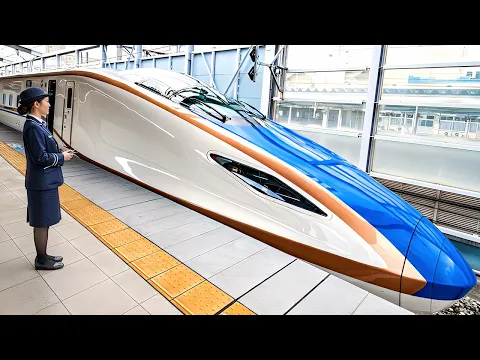

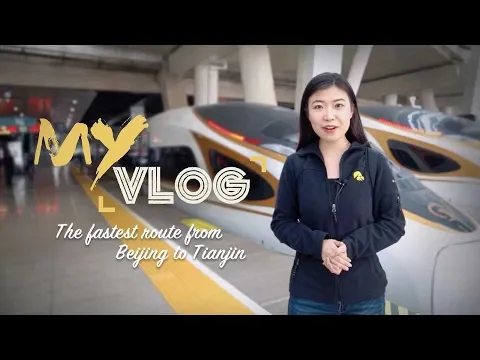
The beginning of high speed: from Beijing to Tianjin in 30 minutes
The modern era of Chinese high speed began in August 2008, when the Beijing-Tianjin line went into operation: 117 km covered in 30 minutes at 350 km/h. It was the country’s first route dedicated exclusively to passengers at this standard.
The inauguration coincided with the Beijing Olympic Games and did not happen by chance; the government wanted to showcase to the world what Chinese engineering was capable of.
The domino effect was immediate. In three years, the Beijing-Shanghai line — 1,302 km long — was completed. Inaugurated in 2011, it connected the two largest economic powers of the country in 4 hours and 24 minutes, at an average speed of 292 km/h.
This is the fastest railway service in the world in terms of average travel speed. And it is also highly profitable: by 2015, the line reported a net operating profit of 6.6 billion yuan — over $1 billion.
Record expansion: 10,000 kilometers of tracks in five years
In 2008, China had zero kilometers of dedicated high-speed railway. Four years later, in 2012, the network had already surpassed 10,000 km.
At that point, the country had more tracks of this type than the entire European Union combined. And the expansion did not slow down: in 2016, the network doubled to 20,000 km; in 2020, it reached 37,900 km. Between 2021 and 2025, another 12,000 km were added.
The pace of this construction is hard to visualize. China built the equivalent of the distance between São Paulo and Tokyo in high-speed tracks every two years.
In other words: on average, about 10 km of new tracks went into operation every working day. This did not occur in a straight line over plains, but traversing mountains, crossing rivers, drilling more than 100 tunnels each over 10 km long, and raising thousands of kilometers of viaducts over cities and farmland.
Cost of the Chinese bullet train: one-third of the price charged in the West
A report published by the World Bank in 2019 analyzed how China manages to build so quickly and economically.
The average construction cost of the lines designed for 350 km/h ranges between $17 and $21 million per kilometer, a figure that already includes viaducts, tunnels, stations, signaling, and electrification. In Europe, the cost for lines of 300 km/h or more ranges between $25 and $39 million per kilometer. In California, the estimate jumps to an outrageous $52 million per kilometer.
The price difference arises from several factors. China has standardized designs: stations, viaducts, and tunnels follow replicable models that drastically reduce engineering costs.
The materials are produced domestically by state-owned companies on a colossal scale. Labor is abundant and cheaper. Additionally, land acquisition, one of the biggest hurdles in Western democracies, is simplified by a system in which the state ultimately controls land use.
Cutting-edge engineering: why are 80% of high-speed tracks elevated?
Anyone imagining trains running directly on the ground needs to adjust their mental image. On most Chinese lines, over 80% of the route is elevated.
The trains glide over concrete viaducts that stretch for hundreds of kilometers, hovering over cities, rivers, and fields. The rationale is pragmatic: building viaducts is financially and logistically simpler than expropriating thousands of rural and urban properties. The structure passes over everything without interfering with the ground level.
The visual result is impressive. Viewed from above, the train seems to float over the landscape; from below, the concrete columns align to the horizon like rows of giants. This engineering focused on elevated tracks is a trademark of the Chinese system and largely explains the dizzying speed of construction, eliminating the need for individual land negotiations along the route.
The world’s deepest high-speed train station: 102 meters below ground
The Beijing-Zhangjiakou line, designed for the 2022 Winter Olympics and inaugurated in December 2019, was completed in just 4 years. It covers 174 km and reduced the travel time from 3 hours to just 45 minutes.
One of its stops, the Badaling Changcheng station, which serves tourists visiting the Great Wall, was excavated 102 meters deep, making it the deepest high-speed railway station on the planet.
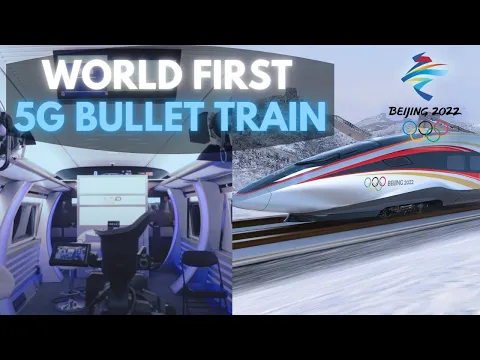
The trains operating there are fully autonomous, traveling without a driver. The carriages are equipped with touchscreen control panels, 5G connectivity, smart lighting, modular areas for winter sports equipment, and removable seats for wheelchair users.
Thousands of sensors monitor safety in real-time. Built from scratch in mountainous terrain and with extremely complex tunnels, the project was also delivered ahead of schedule.
Traffic record: 3.3 billion passengers on Chinese trains in 2024
In the year 2024 alone, nearly 3.3 billion passengers traveled on China’s high-speed trains. This number more than doubles the total population of the country — indicating that, on average, each Chinese citizen used the service at least twice that year.
To meet this demand, by 2024, the active fleet consisted of 4,806 multi-car trains, enabling operations that exceeded 9,600 daily departures.
The modal transports so many people that it has radically altered the dynamics of domestic aviation. On routes of up to 800 km, the train holds absolute dominance: on paper, it is faster than the plane when factoring in travel to peripheral airports, check-in time, and boarding.
On the Beijing-Shanghai route, the train has established itself as the standard transportation for executives. By 2020, 75% of Chinese cities with more than 500,000 inhabitants were connected to the high-speed network.
Shinkansen vs. Bullet Train: Japan Inspired and Was Surpassed
Japan invented the modern concept of high-speed rail in 1964 with the launch of the Shinkansen, a technological revolution admired globally for decades.
Currently, the Japanese network operates 9 lines serving 22 cities, transporting over 420,000 passengers on weekdays and boasting an unmatched record: zero passenger fatalities in over 60 years of history.
China meticulously studied this model. Initially, it imported technology from giants like Kawasaki, Alstom, Bombardier, and Siemens. In just two years of reverse engineering and adaptations, it began manufacturing its own trains without foreign dependence.
The peak of technological gain came in 2011 when the Chinese model CRH380BL reached 487 km/h in a test on the Beijing-Shanghai line, setting the world record for conventional trains (non-maglev). Today, after disputes over patent infringements that the original manufacturers ultimately backed down from, China acts as a strong exporter of railway technology.
The Political Price of Infrastructure and Chinese State Control
Chinese efficiency entails social and political costs that democracies typically do not tolerate. The release of land rights is swift because the State holds control over the land; residents and property owners are relocated and compensated, but lack the legal veto power present in the West.
The routing of the lines is defined centrally, without the delays caused by endless public hearings. Environmental licensing follows strict execution timelines, and construction teams work at paces and under conditions that would clash with union restrictions in Europe or the Americas.
Although the World Bank praises the efficiency of project execution, the institution notes that the model is hardly replicable in democratic countries without significant adaptations.
The California project, for example, struggles amid lawsuits from farmers, environmental litigation for wildlife protection, political clashes, and constant budget revisions. The absence of these bureaucratic bottlenecks in China is reflected in its unbeatable delivery metrics — an achievement inseparable from its system of government.
The Hidden Debt: The Trillion-Dollar Cost of Expansion
The speed of construction comes with another hefty bill: public debt. The state operator China Railway Corporation has accumulated liabilities exceeding $900 billion to finance the pace of the works. As a consequence of planning more focused on presence than on demand, several lines in provinces with lower population density operate at a loss.
Monumental stations built in peripheral cities struggle to generate passenger volume that covers maintenance costs, leading institutions like the Reason Foundation to classify part of the network as projects with questionable financial returns.

Trying to curb this indebtedness, the central government tightened the expansion rules in 2021. Projects aimed at doubling existing routes now need to prove that the current infrastructure operates at 80% occupancy, and new lines have been restricted to urban centers capable of generating at least 15 million trips annually.
The era of expansion at any cost seems to be coming to an end; however, the network is already consolidated on the ground, leaving global competition far behind.
The only high-speed sleeper train in the world
In the field of user experience, China has innovated by introducing the first large-scale high-speed sleeper train service. For continental routes like the impressive Beijing-Kunming, which totals 2,760 km and holds the title of the longest continuous line in the world, passengers board in the early evening, rest in air-conditioned and comfortable cabins, and arrive at their destination punctually in the morning.
This hybrid solution combines the speed of an airplane with the comfort of a hotel on rails, eliminating expenses for nightly stays and travel to airports. To this day, no other country has managed to scale a similar offering.
California High-Speed Rail vs. China: the question the U.S. avoids
While China has woven a network of 50,000 km in 17 years at an average cost of $17 to $21 million per kilometer, the state of California burns about $52 million for every kilometer and still has not a single operational meter after a decade of construction. The European Union took 40 years to finalize what China did in a third of that time, and pioneering Japan still has less than 3,500 km in its network.
Although the quantitative data is impressive, it forms only part of the narrative. The “miracle” of China has been subsidized by stratospheric state debt, land impositions, and a political machine averse to opponents.
In contrast, the West pays the price of transparency, the defense of private property, and environmental and democratic deliberations, which inherently consume time and budget.
The big question does not just lie in pointing out a methodological winner, but in discovering if there is a viable middle ground, where agility in infrastructure and democratic processes can indeed coexist. After all, while this discussion drags on in offices, China adds another 5,000 km of tracks every two years. And the American passenger remains stuck in highway traffic.


When I visited China in 2016 I was amazed and impressed with the Chinese people fully utilise the land along the elevated tracks by farming and poultry……..