Portuguese
  Spanish


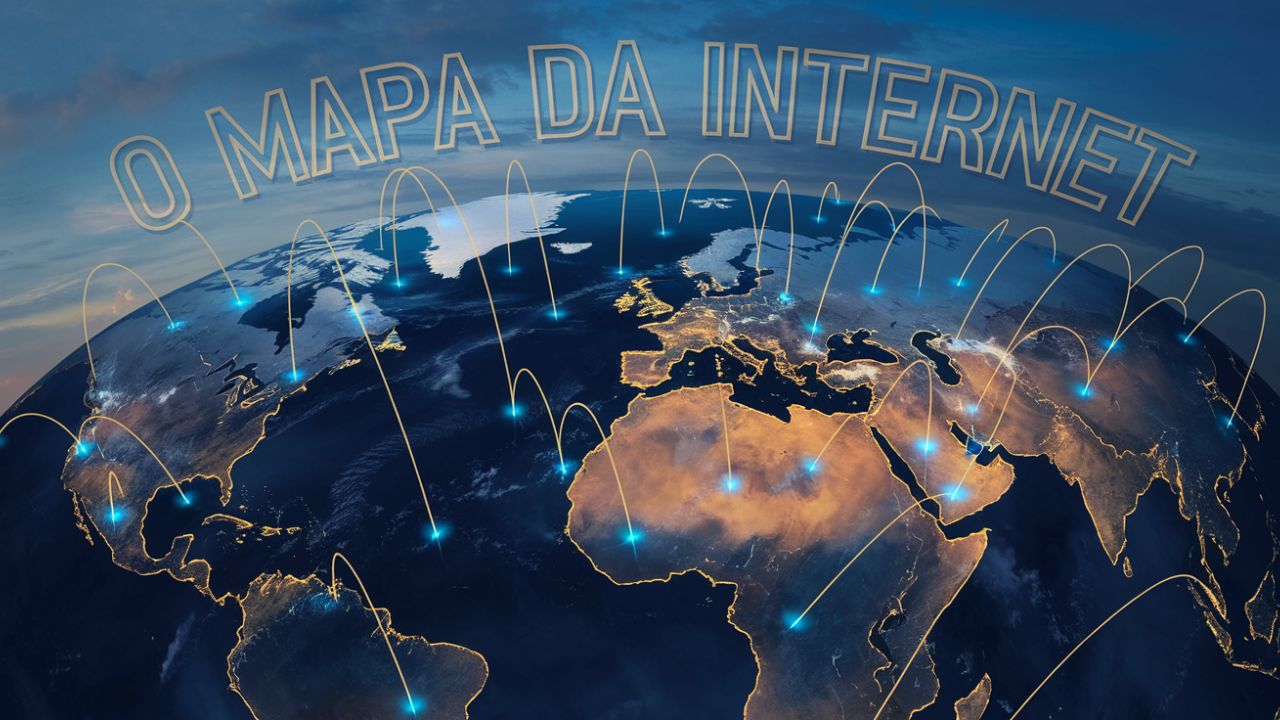


Explore How Submarine Cables Connect Almost All Countries in the World, Forming a Network of More Than 1.3 Million Kilometers of Underwater Optical Fiber, Essential for 99% of Global Communications.
How does the internet connect entire continents in a matter of seconds? The answer lies beneath the surface: submarine cables. These giant wires form the backbone of global communication, supporting nearly 99% of data transmissions between countries. Now, with an interactive map, we can literally “navigate” through this fascinating infrastructure and understand how the modern world is interconnected.
The Essential Role of Submarine Cables
Submarine cables act like the planet’s digital arteries, transporting essential data for everything from video calls to movie streaming. They are so numerous that, combined, they could circle the Sun. The difference between them goes beyond length: some are as thin as a computer wire, while others have the diameter of a garden hose.
If today you can send a message to someone in Europe in seconds, thank submarine cables. Countries like the United States and Japan have dense networks, but even more isolated regions like French Polynesia are connected. However, this dependency also creates vulnerabilities: geopolitical threats and natural disasters can disrupt crucial connections.
-
353-Year-Old Mystery Deepens as Archaeologist Arrested with Teeth and Bone Fragment Possibly Linked to d’Artagnan, the Real Musketeer Behind Alexandre Dumas’ Inspiration

-
16-Year-Old Invents CoolTowel, a Fitness Towel That Stays Cold for Up to 2 Hours, Wins Global Alibaba Competition with Over 15,000 Participants, Earning $1 Million

-
Brazil to Install First Operational Quantum Computers in the Northeast and Establish New Center to Boost Technological Sovereignty
-
Potential Starlink Rival: Company Tests 60-Meter Balloon to Deliver 5G Internet Without Satellites, Prepares for Unprecedented Mission in Japan


How It Works and What It Shows

This interactive map is a true “Google Maps” of submarine cables. It details where they are located, who the owners are, and when they were installed. It’s like seeing the invisible “skeleton” that supports our daily digital interactions.
Some areas on the map stand out as true underwater highways. The North Atlantic, for example, connects the northeastern United States to Europe with cables like Marea and Grace Hopper, while the Suez Canal is a crucial crossroads for communications between Europe and Asia.
The North Atlantic is one of the busiest routes. Cables like Marea, connecting Bilbao to Virginia, and Grace Hopper, which runs from the U.S. to England, show how major technology companies are heavily investing in this infrastructure.
In Asia, the density of cables is impressive. The SeaMeWe-5, with 20 thousand kilometers, connects from France to Singapore. Meanwhile, in the Pacific, the Pacific Crossing-1 interlinks Japan, Hawaii, and the U.S., forming one of the most extensive data bridges on the planet.
The 2Africa project, covering 45 thousand kilometers, is one of the largest ever built. It not only circles the entire African continent but also connects Europe and Asia. This infrastructure promises to revolutionize connectivity in still underexplored regions.

Exponential Growth and Technology Needs
Between 2023 and 2025, more than 300 thousand kilometers of new cables will come into operation, resulting from a 10 billion dollar investment. With the advancement of artificial intelligence and streaming, the demand for this infrastructure is only increasing.
Although they are essential, submarine cables are subject to intentional cuts and political disputes. Regions like North Korea remain isolated, while countries like Cuba rely on a few cables to connect to the rest of the world.
Submarine cables are the veins that keep our digital world alive. The interactive map not only reveals this crucial infrastructure but also makes us reflect on the complexity and interdependence of the modern world. Next time you watch a video or send a message, remember: behind this simplicity, there are thousands of kilometers of cables working to connect you to the world.