






 Portuguese
  Spanish


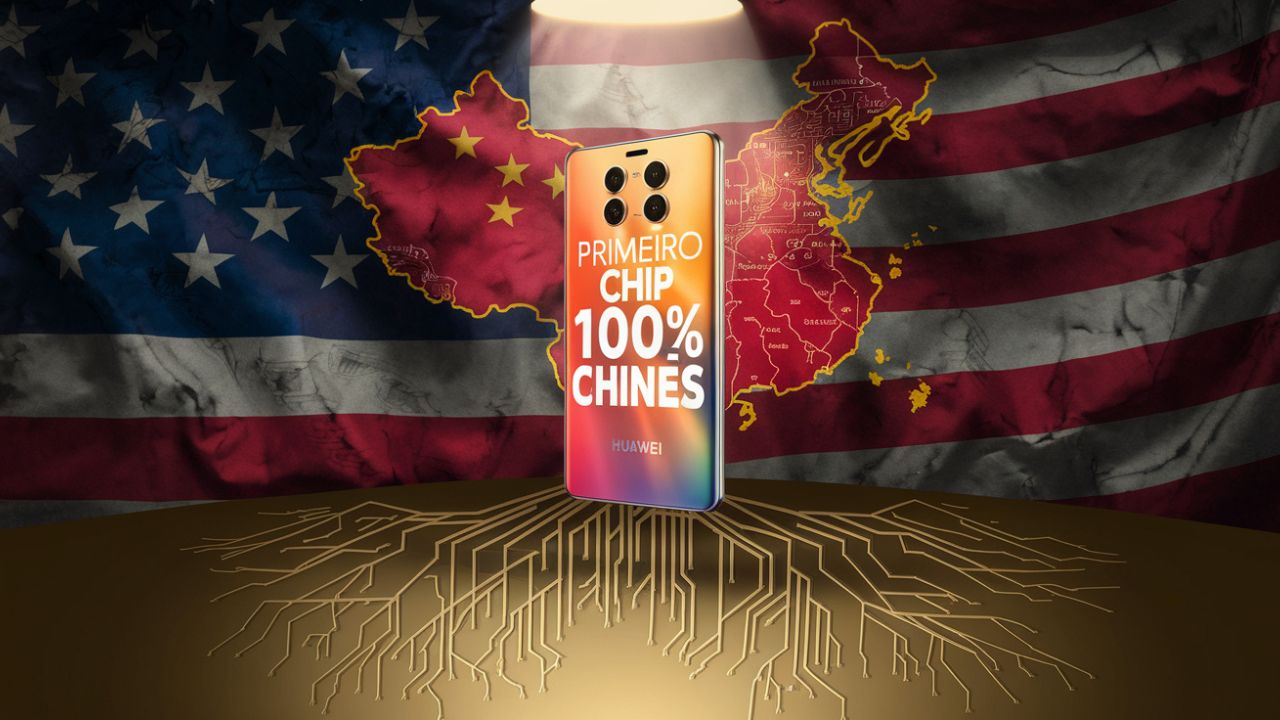


Huawei Launches The Mate 70 Pro+ With The Revolutionary Kirin 9020 Chip, Fully Manufactured In China. The Milestone Places China And Huawei At The Forefront Of Technology Independence, Challenging US Sanctions And Moving Billions In The Global Market.
Huawei has taken a bold and historic step: it launched the first smartphone equipped with a chip entirely manufactured in China, the Kirin 9020. This achievement is more than a technological milestone; it is a declaration of independence amid the geopolitical tensions between East and West. But how does this milestone impact the sector, and what does it represent for the future of technology? Let’s find out.
The Huawei Mate 70 Pro+ has arrived to continue the legacy of the Mate line, but with a unique feature that places it in history: the use of the locally produced Kirin 9020 chip. This chip symbolizes Huawei’s effort to overcome the challenges imposed by the United States, which has restricted access to cutting-edge technologies.
Manufactured using a 7-nanometer process, the Kirin 9020 demonstrates that China is becoming self-sufficient in semiconductors, a strategic sector for any global power. Although it does not directly compete with the most advanced chips from Qualcomm, the Kirin delivers solid performance and energy efficiency, paving the way for future innovations.
-
China Develops Custom 140-Ton Electric Mining Truck with 770 kWh Swappable Battery, Deploys 290 Units in Xinjiang’s Largest Zinc Mine

-
Meta to Launch Arena, a New Prediction App Targeting 3.56 Billion Users, Competing with Polymarket and Kalshi

-
Scientist Challenges Famous Human Evolution Theory, Argues Homo Sapiens Evolved Gradually Over Thousands of Years
-
15-Year-Old American Builds Ocean Generator with PVC Pipe and 3D-Printed Propeller for $12, Wins National Prize, Presents at White House, and Makes Forbes 30 Under 30 List




The Meaning Of The Milestone For China

This launch is not just about smartphones, but about China’s position in the global technological landscape. With Huawei leading this advancement, the country shows that it can develop cutting-edge technologies without relying on foreign suppliers, challenging Western dominance.
The collaboration between Huawei, SMIC, and HiSilicon was essential for this achievement. Even with restrictions on access to state-of-the-art equipment, these companies have proven that creativity and resilience can compensate for the lack of modern resources.
Comparison With Foreign Brands’ Chips
Although still far from competitors like the Snapdragon 8 Elite, the Kirin 9020 is more than just numbers in benchmarks. It represents a strategic milestone, showing that China is determined to build its own technological supply chain.
Besides hardware, Huawei is betting on HarmonyOS Next, an alternative to Android, to complement its vision of self-sufficiency. The system is already widely used in China, with applications that meet local needs, strengthening the brand’s ecosystem.
Repercussions And Future Challenges
The success of the Kirin 9020 places pressure on Western companies and governments, highlighting that sanctions have not been sufficient to stifle China’s technological rise. However, this may also intensify trade tensions between the two blocks.
With this advancement, Huawei is expected to continue expanding its product portfolio and investing in disruptive technologies. Securing a foothold in the global market still depends on overcoming compatibility and acceptance challenges, but the path is being confidently paved.
The creation of the first 100% Chinese chip marks a turning point in the history of China’s and Huawei’s technology. This achievement is not just a national triumph, but an inspiration for other countries seeking technological independence.







Esse dite é patrocinado pela china
Da lhe China os EUA está com Chinafobia e Russofobia.