Portuguese
  Spanish


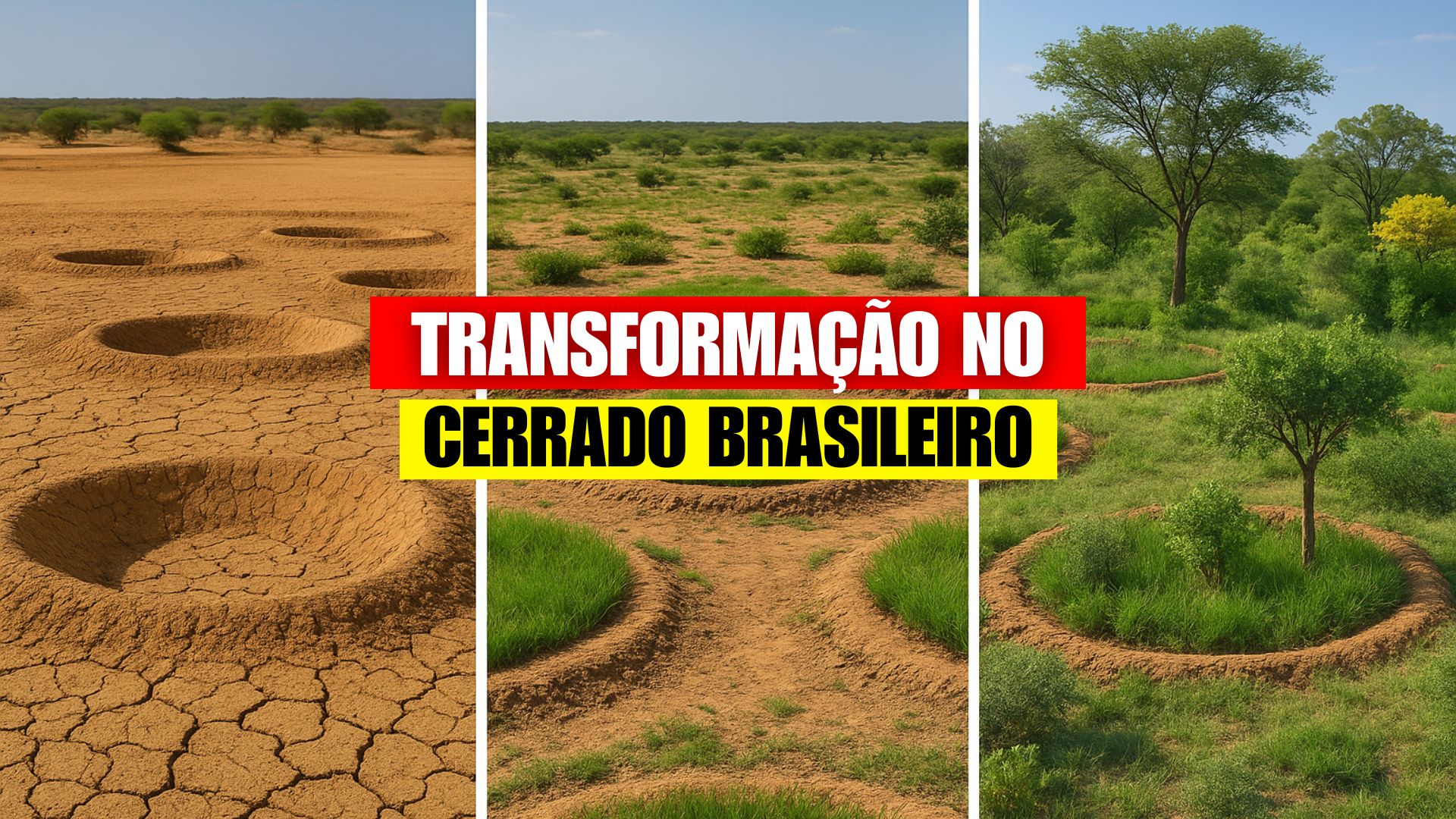


Initiatives for Restoration in the Brazilian Semi-Arid Show How Agroforestry Techniques and Water Management Can Recover Degraded Soil, Increase Water Infiltration, and Boost Local Food Production.
In the Brazilian semi-arid region, environmental restoration initiatives arise in response to the combination of impoverished soils, severe climate, and food insecurity.
Pilot projects in biomes such as the Caatinga have tested the installation of agroforestry systems — consortiums of trees, shrubs, and agricultural crops — as a strategy to recover degraded lands and produce food locally.
Academic studies show that such systems not only help in recovering soil and vegetation, but can also pave the way for a new dynamic of production in the field.
-
Tourist Discovers Forgotten Joaquín Sorolla Painting Worth Up to 60,000 Euros While Strolling in Seville

-
Brazil’s Fernando de Noronha Boasts World’s Most Beautiful Beach, Accessible Only by Descending 208 Cliffside Steps and With No Food Vendors Allowed

-
Wave Rock: Australia’s Giant Granite Wave Stands 15 Meters Tall, Spans 110 Meters, and Showcases 2.7 Billion Years of Erosion in the Australian Desert
-
How to Unclog Showerhead Holes Blocked by Limescale and Hard Water Without Replacing or Hiring a Technician




An investigation conducted in Pernambuco and other states in the Northeast analyzed the implementation of agroforestry systems as a strategy for recovering degraded areas in the semi-arid.
The study concluded that perennial woody plants combined with herbaceous plants and agricultural crops in a diversified arrangement can contribute to improving soil, water, and plant biomass conditions.
Another report from the Center for International Forestry Research points out that agroforestry systems are viable allies in the restoration of altered and degraded areas in Brazil.
The logic behind these projects is that in degraded soils — compacted, lacking vegetation cover, with low water infiltration — the introduction of plant diversity, soil cover, and proper water management can reactivate the functionality of the land.

In the context of the semi-arid region, this means that the soil begins to infiltrate water, organic matter accumulates, and vegetation starts to protect the surface from severe weathering and hot winds.
Soil Recovery and Increased Water Infiltration
In one of the areas analyzed, researchers recorded that the implementation of an agroforestry system based on local species such as sabiá, aroeira, and palm forage contributed to the recovery of vegetation cover and soil improvement.
Studies on the Caatinga indicate that recovery practices for degraded areas should include live cover, vegetative strips, windbreaks, small ditches for rainwater infiltration, and other mechanisms to support new vegetation.
However, the transformation goes beyond soil recovery.
The main objective of these potential “green walls” in Brazil is to generate food for local communities and build food security.
The implementation of fruit trees, food shrubs, and vegetables associated with soil recovery structures allows rural families to produce more resiliently, even in regions with prolonged drought.
Although still strategic and at a pilot scale, these initiatives point to concrete changes.
For example, in restoration areas, vegetation cover reduced soil erosion and improved rainwater infiltration, according to the studies.
This improvement in edaphic and hydric conditions creates a more suitable environment for cultivation and human activity — even though large-scale effects may take time and investment.
Public Policies and Recovery of Degraded Areas
In terms of public policies, Brazil makes international commitments for the restoration of degraded lands.
Through the Low Carbon Agriculture Plan, the country has set goals for recovering degraded pastures and promoting integrated farming, livestock, and forestry systems by 2030.
This type of policy paves the technical and financial way for restoration initiatives focused on food to advance.

However, the projects face practical challenges: the scale of intervention is still small compared to the extent of degraded areas; access to funding and technical support may be limited; knowledge of suitable species, spatial arrangement, and management techniques requires research and training.
The literature highlights that agroforestry systems require planning and adaptation to the local biome.
Impacts on Food Security
For the semi-arid Brazil, the appeal of this model lies in replicating — adapted to the national context — what the Great Green Wall of Africa demonstrates.
Degraded soil can begin to produce again, vegetation can stabilize the local climate once more, and communities can regain control over their own food.
The difference lies in the scale and local conditions.
In Brazil, the Caatinga biome and parts of the Cerrado offer terrain for testing, but also require adaptation to the conditions of soil, climate, and social context of the region.
In practical terms, the report should investigate which municipalities or pilot farms have already implemented agroforestry recovery systems in the semi-arid; which species are being used; what food production has already been generated; how many families have benefitted; what the costs are; what the participation of the local community is; and what barriers have been faced.
This data will help quantify the impact and allow comparisons with other international models.
The report should also seek interviews with restoration technicians, involved farmers, researchers, and representatives of public programs.
In this way, it will be possible to show not only the “potential,” but also the “how it works” in practice — who plants, how they plant, who harvests, who consumes, how long it takes to see results.
If Brazil can scale this type of productive recovery area in the semi-arid, the impact can go beyond ecological restoration: it could mean improvement in food security, decreased migration due to lack of prospects in the countryside, productive diversification for family farmers, and improvement in quality of life in historically vulnerable regions.
It is worth noting that the effects may take years to solidify, but the initial steps are already showing promising signs.
Given this scenario, is the country ready to transform these pilot initiatives into a broad productive recovery strategy, or does it still need to overcome structural obstacles to advance?