Portuguese
  Spanish


Green rocks found in Cave 338, in the Pyrenees, indicate that prehistoric peoples may have ascended remote areas of Spain to process malachite, a mineral linked to copper, in recurring visits marked by fireplaces, jewelry, and children’s bones.
Green rocks found in Cave 338, in a remote area of the Pyrenees, Spain, may indicate that prehistoric people ascended the region to work with copper, according to a study published in Frontiers in Environmental Archaeology.
The discovery includes fireplaces, jewelry, children’s bones, and fragments of a green mineral that researchers believe to be malachite, a source of copper. The collection led archaeologists to review the prehistoric use of high altitudes.
To reach the site, high in the mountains, access is mainly on foot. The team traveled this path during the recent excavation, likely repeating a route used thousands of years before.
-
OnePlus N6 Smartphone to Launch in India with 8,000mAh Battery and 45W SuperVOOC Charging, Lasting Up to Three Days

-
Scientists Plan to Release Air Bubbles Underwater to Protect Antarctica’s “Doomsday Glacier” from Melting

-
Chinese R6000 Drone Combines Airplane and Helicopter Features, Carries Up to 12 People for Multiple Missions
-
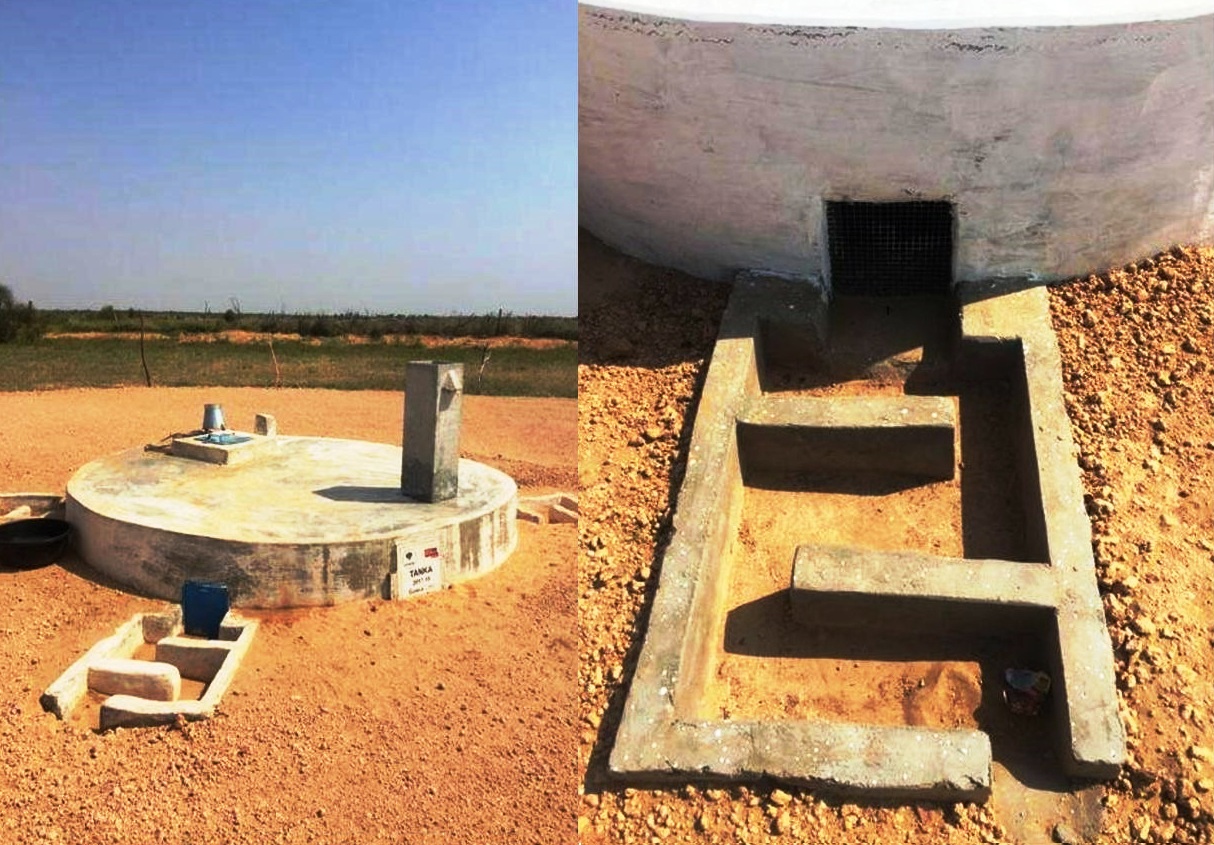
In the World’s Most Densely Populated Desert, Families Dig Funnel-Shaped Underground Cisterns to Capture Rare Rainfall and Store Drinking Water for Up to Eight Months




Copper in the Pyrenees
Before the research, archaeologists considered that prehistoric peoples of that region rarely stayed at high altitudes. The remains of Cave 338 indicate the opposite, pointing to recurring occupations and more complex activities than previously imagined.
Carlos Tornero, the principal author of the study and researcher at the Catalan Institute of Human Paleoecology and Social Evolution, stated that Cave 338 forces a rethink of the role of high mountains in prehistoric societies.
According to Tornero, these spaces have long been seen as marginal. What is documented in the cave shows recurring occupation, complex activities, and clear exploitation of the mineral resources available in the landscape.
The context relates to the transition between the Stone Age and the Bronze Age, when humans began working with copper, a material easy to mold, resistant to corrosion, and a good conductor of heat.
In the mid-fourth millennium BC, peoples of Mesopotamia were already working with copper to create tools and weapons. Around 3,000 BC, European Neolithic cultures also began using the material.
Fireplaces and Malachite
Archaeologists identified four different layers in Cave 338, associated with periods of human visits. The earliest contained only charcoal, while the latest were very thin.
The two intermediate layers, dated from 5,500 to 3,000 years ago, featured several fireplaces with burned fragments of what might be malachite. This green mineral does not occur naturally in the cave.
Therefore, researchers consider the possibility that prehistoric groups carried the malachite up the mountain to process it. The hypothesis is supported by the presence of heat-altered fragments.
Julia Montes-Landa, co-author of the study and an archaeologist at the University of Granada, stated that many fragments were thermally altered, while other materials in the cave do not have the same effect. For her, this indicates deliberate processing.
The researcher emphasized that fire played an important role in the treatment of the material. The difference between the burned fragments and the other elements indicates that the flames did not reach them by accident.
Visits and Possible Ritual
The dating of the objects suggests that Cave 338 did not function as a permanent settlement. Instead, prehistoric peoples would have visited the site frequently, for short periods, between the fifth millennium B.C. and the end of the first millennium B.C.
The presence of children’s bones draws the researchers’ attention. The finding suggests that the cave may have served as a burial or ritual site, in addition to being linked to mineral processing.
There is still no confirmation of a nearby mining point. Among the possibilities raised, the altitude could offer protection, or the extraction sites could be accessible from the area.
For Tornero, the site demonstrates that the Pyrenees were not a marginal territory for prehistoric communities. Cave 338 appears as part of the mobility, occupation, and exploration strategies of these groups.
Archaeologists will continue to climb to Cave 338 for further investigations. The team also seeks to confirm the identity of the green mineral and understand the relationship between malachite and copper in the mountainous region of the Pyrenees.