






 Portuguese
  Spanish
  5 min of reading
  54 comments


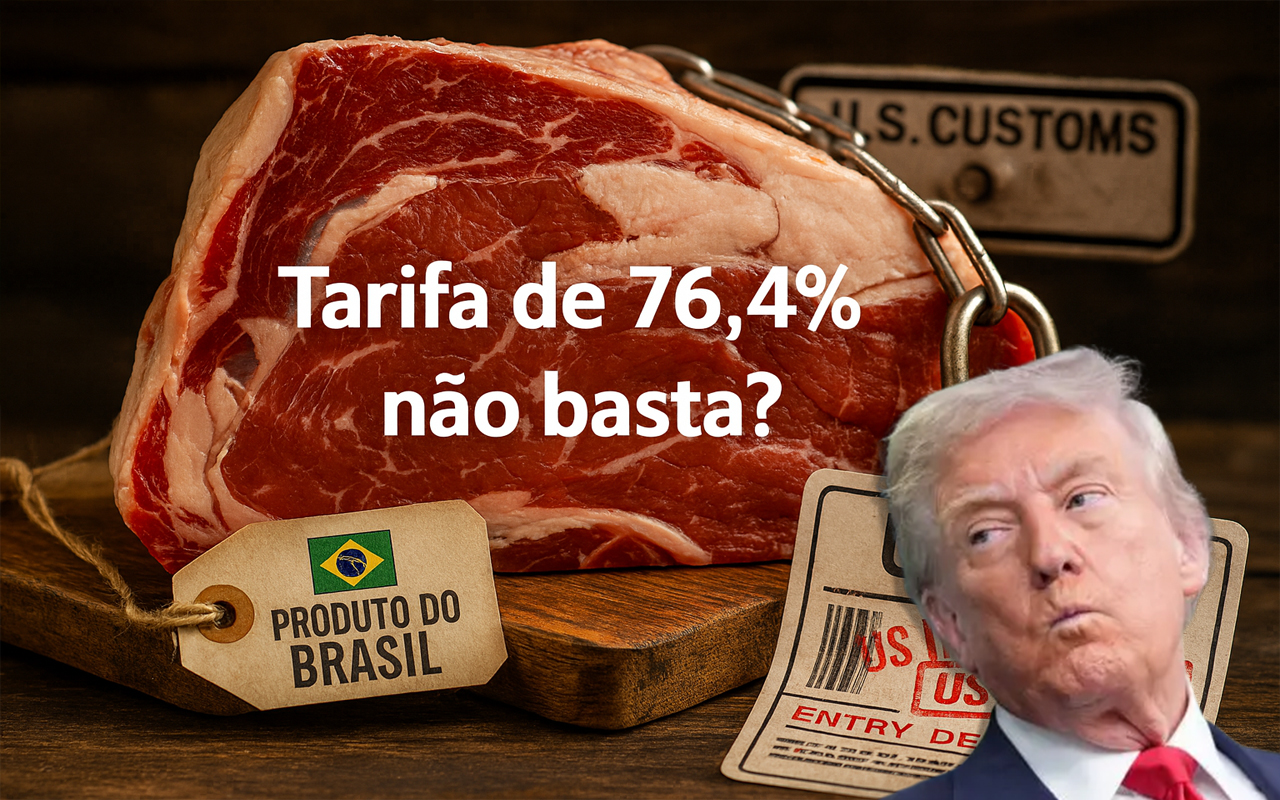


NCBA Wants to Suspend Beef Purchases from Brazil, Claiming That the Total Tariff of 76.4% Will Not Stop Imports. USTR Is Holding a Section 301 Investigation Hearing on Brazilian Trade Practices on September 3, 2025.
Since August 2025, the United States has imposed a 50% additional tariff on products from Brazil. In the case of out-of-quota beef, this surcharge adds to the 26.4% already charged on volumes exceeding the tariff quota. As a result, there is an effective rate of 76.4% for most shipments.
According to Reuters, the new tariff level came into effect on August 6, 2025, with projections of a realignment of global meat trade: the U.S. would tend to purchase more from partners like Mexico and Australia, while Brazil would seek to redirect shipments.
This shock came at a time of tight domestic supply in the U.S. and a declining herd, which makes ground beef mix especially dependent on imported raw materials. For market analysts, the tariff is expected to keep Brazilian beef economically unviable in the short term.
-
Brazilian Joins Homeownership Consortium, Faces Decade of Dual Payments Totaling $141,000, Surpassing Traditional Mortgage

-
Land Rover to Halt Production in July, Putting 371 Jobs at Risk, as Chinese Automaker Negotiates to Convert Factory to 100,000 Vehicles Annually by 2027

-
Mexican Pest Threatens U.S. Cattle Herds at Historic Lows, Potentially Boosting Brazilian Beef Exports as Burger Prices Soar

-
Brazilian Freight Bill Progresses in Congress with $5,000 Minimum Wage, 70% Advance Payment, and Fines Up to $1 Million, as Agriculture and Industry Warn of Rising Costs and Legal Uncertainty


NCBA Wants Total Suspension of Imports; “Tariff Is Just the First Step”
The National Cattlemen’s Beef Association (NCBA) argues that the 50% tariff was a “good first step”, but is not enough to hold Brazil accountable for alleged sanitary and food safety failures. The association has advocated for the government to take tougher measures, such as temporarily suspending purchases until complete audits are conducted. In recent public interventions, association spokespeople have reinforced this stance, reiterating similar requests made in recent years.
NCBA also points out barriers to access for American beef in the Brazilian market and calls for more objective registration and labeling standards in bilateral trade, an issue that has been formally raised with USTR in the current process.
For American ranchers, the tariff alone will not change the economic incentive. With a weaker Brazilian currency and lower production costs, Brazil could, in theory, absorb part of the tax and remain competitive. Hence the call for additional restrictions while the claims are verified.
What USTR Is Evaluating in Today’s Hearing and the Scope of Section 301
The USTR opened a Section 301 investigation on Brazil’s acts and policies on July 15, 2025, across six fronts: digital trade and payment systems, preferential tariffs, anti-corruption, intellectual property, access to the ethanol market, and illegal deforestation. The procedure includes a public hearing on September 3, receiving written comments, and the possibility of actions if unjustifiable or discriminatory practices are found.
The agricultural agenda entered the discussion due to pressure from various sectors. The official schedule for this Wednesday’s hearing (9/3) confirms the testimony of industry representatives and interest groups from both countries. Final decisions may involve new measures or negotiations with the Brazilian government.
It is important to note that the 50% tariffs currently in place on Brazilian products were adopted by a separate act of the American Executive Branch, and any measures from Section 301 would be additional if USTR decides so.
Why Importers Defend Brazilian Beef, The Lean Trim Deficit and Hamburger Prices
On the other side of the table, importers and processing industries argue that the U.S. has a “structural deficiency” of lean trim, an essential input for ground beef and burgers. The Meat Import Council of America and other entities point out that Brazil fills gaps and restricting its beef could raise prices for consumers.
Reuters had already highlighted in July that the 50% tariff on goods from Brazil is likely to increase hamburger prices in the U.S., given the dependence on imported lean meat in a cycle of tight domestic production. Industry publications also report a decline in shipments from Brazil since April and the risk of new inflationary pressures.
For American agrarian economists, fully replacing Brazil’s volume with Australia, New Zealand, or Argentina is possible only partially and at a higher cost, which would not solve the short-term issues in the ground beef market.
Trade Diversion to Brazil, Mexico Takes 2nd Place and Absorbs Part of the Flow
With the U.S. becoming less accessible, Brazilian exporters redirected shipments and, in August, Mexico surpassed the U.S. as the second largest destination for Brazilian beef, according to ABIEC and data tracked by Reuters. This movement confirms the trade diversion expected after the 50% tariff.
Analysts see a trend of greater diversification of destinations in the short term, including Brazil seeking new plant authorizations for the Mexican market and trade negotiations in the region.
For the U.S., the vacuum is likely to be filled by alternative partners, but at higher prices, reinforcing the competition between domestic producers and importers over costs to consumers.
ABIEC Says Exporting Became “Unviable” and the Risk of Losing Up to US$ 1 Billion
The Brazilian Association of Meat Exporting Industries (ABIEC) states that, with the tariff, new shipments to the U.S. are unviable and losses may reach US$ 1 billion in 2025. In July, the president of the entity, Roberto Perosa, already warned that processors were considering replanning or suspending shipments to the American market.
The figures reinforce the scale of the shock; in the first half, Brazilian sales to the U.S. amounted to about 181,000 tons and US$ 1 billion, with significant growth year over year, especially in inputs for hamburgers. With the full tariff, part of this volume is not economically sustainable.
For 2025, the Brazilian industry is expected to recalibrate destinations, accelerating shipments to Mexico and Asia, while monitoring developments from Section 301 and any exceptions.
And what about you, do you think the ban on Brazilian beef is truly a health concern or a fear of Brazilian competitiveness that might guide the market in the U.S.? Leave your opinion in the comments.





Uruguai está comprando a nossa carne
E exportando para o EUA
Eles tem moral com os americanos
Cadê a galera que ontem estavam com a bandeira Norte Americana
Pior que infelizmente sou obrigado a concondar, está mais que na hora de mandar os EUA a ****. Se quiser comprar comprem, se não quiser comprar que fiquem sem carne.