Portuguese
  Spanish


On the South coast of Espírito Santo, a deep-water port project brings together maritime works, billion-dollar financing, and industrial plans linked to oil logistics in the Atlantic, with stages planned until 2028.
The South coast of Espírito Santo is set to receive, in the coming years, a new port structure aimed at deep-water operations.
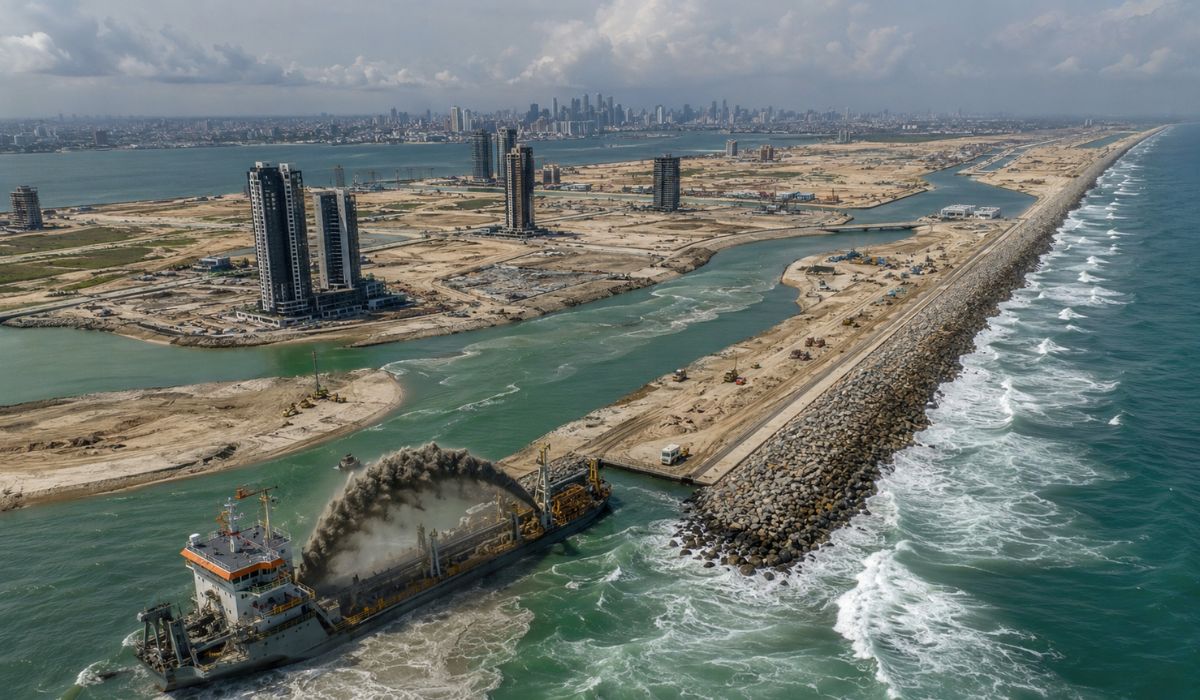
In Presidente Kennedy, Porto Central is preparing the first phase of a private complex that includes dredging, breakwater construction, a turning basin for vessel maneuvering, and a Liquid Bulk Terminal for ship-to-ship oil transfer.
The estimated investment for this stage is R$ 2.18 billion, a value approved by the Merchant Marine Fund for the implementation of port infrastructure.
-
As Brazil Expands Social Welfare, Survey Reveals 40% Blame Poverty on Laziness, While 58% Cite Lack of Opportunities

-
China Tightens Control on Antimony, Driving Prices from $22,000 to Nearly $40,000 per Ton as U.S. Rushes to Bolster Strategic Reserves

-
BlackRock Freezes $1 Billion in Brazilian Renewable Energy, Impacting 1.5 GW of Planned Projects and Highlighting Investor Concerns Over Infrastructure Bottlenecks Cutting Up to 25% of Solar and Wind Generation
-
Labor Shortage: Despite Record Average Salary, 90% of Brazilian Bar and Restaurant Owners Struggle to Hire Key Roles Like Sushi Chefs and Head Cooks


The resources are linked to maritime works deemed necessary to transform the coastal area into a suitable point for receiving large vessels, with an access channel, an area sheltered from waves, and structures associated with industrial operation.
The project’s proposal is to create a maritime base for strategic cargo, mainly oil and liquid bulk.
The planned operation aims to allow cargo to be transferred between ships in a region close to Brazilian coastal routes, without exclusively depending on already established ports or additional displacements to terminals with greater capacity.
Deep-water port requires works before ships arrive
Although the quay is the most well-known part of a port, the operation of large ships depends on prior stages in the maritime environment.
At Porto Central, this phase involves interventions on the seabed, in the vessel maneuvering area, and in coastal protection against direct wave action.
The dredging of the access channel serves to adjust the depth and navigation conditions for ships arriving at the terminal.
The turning basin, on the other hand, functions as an area designated for maneuvers, allowing vessels to turn, position themselves, and operate within the standards defined for the project.
Another planned element is the south breakwater, a structure built to reduce the impact of waves and currents on the operational area.
The combination of these works creates conditions for larger ships to safely access the terminal, in accordance with the technical requirements of port projects of this type.
The first phase involves billions because a deep-water port requires works on land and at sea.
In addition to the area available for the complex’s installation, the project depends on coastal engineering, environmental studies, logistical planning, and structures capable of accommodating larger vessels.
In the case of Porto Central, maritime interventions are scheduled to begin in 2026.
Preparatory land works began in December 2024, with activities related to the implementation of the complex’s initial phase.
Among the next fronts is the installation of a precast concrete plant, which is expected to support the manufacturing of parts used in construction.

Liquid bulk terminal will be the initial focus of Porto Central
The Liquid Bulk Terminal is the main focus of the project’s initial phase.
The structure was planned for ship-to-ship oil transfer operations, a modality known in the sector as ship-to-ship.
In this type of operation, cargo passes from one vessel to another without necessarily going to a land-based storage terminal.
The expectation reported by the company responsible for the project is that the first terminal will begin operations in 2028.
According to Porto Central, initial demand is associated with contracts signed with oil and gas companies, including Petrobras, Equinor, CNOOC, and Repsol Sinopec.
This type of operation is related to Brazilian offshore production, especially in exploration areas far from the coast.
By envisioning a deep-water structure in Espírito Santo, the complex aims to offer a support point for vessels that need to redistribute cargo in the Atlantic and serve supply chains linked to oil and its derivatives.
The location of Presidente Kennedy also forms part of the project’s strategy.
The municipality is located in the extreme South of Espírito Santo, near the border with Rio de Janeiro, in a coastal strip close to oil production areas and maritime routes used by large vessels.
This position helps explain the initial focus on liquid bulk.
Merchant Marine Fund approved R$ 2.18 billion for the project
The R$ 2.18 billion was approved by the Merchant Marine Fund, a federal financing instrument aimed at the development of the merchant marine, the naval industry, and infrastructure related to waterway transport.
The approval was announced by the Ministry of Ports and Airports in March 2026, as part of a round of projects for the naval and port sector.
The financing still needs to be operationalized with a financial institution, such as the National Bank for Economic and Social Development, BNDES, or Caixa Econômica Federal.
The reported deadline for this stage is up to 450 days, and the release of funds occurs in installments, according to the physical progress of the works.
This disbursement model is common in large-scale infrastructure projects.
The amounts are released according to execution stages, measurements, and proof of progress, in addition to compliance with the conditions set out in the financing agreement.
In the round announced by the federal government, Espírito Santo was among the states covered by resources allocated to port and naval projects.
Porto Central appeared among the ventures with the highest approved value, alongside initiatives related to vessel construction and the transport of petroleum derivatives.
Port complex foresees industrial operation in Presidente Kennedy
The first phase is concentrated on the Liquid Bulk Terminal, but Porto Central was conceived as a multi-purpose port and industrial complex.
The project foresees areas designated for different types of cargo and productive activities associated with maritime logistics.
The venture is led by TPK Logística, created in 2011, and has Organização Polimix as its main shareholder, according to institutional information from Porto Central.
The project underwent environmental licensing stages and received an installation license from Ibama for the initial phase.
Another area under study is the implementation of a shipyard focused on the decommissioning of vessels and platforms.
This process involves dismantling, recycling, or proper disposal of maritime structures that have reached the end of their useful life.
To develop this area, Porto Central signed a memorandum of understanding with M.A.R.S Europe.
The company operates in ship recycling and dismantling projects abroad.
The agreement, however, indicates a study and structuring phase, not the start of a shipyard’s operation.
The eventual incorporation of decommissioning into the complex would expand the type of activity planned for the port area.
In addition to cargo handling, the project would also house services related to the offshore industry’s life cycle, including the treatment of maritime structures after the cessation of their operations.


Dredging, breakwater, and environmental licenses define the maritime stage
The project involves significant physical changes in the coastal region.
Dredging alters depths, breakwaters modify how waves reach the protected area, and access channels must follow defined technical parameters for safe navigation.
For this reason, port undertakings of this size depend on licensing, environmental studies, and technical monitoring.
In the case of Porto Central, the environmental licenses cited by the company include Preliminary License nº 498/2014 and Installation License nº 1436/2023, issued by Ibama.
These documents are part of the authorization process for the implementation of the undertaking, within the conditions established by the environmental agency.
The licensing stages also serve to define control, monitoring, and compensation measures when required.
The construction of a deep-water port brings together different technical areas, such as geology, oceanography, civil engineering, navigation, and logistics.
Depth allows for larger vessels; the breakwater reduces direct exposure to waves; dredging adapts the access channel; and the turning basin offers space for maneuvers.
Economic viability, in turn, depends on demand, contracts, and integration with production chains.
The infrastructure needs to be aligned with the projected flow of ships, while operation requires maritime, environmental, and commercial conditions compatible with the type of cargo handled.
Maritime works are expected to mark a new phase of the undertaking
Despite the progress of preparatory works and the approval of funds from the Merchant Marine Fund, the execution of interventions at sea will be the next central stage of the project.
It is at this moment that the implementation ceases to focus primarily on land-based activities and begins to reach the maritime area of the complex.
The informed schedule foresees the start of maritime works in 2026 and operation of the first terminal from 2028.
These deadlines depend on financial contracting, the physical progress of the works, and compliance with the conditions required for the undertaking.
The decommissioning front, on the other hand, remains in the engineering, study, and structuring phase.
The memorandum signed with M.A.R.S Europe indicates an intention for cooperation, but does not confirm the existence of a ready shipyard or one with operations commenced.
Port projects usually advance in successive stages.
First come studies, licenses, area definition, and contracts.
Then, preparatory works begin.
Subsequently, maritime interventions begin, requiring specialized equipment, technical control, and monitoring of sea conditions.
In Espírito Santo, Porto Central reaches a phase where the work now depends on the execution of the maritime structures planned for the first stage.