Portuguese
  Spanish


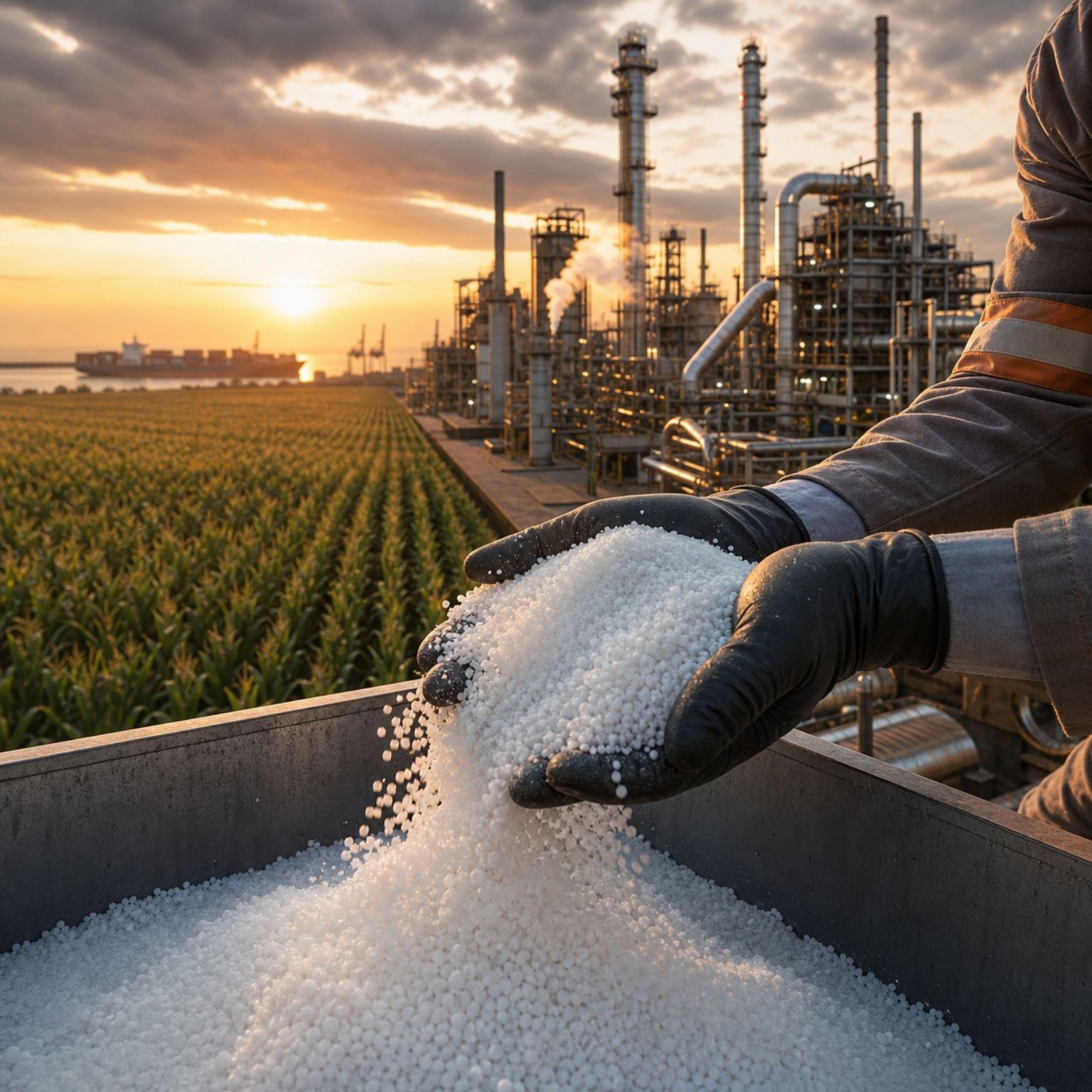

Petrobras restarts urea production in Araucária, Paraná, to reduce external dependence on imported fertilizers, protect agribusiness, and alleviate pressure on essential agricultural inputs.
Petrobras has resumed urea production in Araucária, Paraná, in an initiative aimed at reducing Brazil’s dependence on the international fertilizer market. The move gains significance because it addresses a sensitive point in the national economy: the country is one of the world’s largest agricultural producers, yet it still needs to import almost 90% of the fertilizers used in the fields.
The measure draws attention precisely because of this contrast. Brazil boasts record harvests and plays a central role in the production of cereals, grains, and legumes, but remains heavily dependent on raw materials and inputs from abroad. In a scenario of international conflicts involving major suppliers and strategic regions for energy and fertilizers, the resumption of urea production is now seen as an attempt to reduce vulnerabilities weighing on agribusiness.
What Petrobras’s resumption means in practice

The return of urea production signals an effort to strengthen the agribusiness input base within the country itself. Urea is highlighted as an important input for fertilizer manufacturing, which places Petrobras’s decision in an area directly linked to Brazilian agricultural productivity.
-
Brazilian Workers and Instructors to Train in China on Electric Car Technology Ahead of New Factory Opening in Brazil

-
Viral Message Claiming Government Will Deposit Money for Registering CPF as Pix Key Debunked

-
Embraer Acquires Full Control of Mexican Aircraft Interiors Manufacturer EAI to Reduce Supplier Dependence and Protect Margins Amid Global Aviation Competition

-
Controversial Amazon Highway BR-319 to Receive $1.3 Billion for Road Upgrades and $570 Million for Territorial Governance in Brazil


In practice, this means trying to reduce Brazil’s exposure to external market fluctuations. When domestic production grows, even gradually, the country gains more room to face periods of international instability, supply shortages, and price pressure on rural producers.
The numbers that explain why this decision draws so much attention
The strongest data point in this discussion is the extent of external dependence. According to the source, Brazil imports almost 90% of the fertilizers used in agriculture. This is too high a percentage for a country that holds a prominent position among the planet’s largest agricultural producers.
This number helps explain why the resumption of urea production has gained relevance. It’s not just about reactivating an industrial plant, but about addressing a structural weakness in the Brazilian agricultural chain. In a sector that relies so heavily on fertilizers to sustain productivity and scale, any advance in local production has a strategic effect.
Why urea production became a matter of economic security
The issue has ceased to be merely industrial and has also become geopolitical. The source highlights that much of the current concern stems from Brazil’s dependence on fertilizers and inputs coming from regions affected by wars and international tensions.
On one hand, Russia and Ukraine appear, countries linked to fertilizer supply and still impacted by prolonged conflict. On the other, the Middle East comes into play, where natural gas, used as an input in the manufacturing of these products, is concentrated in a region also experiencing strong instability. This combination shows how the problem extends beyond agriculture and now involves supply security.
What changes for agribusiness with Petrobras’s initiative
For agribusiness, the main change is the attempt to build more resilience within the production chain. Instead of relying almost entirely on fertilizers brought from abroad, the country is starting to seek an internal alternative to reduce some of this exposure.
This is important because the impact of fertilizers is not restricted to an isolated stage of production. They directly influence planting costs and crop yields in regions such as São Paulo, Mato Grosso, Southeast, Central-West, and South. When this input becomes more expensive or scarcer, the pressure spreads throughout the entire agricultural chain.
Why it doesn’t make sense for Brazil to depend so much on external sources
The contradiction highlighted by the source is clear. Brazil is considered the world’s breadbasket, leads or is among the largest global food producers, yet still remains highly dependent on strategic inputs purchased from other countries.
This imbalance helps turn the resumption of urea production into a long-term issue. The logic is simple: it doesn’t make sense to be an agricultural powerhouse and, at the same time, remain vulnerable to external shocks precisely in one of the most important items for sustaining rural productivity.
A resumption that rekindles the debate on long-term planning
The basis also recalls that there have been previous attempts to invest in plants of this type in the country, but some of these projects were suspended due to the potential losses they could represent. Now, the scenario is treated differently, with more emphasis on strategic planning and public policies aimed at the complete agribusiness chain.
This re-frames the debate at another level. Instead of analyzing only the immediate cost of an industrial plant, the discussion now includes the price of external dependence in an environment of crises, conflicts, and high international volatility. In this context, local production ceases to be merely an industrial cost and comes to be seen as a security reserve.
What’s at stake beyond urea


More than a specific input, what is at stake is Brazil’s ability to protect itself from external disruptions in an area vital to the economy. If agricultural production depends on fertilizers, and these fertilizers depend on international supply chains pressured by war, any interruption can raise costs and compromise planning in the field.
Therefore, Petrobras’s resumption in Araucária gains a significance that goes beyond the factory. It enters the debate about productive sovereignty, agricultural competitiveness, and the country’s preparation to face times when the global market ceases to be a solution and becomes a risk.
The next steps of a strategy that still needs to advance
The resumed production in Paraná is presented as a beginning, not as a complete solution to Brazilian dependence. The very logic of the measure is to gradually reduce the need for imports, without suggesting that the country will quickly solve a problem accumulated over many years.
Even so, the movement has symbolic and practical value. Symbolic because it shows an attempt to place national industry back at the center of a strategic chain. Practical because it can open space for new discussions about investment, industrial integration, and strengthening an essential area to sustain Brazilian agribusiness in the long term.
Do you think Brazil will truly be able to reduce its dependence on imported fertilizers, or will it remain vulnerable to international crises for many years?