Portuguese
  Spanish


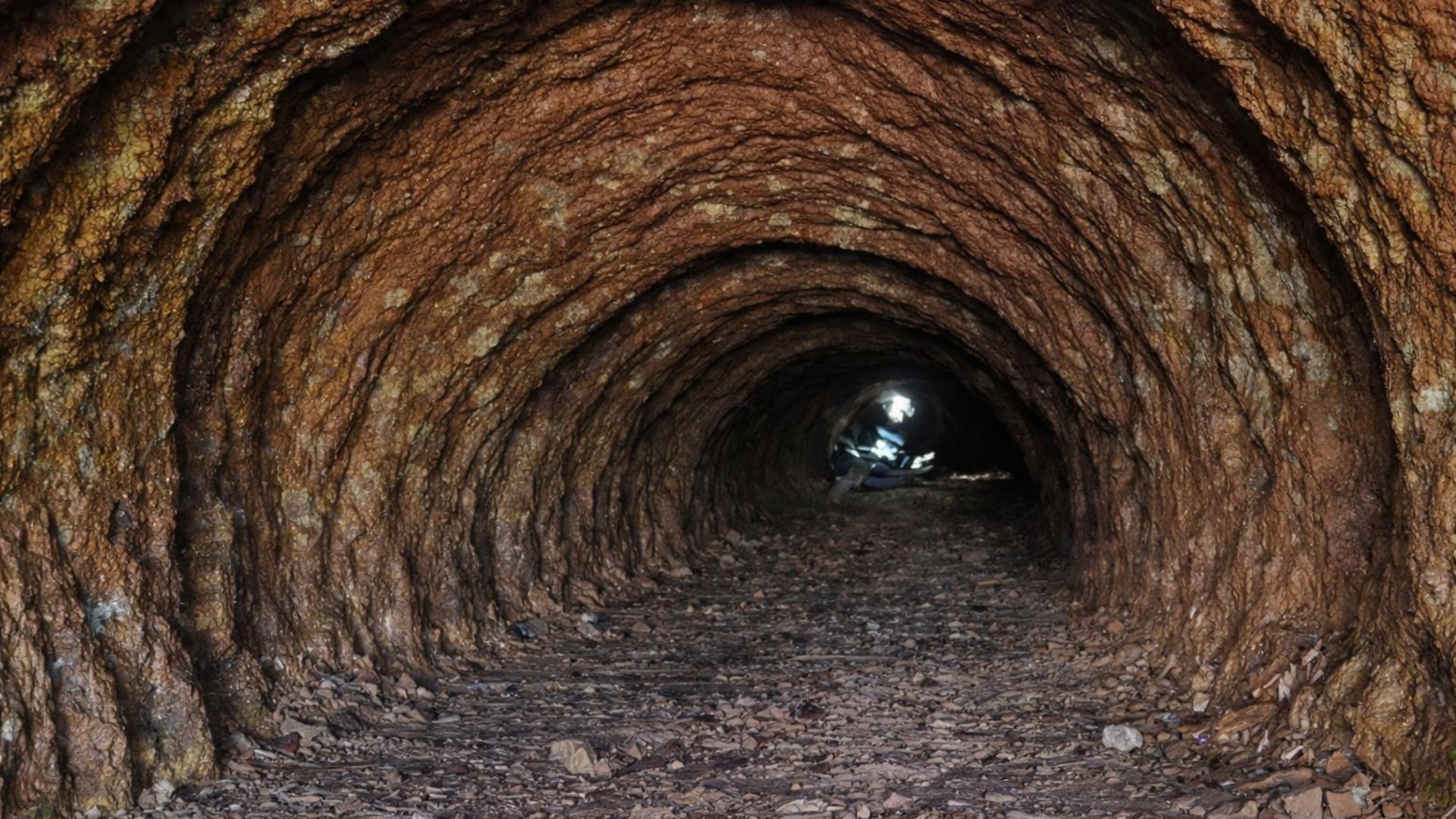


Giant Underground Structures, Opened by Extinct Megafauna Animals, Cross Different Regions of the Country, Remain Hidden Beneath the Soil, and Reveal Rare Clues About Brazilian Prehistory, While Scientists Still Seek to Understand Their Origin, Functions, and the Challenges of Preserving These Millennia-Old Tunnels.
Scattered across rural areas, hillsides, and seemingly ordinary land, underground tunnels several meters high have been identified in different regions of Brazil.
Excavated by extinct megafauna animals, these structures continue to challenge researchers, both due to their scale and the questions about how they were opened, why they existed, and how they should be protected.
Called paleotocas, they are primarily concentrated in the South and Southeast and already total more than 1,500 documented records over the past few decades.
-
Man wins millions in the lottery, starts receiving money help every day, abandons his own house and says he regrets the prize.

-
Japanese doctors complete 34 years of volunteer mission in Vietnam and have already performed more than 3,000 free surgeries to correct cleft lip and palate in children from families unable to afford treatment.

-
The man who started by cleaning bricks and unloading wagons entered the warehouses of Dallas and helped transform commercial real estate into a billion-dollar business.
-
An entrepreneur from Alagoas started by selling organza bags as extra income, ventured into digital after motherhood, and transformed personalized packaging into a national business that sells 35,000 units per month, generates about R$ 60,000, and employs 14 people.




In many cases, the passages go unnoticed, hidden by dense vegetation or irregular terrain.
When they do appear, however, they draw attention due to their size and the deep marks on the walls, compatible with claw usage, and not human tools.
As new findings have been repeated in states such as Santa Catarina, Rio Grande do Sul, Minas Gerais, and Rondônia, scientific interest has grown and gained more visibility.
What Are Paleotocas and Why Do They Intrigue Researchers
From a scientific perspective, paleotocas are cavities interpreted as tunnels or chambers excavated in rock by large prehistoric animals.
Unlike voids formed by water action or natural geological processes, many of these corridors feature long, parallel, and deep grooves, consistent with repeated scratching.
These vestiges reinforce the hypothesis of biological excavation and rule out the possibility of purely natural origin.
More than identifying the author of the excavations, studies seek to explain how it was possible to open such wide and durable structures.
In some places, the corridors allow an adult to walk without bending. In others, they have branches and widened chambers, suggesting prolonged use or multiple functions over time.
Accidental Discovery Revealed Tunnels Underhabited Areas

A large part of the known paleotocas came to light unexpectedly, after collapses or sudden openings in the soil.
One of the most emblematic episodes occurred in 2009 when a farmer was working in a field, and the tractor sank after breaking the ceiling of an underground cavity.
Upon investigating the site, he found a tunnel that continued beneath his own house.
The structure was about two meters high, of similar width and more than ten meters long.
Inside the cavity, researchers identified deep marks on the walls. The observed pattern indicated that the space had not been opened by modern machines or by ancient human excavations.
From geological analysis, studies began to attribute the tunnel to extinct animals, such as giant sloths or giant armadillos, which inhabited the region at least 10,000 years ago.
Giant Animals Are the Main Suspects of the Excavations
The main hypotheses point to giant terrestrial sloths and large prehistoric armadillos.
These animals had very different proportions from current species.
Described by researchers as “hamsters the size of elephants,” some giant sloths could reach up to four meters long.
While certain species moved on four legs, others could partially rise as bipeds.
The giant armadillos, comparable in size to cars, would have had enough strength to open extensive corridors and maintain tall passages.
Despite this evidence, the definitive identification of which species excavated each structure has not yet been established.
Where the Largest Paleotocas Mapped in the Country Are Located
The most numerous records are concentrated in the South and Southeast regions. Santa Catarina and Rio Grande do Sul contain most of the cataloged structures.
Still, there are significant occurrences in Minas Gerais and Rondônia.

In Minas Gerais, researchers identified a set formed by six tunnels that reach 40 meters in length and lead to chambers about 10 meters wide and four meters high.
In the Serra do Gandarela region of Caeté, the largest paleotoca ever recorded in the state is located.
The tunnel is 340 meters long and has become the subject of legal disputes for involving an area of environmental and economic interest.
Judicial Protection and Disputes Over Preservation
The need to preserve these structures brought the issue to the judiciary in Minas Gerais. In June 2023, a ruling determined protective measures for the paleotoca of Serra do Gandarela.
The recognition of the cultural and scientific value of the cavity reinforced the urgency to prevent irreversible damage.
With the development of the debate, federal agencies have also begun to monitor the case.
The Federal Public Ministry demanded actions from Iphan to ensure the preservation of the area amid risks associated with mining activity.
Marks on Walls Serve as Records of the Past
A large part of the scientific interest is focused on the marks left on the walls of the paleotocas.
These grooves help indicate direction of movement, type of claw, and intensity of force applied during excavation.
“You find an open book. You observe, you feel that this was not done by humans,” said geologist Heinrich Theodor Frank.
To deepen the analysis, researchers have begun to use more precise documentation techniques.
Luiz Carlos Weinschutz develops 3D mapping work to identify excavation patterns and search for vestiges that help confirm the species involved.
“This study is still new, we have years and years of research ahead in this area,” he said.
The Purpose of the Tunnels Still Lacks a Definitive Answer
Even with the most likely attribution to extinct animals, the use of paleotocas remains under discussion.
Among the hypotheses discussed are shelter for young, protection against predators, and body temperature regulation.
In some contexts, prolonged resting periods are also considered for their use. The main difficulty lies in the scarcity of preserved organic material.

Without bones, fossilized hairs, or other biological vestiges, analyses primarily depend on the marks and geological context.
Human Presence and Impacts Over Time
For a long time, locals and even researchers believed that some of these passages were ancient human works.
In certain locations, there are records of rock art associated with paleotocas.
When the drawings are engraved directly into the rock, dating becomes especially complex.
Oral reports indicate that indigenous peoples were already aware of these tunnels before modern science. Some narratives link them to floods and subterranean passages.
On the other hand, beliefs about hidden treasures attracted curious wanderers and treasure hunters. Disorderly excavations ended up compromising the soil and possible archaeological evidence.
Other Discoveries Reinforce Brazil’s Prehistoric Richness
Paleotocas are part of a broader set of findings that help reconstruct Brazilian prehistory.
In São Paulo, researchers identified fossilized eggs of carnivorous dinosaurs, estimated to be between 60 and 80 million years old.
The material may indicate the preservation of embryonic structures.
Also in São Paulo, studies revealed fossils of prehistoric crocodiles, expanding knowledge about the predators that lived in the region.
With giant tunnels still unexplained and new structures emerging in areas threatened by construction and mining, what is missing for these marks of prehistory to be treated as a priority scientific heritage in Brazil?