Portuguese
  Spanish


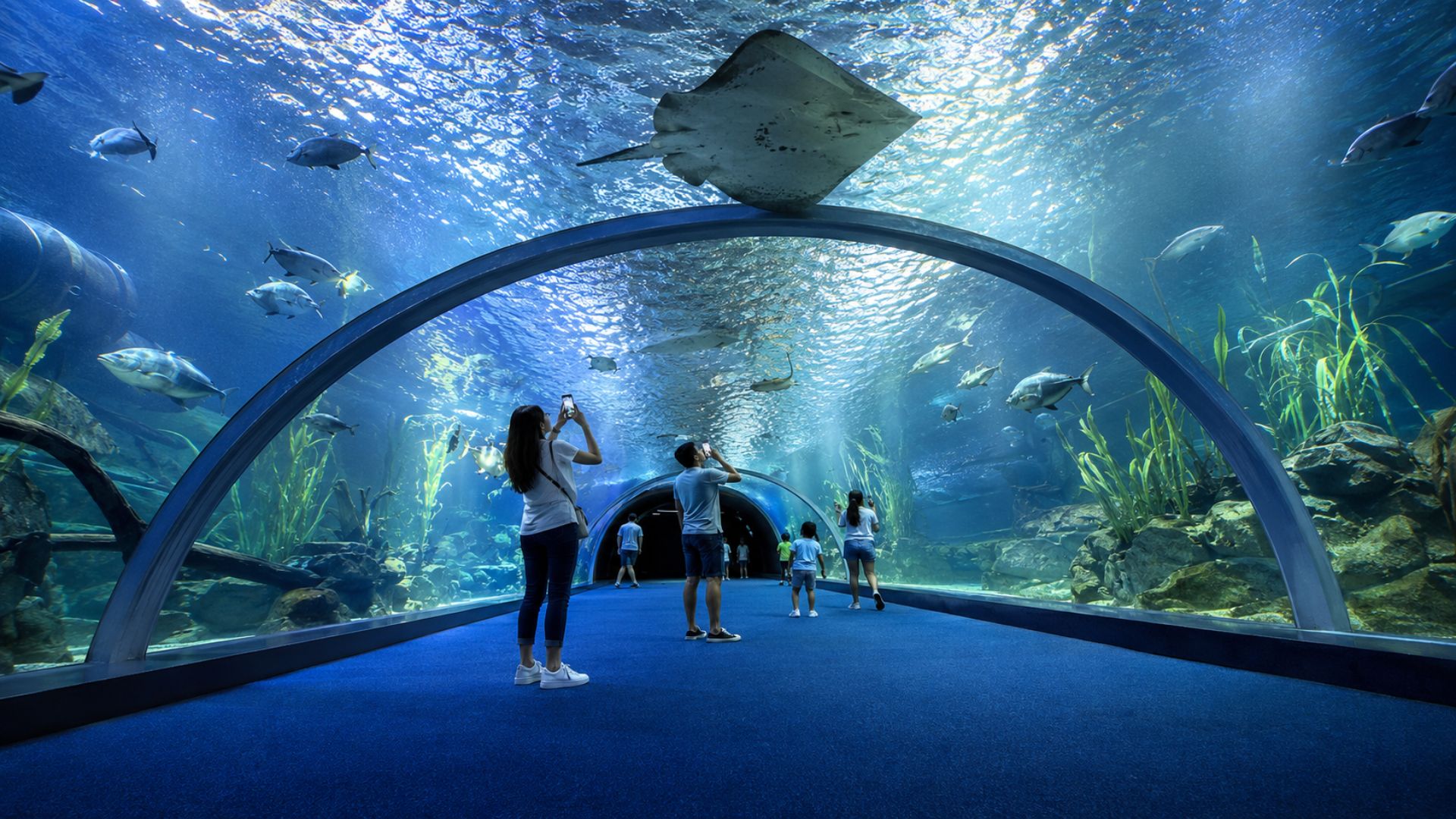


Bioparque Pantanal will host a national congress with debates on biodiversity, animal management, and environmental education in Campo Grande, bringing together specialists, researchers, and students at the world’s largest freshwater aquarium.
The Bioparque Pantanal in Campo Grande will be the venue for the 49th Congress of the Association of Zoos and Aquariums of Brazil from May 26 to 30, 2026, with the participation of researchers, students, and professionals related to wildlife conservation, biodiversity, and the management of animals under human care.
With the theme “A Dive into Conservation: Science, Society, and Environment”, the national meeting will include discussions on applied research, environmental education, zoo and aquarium management, as well as strategies aimed at protecting endangered species and strengthening the scientific role of these institutions.
Located in the Parque das Nações Indígenas, the complex is presented by the government of Mato Grosso do Sul as the world’s largest freshwater aquarium, with a structure focused on visitation, research, and the conservation of aquatic and terrestrial species.
-
In 1961, Hollywood held a unique audition with 152 black cats to cast the perfect feline for the horror film The Black Cat.

-
Brazilian Truck Driver in the U.S. Earns $11,200 Commission on Heavy Haul, Highlights High Income Potential and Demands of the Job

-
Teen without prom date invites pet cat to dance, goes viral with tuxedo and pink dress photoshoot
-
Boy Uses Mother’s Sewing Machine to Make Teddy Bears for Hospitalized Children in Tasmania Over 365 Days




According to institutional data from Bioparque Pantanal, the space has 21,000 square meters of built area, 5 million liters of water, and 453 species of animals, a number higher than the reference of 380 species published in previous reports about the enterprise.
The update of official data indicates an expansion of the living collection maintained in the complex and reinforces the use of the space in research, management, and environmental education activities, especially in actions related to Brazilian biomes and freshwater fauna.
AZAB Congress brings science and conservation closer in the Pantanal
The 49th edition of the AZAB congress will feature a program aimed at professionals in Biology, Veterinary Medicine, Animal Science, and related fields, with activities on biodiversity, management, animal welfare, scientific communication, and environmental education.

According to the event’s organization, the proposal is to gather technical experiences from different Brazilian institutions and expand the exchange between teams working in zoos, aquariums, universities, research centers, and agencies related to wildlife conservation.
Held annually since 1977, the congress brings together zoos, aquariums, researchers, public managers, and representatives of private institutions working with animals under human care, ex situ conservation, environmental education, and applied scientific production.
In the 2026 edition, the choice of Campo Grande places the Pantanal among the themes associated with the program, due to the direct relationship between the biome, species conservation, and the scientific structure maintained at the Bioparque.
In addition to lectures and round tables, the program includes training activities related to practical challenges faced by technical teams in the daily life of zoos and aquariums, including management routines, communication, and educational actions.
Among the planned topics are technical photography, institutional communication, wildlife management, and environmental education strategies, areas that integrate the work of professionals involved in the care and conservation of species.
The event at the Bioparque Pantanal links the congress to a structure that already hosts visitation, research, and animal management activities, in addition to technical areas intended for the monitoring of species kept under human care.
The location has exhibition tanks, quarantine sectors, and spaces used in research, conservation, bioeconomy, and sustainability, according to information released by the complex’s administration and the state government.
Bioparque Pantanal marks milestone in species reproduction
In March 2026, the Bioparque Pantanal reported reaching the milestone of 100 species reproduced under human care and naturally, data disclosed by the complex’s administration in an institutional publication.
Of the total reported, 32 species specifically belong to the Pantanal, a number presented by the institution as part of the work of maintaining animal populations in a controlled environment and specialized technical monitoring.
According to the Bioparque, the reproductive results are related to conservation actions involving monitoring, management, animal welfare, veterinary follow-up, and scientific research applied to the needs of each species.
In monitored environments, animal reproduction allows the observation of biological cycles, behavior, genetics, and environmental requirements of native species, information used by researchers and technical teams in conservation protocols.
The institution also claims to maintain the largest living freshwater genetic bank, information present in official materials from the state government and the Bioparque itself, associated with the diversity of species kept in the tanks and ongoing research.
This definition, released by institutional channels, appears linked to projects developed in partnership with researchers and educational institutions, without public detailing, in the consulted materials, of independent comparative methodology.

In the case of Pantanal species, the monitoring carried out by Bioparque involves a biome subject to changes in rainfall patterns, fires, habitat alterations, and environmental pressures recorded by research and conservation bodies.
These factors make management, monitoring, and environmental education initiatives integrate policies and projects aimed at fauna conservation, especially when associated with studies on reproduction, behavior, and species adaptation.
Structure of the world’s largest freshwater aquarium combines visitation and research
Also known for its visitor flow, Bioparque Pantanal functions as a public facility for science, research, and environmental education, with spaces dedicated to species exhibition and technical areas focused on animal care.
During the visitation, the complex presents different aquatic environments and Brazilian species, while internal sectors maintain routines of management, reproduction, feeding, behavioral observation, and veterinary monitoring conducted by specialized teams.
The structure includes 239 tanks, according to institutional data released by Bioparque Pantanal, a number that includes exhibition areas, supply, quarantine, effluent reuse, and spaces reserved for technical purposes.
Of this total, 31 tanks are intended for exhibition, while the others support activities of support, research, conservation, bioeconomy, and sustainability, according to information provided by the complex’s administration.
The separation between areas open to the public and technical sectors allows organizing visitation without interrupting care, management, and study routines, practices necessary to maintain species in a controlled environment.
Behind the scenes, the work includes water quality control, appropriate feeding, veterinary monitoring, behavior observation, and application of protocols defined according to the biological, environmental, and sanitary characteristics of each species.
With the congress taking place, researchers, students, and professionals will have access to debates and activities that can expand the circulation of technical knowledge within the very space where part of these practices is executed.
The scheduled program creates opportunities for the presentation of studies, discussion of methodologies, technical exchange, and the formation of cooperation networks among institutions from different regions of the country involved with fauna and conservation.
Mato Grosso do Sul hosts national congress on zoos and aquariums
By hosting the congress, Campo Grande will welcome an audience specialized in conservation, applied science, and fauna management, areas directly related to the operation of zoos, aquariums, research centers, and environmental institutions.
The choice of the Biopark as the venue also connects the event to Mato Grosso do Sul’s strategy of associating tourism, research, and environmental education around the Pantanal, according to institutional materials released by the state government.
During the program, participants are expected to discuss topics that go beyond public visitation in zoos and aquariums, including ex situ conservation, animal welfare, communication with society, and the training of new professionals.
These topics appear on the sector’s agenda because institutions that keep animals under human care work not only in public exhibition but also in research, environmental education, reproduction, management, and species conservation.
For the Biopark, hosting the congress takes place after the consolidation of visitation routines, scientific dissemination, and presentation of results related to the reproduction of species kept under human care.
Inaugurated in 2022, the space has started to publicize advances in scientific projects and management actions while expanding its presence in tourism, environmental education, and biodiversity conservation activities.
The May 2026 program will bring together specialists in an environment that concentrates fauna, technical infrastructure, and scientific projects, with activities aimed at sharing experiences among sector professionals.
Also under discussion will be the role of zoos and aquariums in research, environmental education, and species conservation, a topic present in technical discussions in the area and in the national program of AZAB.
With nearly 5 million liters of water, hundreds of species, and an agenda focused on biodiversity, the Pantanal Biopark will be the venue for a congress dedicated to animal conservation and scientific production in Brazil.
At the meeting, the Campo Grande space will host activities on animal conservation, professional training, and applied research, in a program directed at specialists, students, and institutions working with fauna.