Portuguese
  Spanish


Images captured from the International Space Station reveal how long exposure technique transforms lights of Earth and stars into continuous traces, creating unusual visual compositions that unite science, orbital speed, and human perception in records made hundreds of kilometers above sea level.
About 400 kilometers from Earth and at a speed close to 28 thousand kilometers per hour, the International Space Station offers a scenario where photography and scientific observation intersect in a rare way.
In this environment, NASA astronaut Don Pettit stood out by transforming nighttime passes of the station into long exposure images in which urban lights, stars, and the glow of the atmosphere appear as continuous traces and unusual visual compositions.
How long exposure reveals the movement of the ISS
The images do not result from a single prolonged click, as the simplified description of the technique often suggests.
-
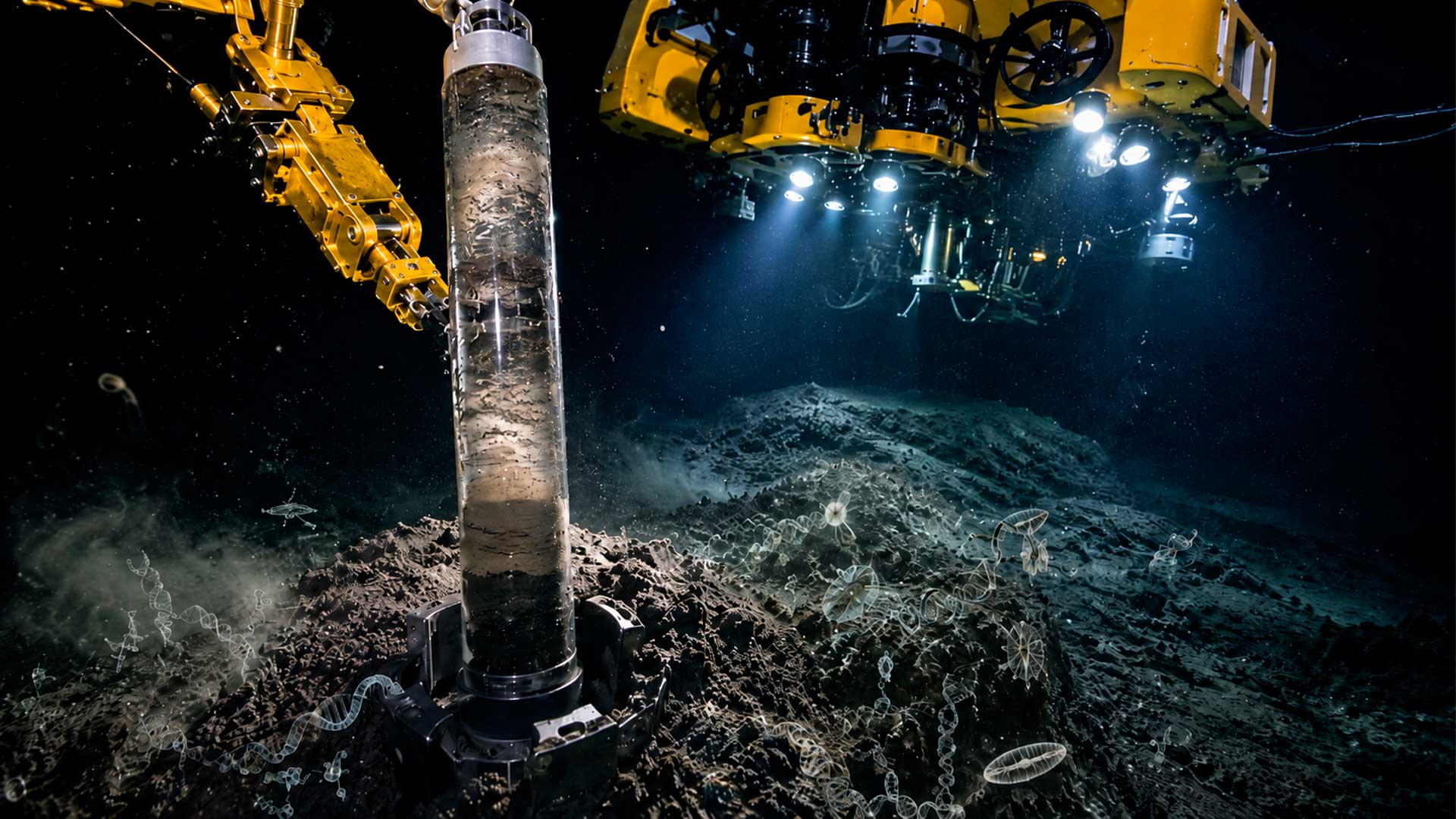
At a depth of 5,000 meters, where there is no sunlight, researchers found ancient DNA preserved in the mud of the South Atlantic and discovered signs of organisms that did not match known records.

-
At 77 years old, a retired woman who never tires of learning completes her second degree in design in Ceará and moves people by revealing the help of her 98-year-old mother in the final project.
-
China’s masterstroke: a plant capable of regrowing even when buried by sand helps to recover more than 7,300 hectares of desert with 5 million seedlings, roots over 10 meters deep, and rainfall below 150 mm per year.
-
Portugal placed 1.4 million m³ of sand in the Algarve, spent 14.9 million euros to recover 6.7 km of beaches between Quarteira and Garrão, and is now trying to gain 37.5 meters of shoreline before the sea advances again.




According to Pettit, the effect is achieved through a sequence of exposures of 15 to 30 seconds, then stacked in software to produce the visual equivalent of a longer exposure, sometimes close to half an hour during the darkest part of each 90-minute orbit.
This procedure causes any light source to record the station’s movement around the planet.
In practice, cities appear as golden lines, stars form white streaks, and the atmospheric layer emerges as a colored band, simultaneously revealing the orbital speed of the ISS and the geometry of the movement.
Technical challenges of photographing in space
The aesthetics of these photographs arise from a highly technical routine, marked by limitations that do not exist for photographers on Earth.
Pettit explained that the greatest difficulty begins with the station’s own windows, as the framing depends on the fixed position of these visors and the need to photograph through a set of panels with multiple reflective surfaces.
At the dome of the station, a module known as the “window to the world,” the crew has seven windows aimed at observing the Earth, spacewalks, and vehicle maneuvers.
It is precisely there that many of these records are made, although the visual gain comes with a persistent problem: internal reflections, light leaks, and the thickness of the glass set can compromise sharpness and contrast.

Equipment and adjustments for sharp images in orbit
To work around this, astronauts use a type of dark cover fitted to the window, minimizing light entry from inside the cabin.
Night sessions include different cameras and lenses positioned around the dome, while the final setup depends on precise focus on stars, manual adjustment, and strict control of ISO sensitivity.
Sharpness also requires specific corrections for an environment dominated by radiation, heating of the camera body, and operational vibrations.
Astronauts use long exposure noise reduction and “dark frames”, dark images recorded with the same settings to remove interference from the sensor.
In some cases, Pettit worked with a tracker adapted for orbital rates, allowing stars to be kept as points for up to about 30 seconds while the rest of the scene moves.
When science and art meet in NASA’s images
The production gathered by the agency shows the reach of this method in different visual contexts.
Among the records are star trails seen from the ISS, fields of stars over the curvature of the planet, luminous patterns over coastal regions, and images where atmospheric phenomena contribute to scientific observations.
This point helps dispel the idea that it is merely an aesthetic exercise.

Each photograph gathers enough information to support a detailed reading about atmosphere, urban lighting, clouds, and the optical behavior of Earth.
The relevance of these images also lies in how they reorganize human perception of scale and movement.
From the station’s view, Earth appears as a system in continuous activity, with rapid transitions between night and dawn and luminous patterns that highlight the planet’s dynamics.
By transforming operational limitations into visual language, Pettit has consolidated a production that circulates between science, documentation, and art.
The result is images that seem improbable at first glance, but are born from a meticulous process inside a module with seven windows, where every second of darkness and every technical adjustment directly influence the final result.