Portuguese
  Spanish


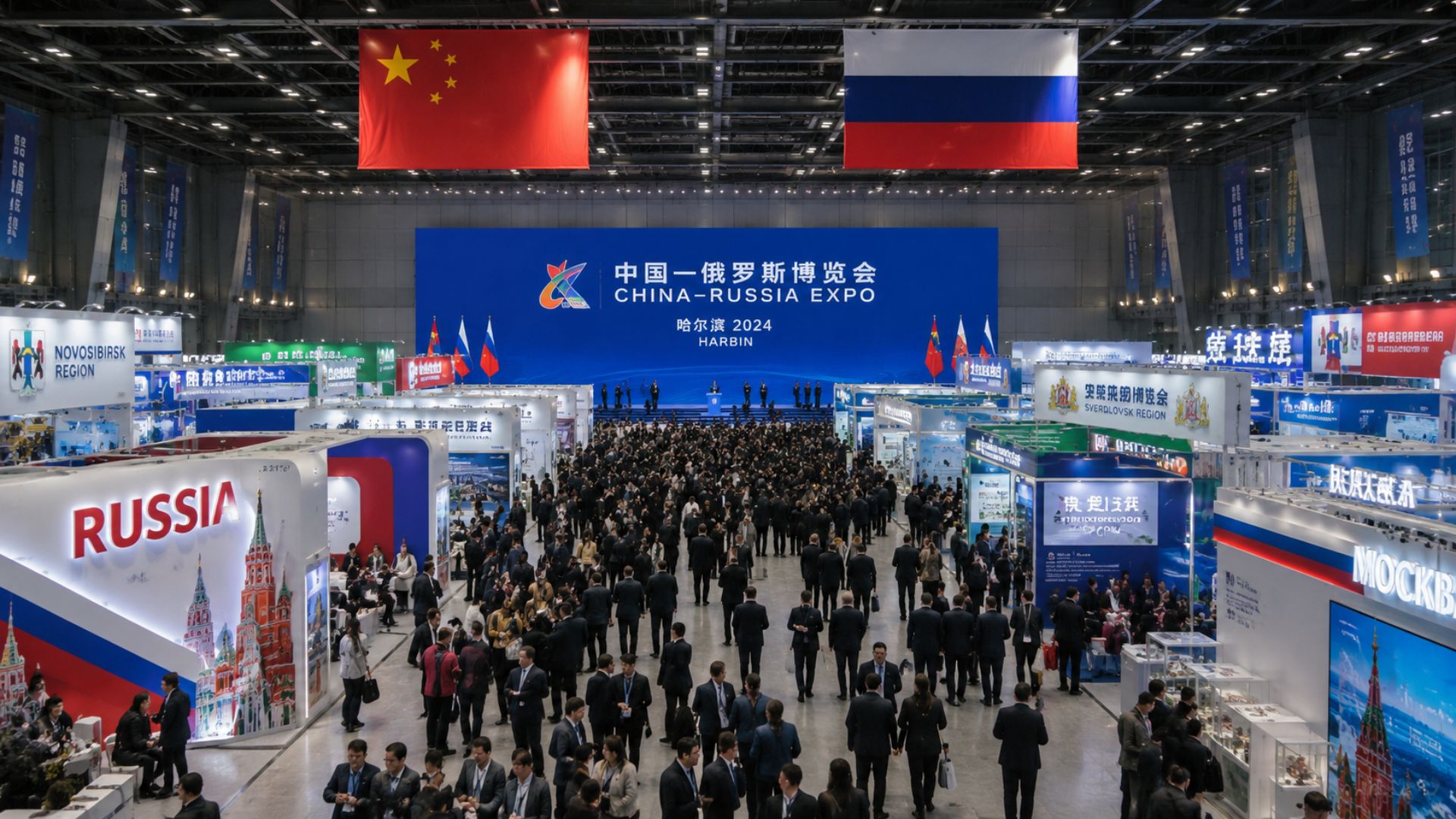

China hosted the 10th China-Russia Expo in Harbin, the largest bilateral business platform between the two countries. According to CGTN, the five-day event attracted nearly 300 Russian companies, more than 5,000 buyers, 1,500 exhibitors from 46 countries, and recorded the launch of 500 products and 800 new projects. Bilateral trade reached 61.2 billion dollars in the first quarter of 2026, an increase of 14.7%, consolidating China as Russia’s largest trading partner for the 16th consecutive year.
China and Russia have just concluded the largest trade showcase ever held between the two countries. The 10th China-Russia Expo, which ended this Thursday (22) in Harbin, the capital of Heilongjiang province, brought together nearly 300 Russian companies and a purchasing delegation with more than 5,000 members in 55,000 square meters of exhibition space. The event functioned as a continental-scale market: 500 products were launched and 800 new projects, partnerships, and technologies were presented, covering everything from smart equipment and artificial intelligence to creative cultural items, jewelry, crafts, textiles, and Russian food.
The context of the fair is not coincidental. China has been Russia’s largest trading partner for the 16th consecutive year, and bilateral trade reached 227.9 billion dollars in 2025, surpassing 200 billion for the third consecutive time. In the first quarter of 2026, the volume rose to 61.2 billion dollars, an increase of 14.7%, with China’s exports to Russia growing 22% and Russian imports advancing 9%. The Harbin Expo is the physical translation of these numbers: a space where companies from both sides negotiate contracts, test products, and build relationships that sustain ever-growing trade, even under Western sanctions.
What happened during the five days of the Expo in Harbin
The 10th edition of the China-Russia Expo attracted more than 1,500 companies from 46 countries and regions, highlighting the nearly 300 Russian companies that showcased advances in high-tech manufacturing, energy equipment, modern agriculture, and digital technologies. The Russian Export Center, represented by Evgeny Bazhov, held 104 business matchmaking sessions on the first day alone, negotiating with 43 Chinese companies in discussions that totaled a cooperation potential of 3.9 billion rubles, about 55 million dollars.
-
Engineers spend a decade building a $2.3 million bridge, but the project features a surreal curve, becomes a joke, and ends with seven suspended.

-
7-year-old boy acts without hesitation and saves his 1-year-old brother from drowning in the family pool in Texas: the boy’s courage impressed the sheriff and he may now receive an official police commendation.

-
The forgotten Atari stock that seemed like something out of a movie: millions of sealed cartridges were buried underground and were sold for very low prices.

-
Collector adapts forklift electric motor in a Kombi Corujinha pickup, hides 16 batteries under the bed, and makes the Brazilian classic run silently with up to 90 km of range.



The fair also served to present 32 exhibitions covering the entire Russian agricultural production chain, as well as cultural products that go beyond the chocolate stereotype. Russian representatives declared that the goal is to show that the country’s products are not limited to commodities but include cultural goods, high-quality crafts, and competitive technologies. On the Chinese side, automobiles, home appliances, and machinery remain the strongest exports to the Russian market.
How the composition of trade between China and Russia is changing
One of the most revealing data during the Expo was presented by Ma Chi, an official from the Ministry of Commerce of China: the share of electromechanical and high-tech products in bilateral trade has been consistently growing. Russia, which historically exported almost exclusively energy and minerals to China, saw the share of non-primary products rise from 22% to 27% of the total.
On the Chinese side, automobiles, home appliances, and industrial machinery dominate exports to Russia. The change in the composition of bilateral trade is significant because it indicates that the relationship is diversifying beyond the dependence on oil and gas. The Harbin fair reflects this transformation: among the 800 projects presented, there are partnerships in the digital economy, green development, cross-border e-commerce, and artificial intelligence technologies.
The logistics that support the world’s largest bilateral fair
The scale of the Expo required a logistics operation to match. Requests for charter flights for oversized cargo destined for Harbin grew 19% compared to 2025, and hotel occupancy in the city exceeded 90% during the five days of the event. The organizers also tested a digital “Expo Pass” that functions as a local transport card and digital yuan wallet, facilitating payments for delegations from countries where UnionPay acceptance is limited.
China’s visa waiver policy for Russian citizens was highlighted by Bazhov as a decisive factor in attracting participants visiting the fair for the first time. Chen Shijun, chairman of the Heilongjiang committee of the Council for the Promotion of International Trade, stated that economic cooperation between the two countries has expanded beyond traditional sectors and now includes the digital economy, sustainable development, and e-commerce.
What the Expo Reveals About the Economic Alliance Between China and Russia


The 10th China-Russia Expo took place in the same week that Putin visited Beijing for the 25th time, in a meeting that resulted in 40 bilateral agreements and joint declarations on security and trade. The Harbin fair is the commercial face of this political alliance: while the presidents sign declarations in Beijing, companies negotiate contracts in Harbin.
For China, Russia offers cheap energy, minerals, and agricultural products in volumes that compensate for the restrictions imposed by the closure of the Strait of Hormuz. For Russia, China is the market that absorbs what Western sanctions prevented from going to Europe. The fair shows that bilateral trade is not just emergency: with 10 editions and growing numbers each year, it has become structural.
Did you know that China has been Russia’s largest trading partner for 16 consecutive years? Do you think this economic alliance will strengthen even more with Western sanctions or will it reach a limit? Tell us in the comments.