Portuguese
  Spanish


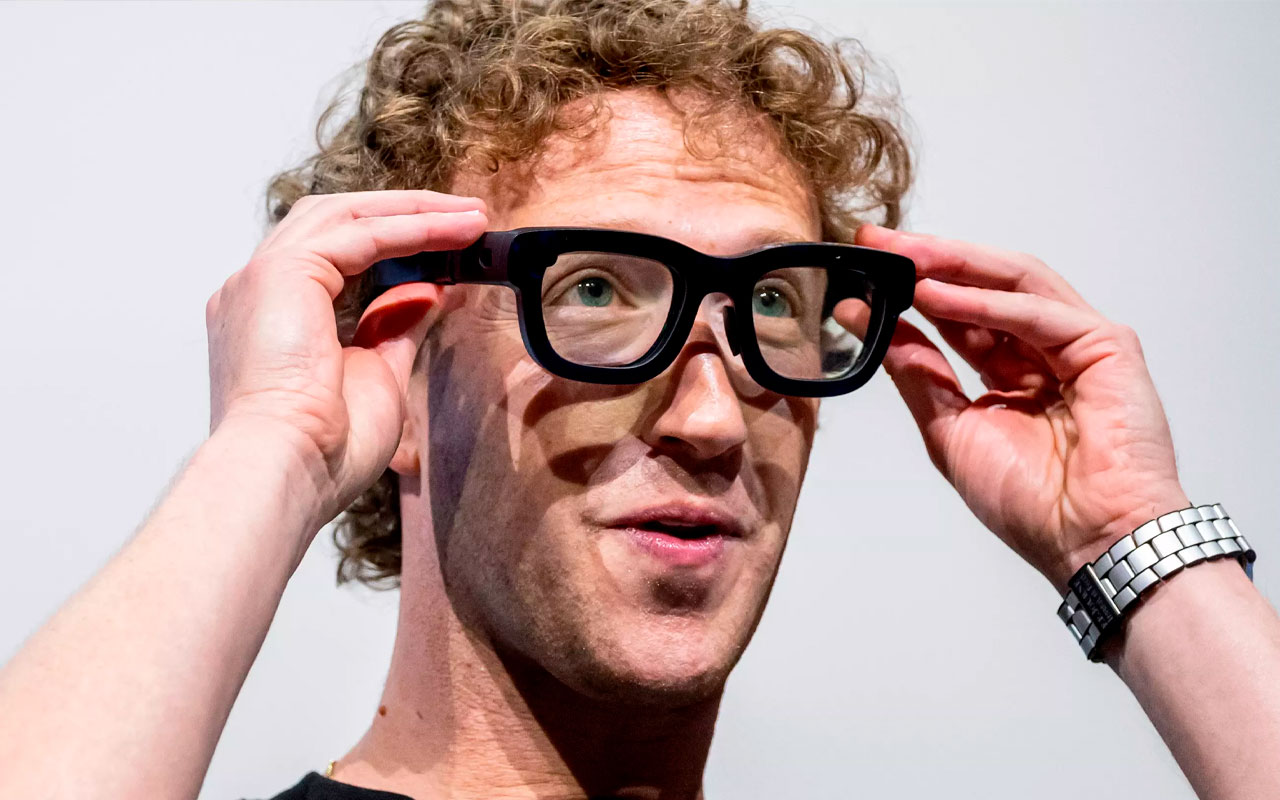


Meta CEO Predicts a “Post-Phone Era” Again and Accelerates the Race for Augmented Reality with Ray-Ban Meta Glasses and the Orion Prototype, While the Smartphone Market Shows Signs of Stagnation.
Meta has repeated that the next big computing platform won’t fit in your pocket anymore, but on your face. In an interview at the end of 2024 and more recently during the Q2 2025 earnings call, Mark Zuckerberg expressed his belief that smart glasses will gradually replace smartphones as the primary interface for daily use, creating a “post-phone world” in about a decade.
The bet relies on assistants with built-in generative AI and augmented reality experiences that “blend” digital and physical worlds without requiring the user to hold a screen all the time. According to him, those who don’t adopt this category may be at a “cognitive disadvantage.” This vision was detailed in an interview with The Verge’s Decoder podcast and reiterated to investors in 2025.


What Meta Already Has Today: Ray-Ban Meta and AI Features
Currently, the showcase of the strategy is the Ray-Ban Meta, glasses with a 12 MP camera, capturing through five microphones and open audio that allow you to take photos, record videos, and activate Meta AI by voice.
-
Brazilian Engineer Who Grew Up Without Electricity Develops Software, Expands AltoQi to 67,000 Clients, Aiming for $21 Million by Digitizing Brazil’s Construction Industry

-
Spain Launches World’s Largest Floating Dry Dock: 56-Meter Giant Produces Massive Concrete Structures in A Coruña Using Technology Proven in Brazil

-
AI-powered toys that talk, recognize faces, and collect data face scrutiny from Brazilian government over children’s privacy concerns

-
4,000-Year-Old Child’s Skull Unveils Ancient Burial in 7,500-Year-Old Norwegian Rock Shelter, Impressing Archaeologists





The company has added real-time translation between English, Spanish, French, and Italian and expanded calls and messaging via apps in the Meta ecosystem, as well as improvements in visual recognition. These features began rolling out at the end of 2024, with expansion in 2025 to new markets.
In September 2024, Meta publicly introduced Orion, its first pair of augmented reality glasses with digital projection in the field of view and control via a neural pulse interface in development. The company itself admits that the consumer model will still take time due to costs and complexity, but the announcement signals the product direction that could, in the future, eliminate the need for phones for many daily tasks.
Why Talk About the “End” of Smartphones Now
The backdrop is a smartphone market that has lost momentum. Data from Canalys shows that global shipments fell 1% in Q2 2025, the first decline in six quarters, reflecting more cautious consumers and a perception of incremental innovation. Meanwhile, manufacturers are trying to rekindle demand with on-device AI features, while Meta promotes a bold shift with wearables.
Meta’s smart glasses have clear strengths: hands-free, a voice assistant always available, “first-person” recording, and live translation that aids in travel and quick interactions. Independent tests, however, highlight limitations in fast speech, slang, and noisy environments, as well as varying autonomy and comfort based on usage. In other words, the experience evolves quickly but still does not fully replace the phone for everyone.
If the promise is to live with a camera on your face, then privacy becomes a central theme. The expansion of Meta AI to Europe only occurred after negotiations with regulators and adjustments for transparency, reflecting stricter data protection rules. Experts also warn of the risks of capturing images of third parties without consent. The combination of regulation, costs, and social pressure will define the speed of this migration.
“Replacing” is a Prediction, Not a Decree
It’s important to distinguish the headline from reality. Despite the CEO’s enthusiasm, Meta’s CTO, Andrew Bosworth, acknowledged in 2025 that the complete replacement of smartphones with glasses is not for “now.” There are ecosystem dependencies, usage habits, and technical barriers to overcome. In summary, Meta aims for a gradual transition, with long periods of coexistence between the two categories. The end of cell phones is more of a future narrative than a fait accompli.
Beyond announcements, what will determine if the thesis holds are metrics such as: daily usage time of the glasses, engagement with multimodal AI in the “real world,” adoption of offline translation, arrival of non-Meta native apps, evolution of battery and comfort, and, above all, responses from regulators to new features. If these indicators progress, the vision of a post-phone platform gains traction.
Zuckerberg did not “decree” the immediate end of smartphones, but positioned Meta at the forefront of the narrative about the next computing cycle with smart glasses + AI. There are market signals that support the bet and gaps that need to be filled.
Do you think that glasses with cameras and AI should become standard in public places or does this threaten privacy and social interaction? Leave your comment and let us know what side you’re on in this potential post-smartphone era.