Portuguese
  Spanish


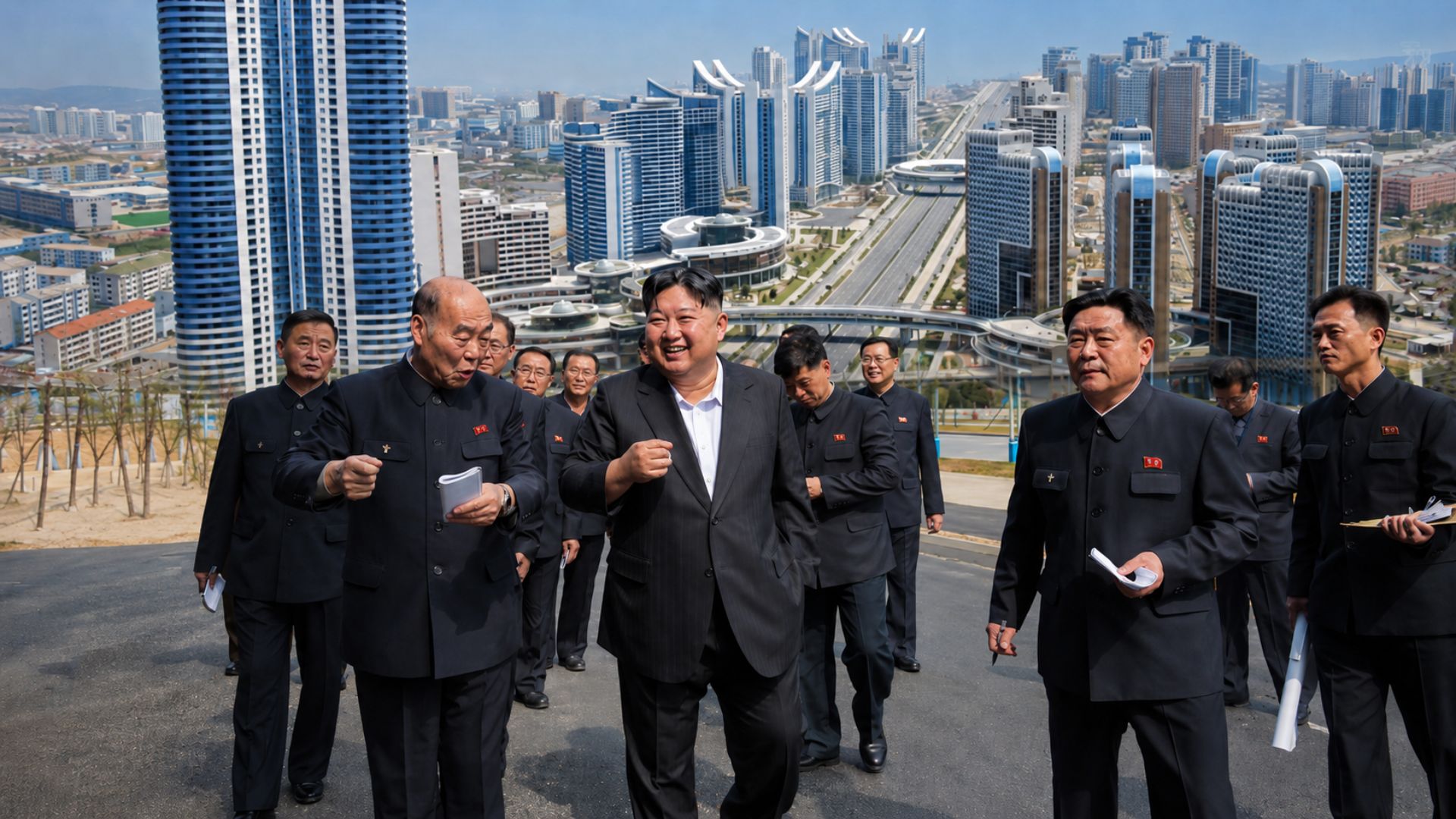


North Korea has built a new skyline of skyscrapers in Pyongyang that is being called “Pyonghattan” by international observers. According to information from South China Morning, the main tower on Songhwa Avenue, with 80 floors and 282 meters high, was completed in just one year along with 10,000 housing units. Kim Jong Un’s regime promises to transform the capital into the center of Korean civilization, but residents face frequent blackouts that leave elevators stalled and make life on the upper floors a daily challenge.
North Korea has transformed parts of Pyongyang into something few would expect to see in a country under international sanctions for decades. In recent years, the capital has gained multiple skyscraper districts with towers reaching 80 floors, wide avenues, and modern housing complexes that starkly contrast with the image of poverty and isolation associated with the regime. The nickname “Pyonghattan,” coined by international observers, directly references Manhattan and reflects the astonishment at the speed and scale of the urban transformation conducted by Kim Jong Un’s government.
The most emblematic construction in North Korea in recent years is the main tower on Songhwa Avenue, an 80-story, 282-meter skyscraper that has become the second tallest building in the country. The complex was erected in just one year, including 10,000 housing units for families considered loyal to the regime, and inaugurated with an official ceremony where Kim Jong Un personally thanked the civilian and military workers who participated in the construction. The state media celebrated the achievement as a “miracle” of “Pyongyang Speed,” an expression used by the regime to describe the accelerated pace of construction in the capital.
The districts that form the North Korean “Pyonghattan”

image: link
The nickname Pyonghattan does not refer to a single neighborhood, but to a set of districts built in North Korea in recent years. Songhwa Avenue, with its 80-story tower, is the latest. Before it, Ryomyong New Town, inaugurated in 2017, had already attracted attention with an 82-story, 270-meter tower, whose structure was completed in just 74 days, according to state media. Mirae Scientists Street and the Hwasong district complete the new skyline of Pyongyang.
-
28-meter, 156-ton titans traveled 20,000 km from China to the port of Santa Catarina: Portonave received 7 fully electric megacranes, part of a R$ 210 million package, to double container handling.

-
They exchanged the idea of a large house for a 35 m² warehouse, spent US$ 12,000 on the structure, and created a tiny house in Colorado with space to live and work.

-
A newly opened terminal in the middle of the Amazon has begun transporting soy and corn through Amapá, eyeing the queue of ships that is congesting the ports in the South.

-
Goodbye to old tiles: renovation technique without construction transforms bathrooms in a few hours, eliminates debris, and reduces costs with coverings using special paints, high-resistance adhesives, and modern finishes that completely renew the space.


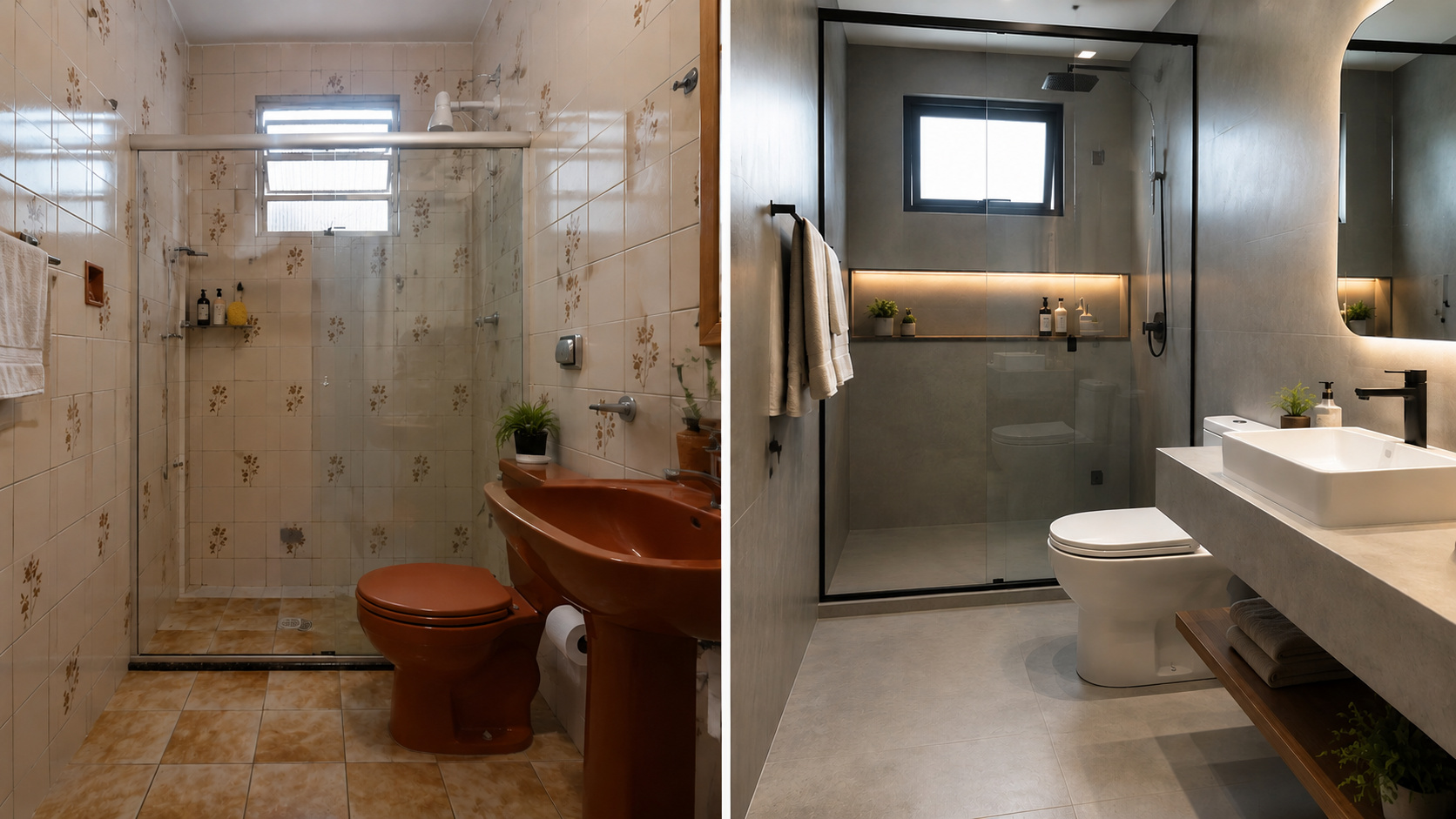

image: vermelho.org.
The Council on Tall Buildings and Urban Habitat currently records 15 buildings over 150 meters completed in the capital of North Korea. The expansion is part of a five-year plan announced by Kim Jong Un in 2021 to build an additional 50,000 apartments in Pyongyang. The official justification is to improve the quality of life for the capital’s residents, but analysts note that the distribution of housing follows criteria of political loyalty to Kim Jong Un’s regime, not housing need.
Who lives in North Korea’s skyscrapers
Housing in the new districts is assigned by the government, prioritizing families considered loyal to the Kim dynasty and professionals in sectors valued by the regime, such as scientists, engineers, and military personnel. The “ordinary workers” mentioned by official propaganda are not the ones who choose where to live, they are the ones the regime decides deserve to live there.
The reality inside the skyscrapers, however, contrasts with the gleaming facades. North Korea faces frequent blackouts, which means that the elevators in residential buildings often do not work. As a result, younger residents are assigned to the upper floors, while the elderly stay on the lower floors to avoid climbing stairs in buildings with dozens of stories. CNN documented this dynamic in visits to the country, revealing a contradiction between apparent modernity and everyday precariousness.
The beach resort and the renovated metro
The urban transformation in North Korea is not limited to Pyongyang. The Wonsan-Kalma Beach Resort, opened in the summer of 2025, stretches for 5 kilometers along the coast with more than 50 hotels and a capacity for 20,000 people. The resort was initially opened only for Russian tourists, but has since been closed to all visitors, illustrating the pattern of grandiose projects whose real utility remains questionable.

In the capital, the metro system inaugurated in 1972 with trains imported from China has undergone visible renovations. Stations like Yonguang have gained escalators and modernized platforms, abandoning the Cold War aesthetic that dominated the interiors. However, the metro continues to operate with only two lines and 16 stations, not reaching the new skyscraper neighborhoods in the suburbs of Pyongyang, forcing residents of the newer districts to rely on other means of transportation.
Where the money comes from to build under sanctions
The question that intrigues international observers is how North Korea finances billion-dollar projects in a country subjected to some of the world’s most severe sanctions. International reports indicate that the regime raised billions of dollars in 2025 through cybercrimes, mainly cryptocurrency theft, making the country one of the largest perpetrators of cybercrimes on the planet.
In addition to cybercrimes, North Korea profits from sending soldiers to fight for Russia in Ukraine, arms trade, and exporting labor to allied countries. The construction of skyscrapers heavily depends on military labor: soldiers and civilian workers are mobilized for the projects under precarious conditions and with minimal remuneration. The regime treats the labor force as a state resource, not as a workforce with rights.
What Pyonghattan reveals about North Korea


The skyscrapers of Pyongyang are both a showcase and a contradiction. North Korea builds 80-story towers while much of the rural population lives without stable electricity, without access to sufficient food, and without the freedom to choose where to live. The capital functions as an island of relative comfort in a country where living conditions outside it are dramatically different.
The nickname Pyonghattan captures the irony: a city that looks like Manhattan, but where residents are assigned by political loyalty, elevators don’t work due to lack of power, and construction money comes from cybercrimes. North Korea wants the world to see the skyscrapers that Kim Jong Un is raising in Pyongyang. What it doesn’t want is for people to look at what’s behind them.
Did you know that North Korea is erecting 80-story skyscrapers in Pyongyang? What impresses you the most: the speed of construction, the elevator blackouts, or the dubious origin of the money that finances it all? Share in the comments.