






 Portuguese
  Spanish


Survey conducted with satellite data expanded the map of active lakes beneath Antarctica and helps scientists observe water movements that occur far from the frozen surface.
Scientists identified 85 active subglacial lakes beneath Antarctica’s ice sheet, some located several kilometers from the surface.
The discovery was made using data from the European Space Agency’s CryoSat-2 satellite, increasing the number of known active lakes on the continent from 146 to 231, according to a study published in September 2025 in the journal Nature Communications.
The lakes were not observed directly.
-
Astranis Builds Half-Ton Satellites, 20 Times Smaller and Cheaper, to Provide Internet to Alaska, Mexico, and the Philippines

-
General Motors Halts Self-Driving Car Service After $10 Billion Investment Following Pedestrian Incident in San Francisco
-
Scientists Discover Mysterious Black Fungus Thriving in Chernobyl for Nearly 40 Years, Challenging Extreme Radiation and Potentially Revolutionizing Space Missions

-
Antarctica’s Blood Falls: Scientists Uncover a 1.5-Million-Year-Old Isolated Ecosystem, Shedding Light on Potential Ice Changes


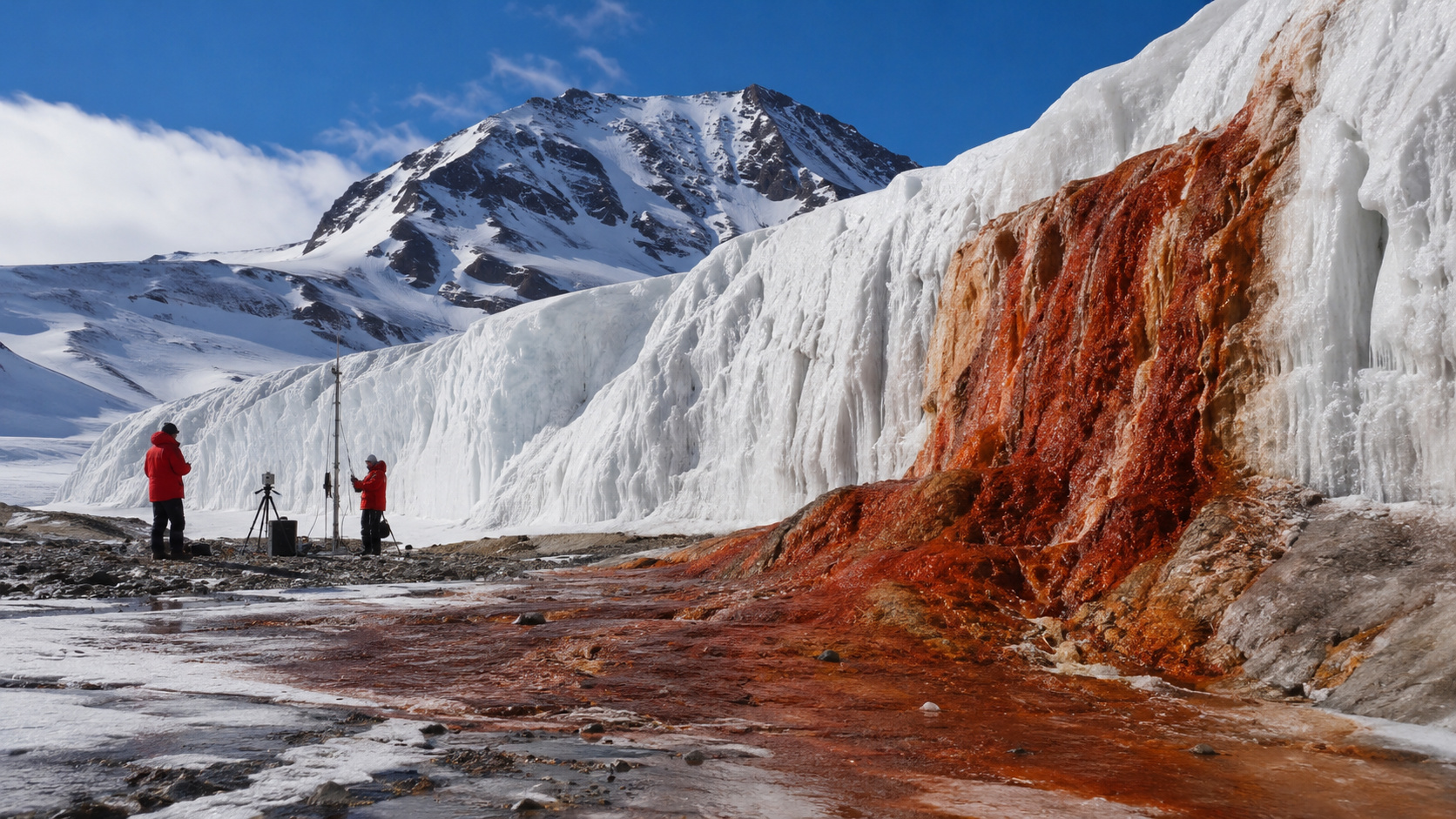
The team detected these formations through discrete variations in the ice surface height, which can rise or fall as water accumulates or drains at the base of the frozen layer.
This type of measurement allows for the investigation of areas inaccessible by conventional methods, according to the researchers.
The survey analyzed information collected between 2010 and 2020 by CryoSat-2, a mission created to monitor polar sea ice thickness and altitude changes in large ice masses, such as those in Greenland and Antarctica.
The satellite uses a radar altimeter capable of recording small changes in the elevation of the icy surface.
Active subglacial lakes in Antarctica
Subglacial lakes form when meltwater accumulates between the ice and the bedrock.
This melting can occur due to geothermal heat from the Earth’s interior and the friction generated when ice moves over the rock.
Although they remain hidden beneath the surface, these reservoirs are part of the dynamics of glaciers.
When water moves at the base of the ice sheet, it can reduce friction between the ice and the rocky ground, facilitating the sliding of the frozen mass towards the ocean, according to the study’s authors.
The research also identified five interconnected networks of subglacial lakes and 25 clusters of lakes.
In some areas, the data indicates drainage at one point and filling at another, suggesting water circulation through still little-known paths beneath the Antarctic ice sheet.
How satellites identify lakes beneath the ice
To locate the lakes, the team analyzed specific changes in the height of Antarctica’s surface.
When a lake under the ice fills up, the region above it can rise; when the water drains, that same area can sink.
The comparison of these movements over ten years allowed mapping the lakes and monitoring filling and emptying cycles.
Sally Wilson, a doctoral researcher at the University of Leeds and the lead author of the study, stated that observing these events is difficult because they occur under hundreds of meters of ice and can take months or years.
According to her, before the research, only 36 complete filling and draining cycles had been recorded worldwide; the new survey added 12 more complete cycles, bringing the total to 48.
The data published in Nature Communications also record 37 complete drainage events and 34 complete filling events during the analyzed period.
The median duration of a complete drainage was 2.2 years, while filling took, on median, 3.5 years.
Why hidden lakes matter to science
The discovery expands the inventory of active lakes under Antarctica and provides new data on the behavior of water at the base of the ice sheet.
According to the researchers, this type of information helps to understand how ice, rock, water, and ocean interact in regions where direct observation is limited.
Anna Hogg, a professor at the University of Leeds and co-author of the study, said in a statement from the European Space Agency that the areas of the lakes can change during different filling or draining cycles.
For her, the result indicates that the subglacial hydrology of Antarctica is more dynamic than previously known.
The distribution of the new lakes was also detailed by the authors.
Of the 85 identified lakes, 73 are in East Antarctica and 12 in West Antarctica.
This data expands the record of active lakes in the east of the continent, a region that appeared with less presence in previous surveys.
Another point highlighted in the study is the location of some lakes in relation to the so-called grounding line, an area where the glacier stops resting on the rocky bed and starts floating on the ocean.
Six lakes were identified up to 8 kilometers from this zone, information considered relevant by the researchers for studying ice flow and processes associated with basal melting.
Water under the ice and glacier behavior
Models used to estimate the contribution of ice sheets to sea level rise still do not fully incorporate subglacial hydrology, according to Sally Wilson.
The researcher stated that mapping where and when these lakes are active can help measure the impact of groundwater on glacier dynamics.
The presence of water under the ice does not, by itself, mean immediate instability.
What the study shows is that part of this system goes through cycles of filling and draining capable of altering the interaction between the ice sheet and the bedrock.
For the authors, monitoring these processes over time is necessary to improve ice models and projections related to sea level.
Not all subglacial lakes are classified as active.
Some are considered stable because there is no record of known cycles of filling and emptying.
Lake Vostok, the largest known subglacial lake, lies beneath the East Antarctic ice sheet, under about 4 kilometers of ice, and has an estimated volume between 5,000 and 65,000 cubic kilometers of water, according to the European Space Agency.
The identification of the 85 active lakes adds new information to a system that remains largely inaccessible.
As the surface of Antarctica can record signs of processes occurring at the base of the ice sheet, satellite data becomes a central tool for monitoring changes without direct drilling.
The survey also reinforces the need for continuous observations, according to the scientists involved in the research.
Long data series allow for comparing cycles, identifying new connections between lakes, and checking if drainage patterns repeat in different regions of the continent.
There are still gaps regarding the factors that initiate certain drainage events and the frequency with which the cycles repeat.
The new inventory, however, provides a larger basis to investigate how water circulates under Antarctica and how this movement relates to glacier behavior.
In an area where much of the processes occur out of visual reach, small variations measured from space can indicate reservoirs, channels, and water flows hidden under kilometers of ice.


