Portuguese
  Spanish


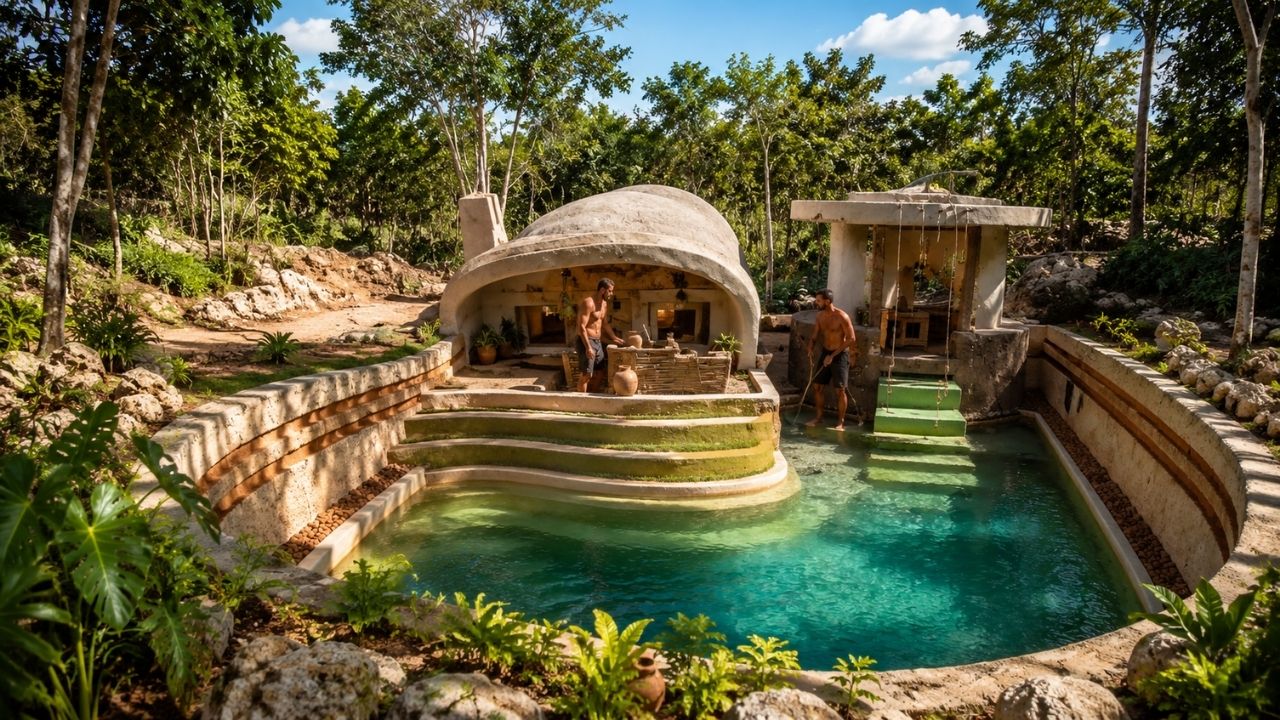


With a house molded in the ground, the record shows two men raising a semi-buried construction in a forest area, using manual excavation, clay, wood, and artisanal finishing. The structure gains a curved roof, windows, rustic interior environment, stepped external area, and a pool integrated into the land, surrounded by vegetation in an isolated natural setting.
The semi-buried house appears in a forest area, handcrafted by two men from manual excavation, clay, wood, and finishing molded on the terrain itself. The record, with no date and exact location provided, follows the transformation of an open area into a rustic structure integrated into the natural landscape.
In a video published by the channel Tube Survival Wilderness, throughout the scenes, the construction gains internal walls, a curved roof, door, windows, countertop, space for fire, and a lowered external area with steps. The final result shows the house in the background, a lined pool filled with water in front, and the surrounding vegetation composing the scenery.
Construction begins with manual excavation and use of the terrain itself

The first stage shows the workers preparing the soil and digging a large area in the middle of the forest. The house begins to take shape from the very earth, with manually molded walls and internal spaces being defined gradually, without visible machinery in the described scenes.
-
Giant 3,600-ton Crane Breaks Two World Records by Installing World’s Largest Single-Piece Forged and Welded Hydrogenation Reactor, Weighing 3,037 Tons, in Chinese Petrochemical Plant in Just Six Days

-
$80 Million Bridge in Brazil Cuts Travel Time from 30 Minutes to 1 Minute, but Audit Reveals Major Flaws
-
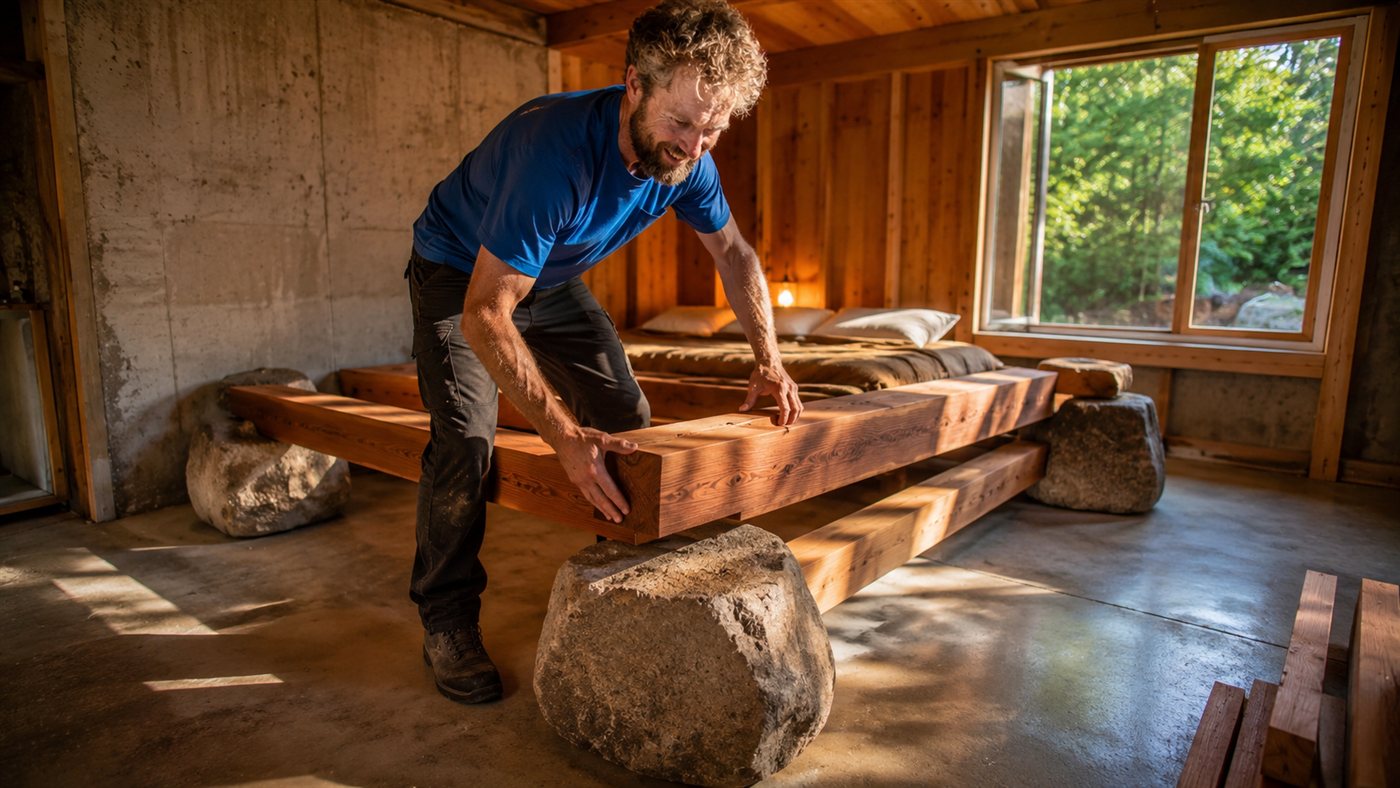
Man Builds Stone Bed with Granite Rocks and Hand-Sawn Cedar Beams, Home Extension Garners Over 437,000 Views on Bonus Bolts Channel

-
Brazilian Researcher Develops Color-Changing Roof Tile to Reduce Air Conditioning Use by Up to 15%



This type of process draws attention because the terrain does not function merely as the base of the work. The excavation becomes part of the visual structure of the construction, creating the appearance of a semi-buried dwelling, low and integrated into the natural relief.
Clay, wood, and curved shapes define the visual of the house

After the excavation, the men install pieces of wood or bamboo to form partitions and support points. Then, the curved roof begins to be assembled with flexible rods, creating an arched structure that resembles a tunnel or vaulted shelter.
The house receives a finish with clay or natural mortar, gaining a clear, rounded, and artisanal surface. The final look avoids traditional straight lines and bets on organic shapes, making the construction seem like an extension of the land rather than a completely separate volume from the landscape.
Rustic interior includes windows, counter, and space for fire

The internal scenes show a simple proposal, with door opening, windows, and functional elements. A counter and a space with fire also appear, suggesting a living area or rustic kitchen, although the video does not detail electrical, plumbing, or other technical systems.
The house seems designed to create shelter and basic use within a natural environment. Even so, it is important to avoid conclusions beyond what the record shows: there is no information about structural safety, legal authorization, cost, total construction time, or precise location of the construction.
Integrated pool changes the scale of the artisanal work

On the outside, workers excavate a large recessed area in front of the building. The space gains steps, clad walls, and a decorative edge made with stones or small blocks, forming a leisure area directly connected to the entrance of the house.
After the cladding, the pool receives a green finish and appears full in the final result. The water transforms the perception of the ensemble, because the construction stops looking like just an excavated shelter and starts to resemble a small rustic dwelling with a patio, living area, and visual integration with the forest.
Construction impresses, but requires caution in interpretation


The strength of the record lies in the artisanal process and the progressive transformation of the land. The house emerges from manual stages, with simple materials and an aesthetic that communicates with the landscape. This explains the visual appeal of the construction, especially for those who follow content about alternative housing and natural architecture.
On the other hand, the video does not allow us to assert that the technique is proven sustainable, safe for any terrain, or suitable for reproduction without professional guidance. A semi-buried construction involves drainage, soil stability, ventilation, and roof resistance, points that cannot be assessed solely by the images.
What this house leaves in debate
The house semi-buried shows how an artisanal construction can generate curiosity by combining excavation, clay, wood, curved roofing, and a pool in a single visually striking project. The result draws attention because it seems to emerge from the land, rather than simply occupying the landscape.
At the same time, the work also raises questions about safety, durability, comfort, and feasibility outside the context shown in the video. Would you live in a semi-buried house in the middle of the forest, or do you find this type of construction more interesting as a visual experience than as a real dwelling? Leave your opinion in the comments.