






 Portuguese
  Spanish
  3 min of reading
  1 comment


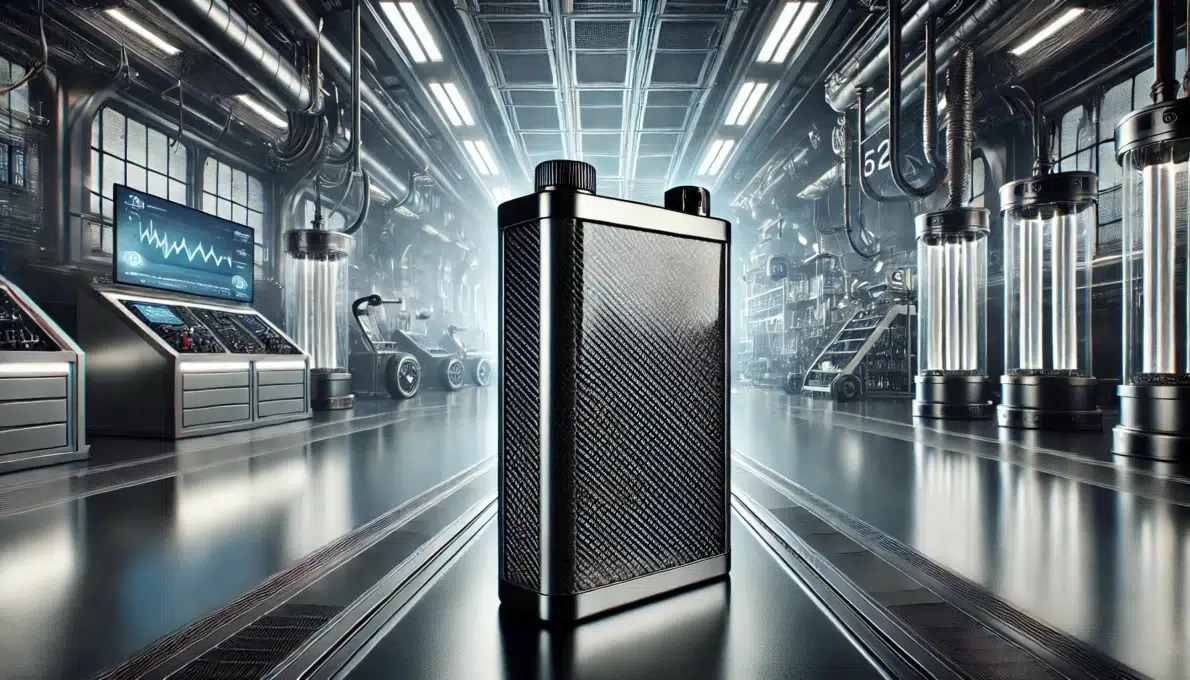

Swedish Startup Develops New Carbon Fiber Battery That Promises to Change the Automotive Sector. The Component Can Increase the Range of Electric Cars by Up to 70%.
In recent years, advances in batteries for electric cars have been impressive. In 2024, the Swedish startup Sinonus took a step forward, developing an innovative carbon fiber battery. This new technology promises to be lighter, safer, and more efficient. The special carbon fibers act as electrodes, significantly increasing the range of electric cars.
Understand How the New Carbon Fiber Battery Works
In addition to storing energy, this specific type of carbon fiber can also be used in structural components. In theory, the frame of an electric bicycle, for example, could function as a huge battery, eliminating the need for another one housed in the body of the vehicle.
Researchers from Chalmers University of Technology discovered that using a carbon fiber battery could increase the range of electric cars by up to 70%. The new carbon fiber battery also does not use any volatile substances, making it safer and less prone to fires.
-
Uber Faces Shareholder Scrutiny as Board Accused of Ignoring Safety, Compliance, and Harassment Warnings Amid Over 3,500 U.S. Lawsuits

-
Ferrari’s First Electric Car Divides Fans, Priced at $630,000, Amid Concerns Over Limited Editions; Brand Clarifies It’s Not Just for Future Perks
-
BYD Dolphin Mini: The Electric Car That Defies Depreciation, Losing Only 3.58% in a Year and Becoming the Best-Selling Retail Model Under $22,000

-
Electric Car JAC E-JS4 Loses $19,000 in Value in One Year, Leading Record Depreciation of Used Cars in Brazil Due to Expensive Battery and New Models


It’s important to mention that carbon fiber has become almost ubiquitous in the automotive industry due to its lightweight and high durability. This innovation also arrives to solve another problem. Battery-powered models are often criticized for their weight.
The new technology, in addition to increasing the range of electric cars, could also make models lighter and, naturally, feature faster charging and longer lifespan.
New Carbon Fiber Battery Will Also Be Used by Electric Aircraft
In other words, in addition to being a true boost for range, these new batteries will likely help address some of the criticisms related to the weight and range of electric cars.
However, it is also important to highlight that this new technology will not only assist ground vehicles but will also be a true ally for e-bikes, electric motorcycles, vessels, and even aircraft, such as the electric aircraft that will have a flight range of up to 3,000 km.
The CEO of Sinonus, the startup responsible for the new carbon fiber battery, Markus Zetterström, hopes to commercialize the innovation for large-scale applications, including manufacturers of drones, electric vehicles, and even aircraft, as mentioned above. Currently, it is being tested to replace AAA batteries in electronics.
Of course, as with any new discovery, some steps must be taken before the innovation is adopted by manufacturers to increase the range of electric cars. One of the main hurdles at the moment is one that always interests companies: costs. Carbon fiber is somewhat more expensive than steel, and the price of electric vehicles could rise significantly.
New Battery Could Make Electric Car 50% Lighter
However, the advantages of using a carbon fiber battery do not stop at energy storage but also at its collection. The vehicle in question could be produced in such a way that the carbon fiber in the body would also absorb kinetic energy, making it a great investment for those who use the vehicle.
Professor Leif Asp from the University states that building a vehicle with the material could reduce its weight by up to 50%. Due to the price, if the idea moves forward, we will likely see initially only luxury cars using the new carbon fiber battery, and economically, perhaps a mixture of steel and fiber in the first vehicles.





A evolução das baterias tem sido algo galopante! Eu sinda não sei como alguém ainda defenda o velho carro a combustão!