






 Portuguese
  Spanish
  3 min of reading
  0 comments


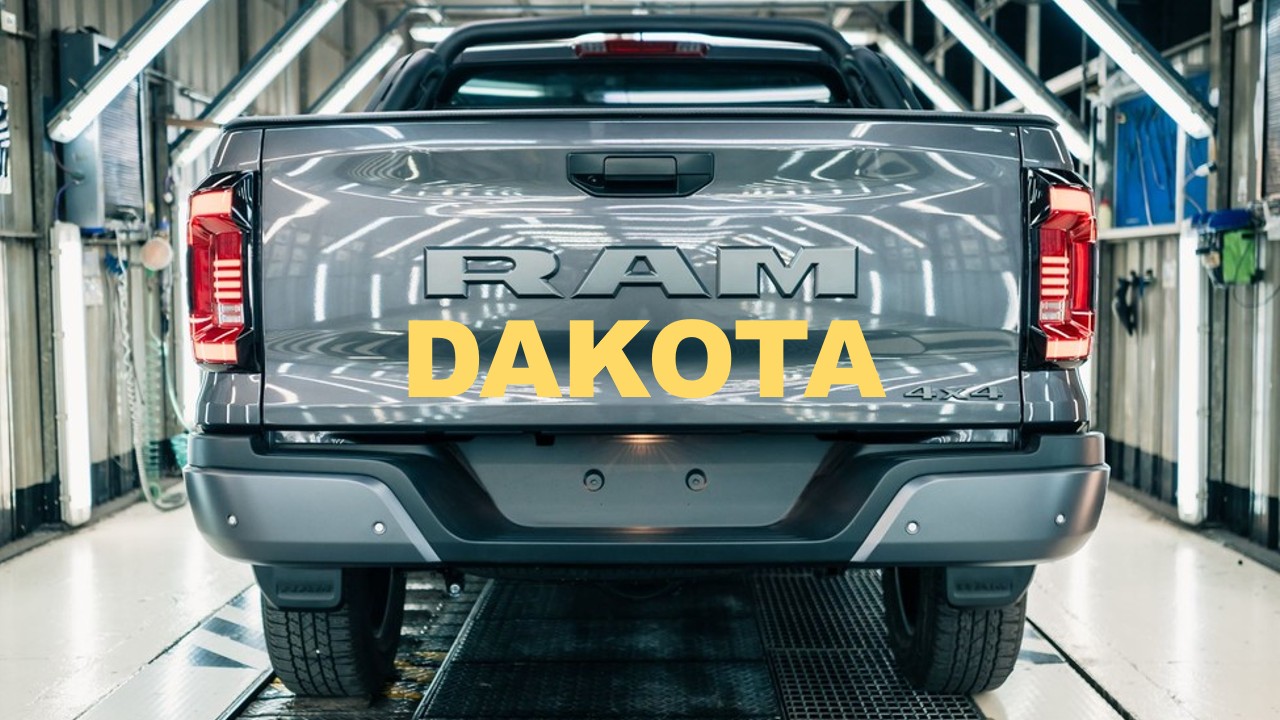
The Model, Developed by the Stellantis Group, Will Be Equipped with the 2.2 Turbodiesel Engine — the Same Used in Vehicles Like Rampage, Jeep Commander, Fiat Toro, and Titano.
The Ram Dakota officially began production at the Córdoba factory in Argentina, marking an important step for the arrival of the brand’s new midsize pickup in Brazil. The model, developed by the Stellantis group, will be equipped with the 2.2 turbodiesel engine — the same used in vehicles like Rampage, Jeep Commander, Fiat Toro, and Titano.
The automaker confirmed that this engine delivers 200 hp of power and 45.9 kgfm of torque, and will also be manufactured in Argentine soil starting in 2027. In the Dakota, the engine will be paired with an eight-speed automatic transmission, 4×4 traction with low range, and rear differential locking.
The first version presented, called Warlock, anticipates the style and equipment package that will be offered in the lineup, at least in the Argentine market.
-
Uber Faces Shareholder Scrutiny as Board Accused of Ignoring Safety, Compliance, and Harassment Warnings Amid Over 3,500 U.S. Lawsuits

-
Ferrari’s First Electric Car Divides Fans, Priced at $630,000, Amid Concerns Over Limited Editions; Brand Clarifies It’s Not Just for Future Perks
-
BYD Dolphin Mini: The Electric Car That Defies Depreciation, Losing Only 3.58% in a Year and Becoming the Best-Selling Retail Model Under $22,000

-
Electric Car JAC E-JS4 Loses $19,000 in Value in One Year, Leading Record Depreciation of Used Cars in Brazil Due to Expensive Battery and New Models


Launch in Brazil and Production in Argentina
The debut of the new Dakota is scheduled to take place during the São Paulo International Motor Show, in November 2025. However, the start of sales is only expected for February 2026.
As is customary with Stellantis products manufactured in Argentina, the model will first launch in the neighboring country. The production of the pickup is part of a R$ 2 billion investment made by the group at the Córdoba plant.
The Dakota is set to fill a strategic space in the Ram lineup, positioning itself between the Rampage and the brand’s larger trucks, and promises to compete with Chevrolet S10, Ford Ranger, Toyota Hilux, and other traditional midsize pickups.
Design and Dimensions
Visually, the new Dakota follows the brand’s robust identity, with narrow headlights and integrated dual LED strips, as well as a large front grille. At the rear, the highlight is the Ram logo embossed on the tailgate. The wheels are 17-inch alloy, with a diamond finish, and the pickup also features side steps.
Sharing the platform with the Fiat Titano, the Dakota is expected to maintain similar proportions: 5.33 meters in length, 1.96 m in width, 1.85 m in height, and 3.18 m in wheelbase. The bed promises capacity for 1,200 liters of volume and a towing capacity of up to 3.5 tons, figures that place it among the most capable in the segment.
Interior and Technology
During the announcement of the production start, Ram released images of the new Dakota’s interior, confirming the focus on comfort and technology. The cabin features sophisticated finishing and a modern design, reinforcing the connection with the Changan Hunter, a Chinese pickup that serves as the basis for the project — the same strategy used in the Fiat Titano.
The interior includes integrated instrument cluster and multimedia center, both with 12.3-inch digital displays, compatible with wireless Android Auto and Apple CarPlay.
Among the comfort and convenience features, there are wireless phone charger, leather seats, raised center console, rotary gear shift knob, electronic parking brake, and horizontal air vents.
In terms of safety, the brand confirms six airbags and semi-autonomous driving systems, reinforcing the premium standard of the model within the midsize pickup segment.
Positioning and Price Expectation
According to Juliano Machado, vice president of Ram in South America, the brand seeks to explore a market segment still little researched by competitors:
“When we launched the Rampage, we found a space where there was practically no competition. And it’s exactly this same logic that we are applying to the Dakota,” the executive explained in an interview with the CBN Autoesporte program.
Today, the midsize pickups sold in Brazil cost between R$ 230 thousand and R$ 350 thousand. The expectation is that the Ram Dakota will come with prices starting at R$ 270 thousand, a value close to the top-of-the-line version of the Rampage, positioning the new model as an intermediate option between traditional midsize pickups and the brand’s premium models.





Be the first to react!