






 Portuguese
  Spanish


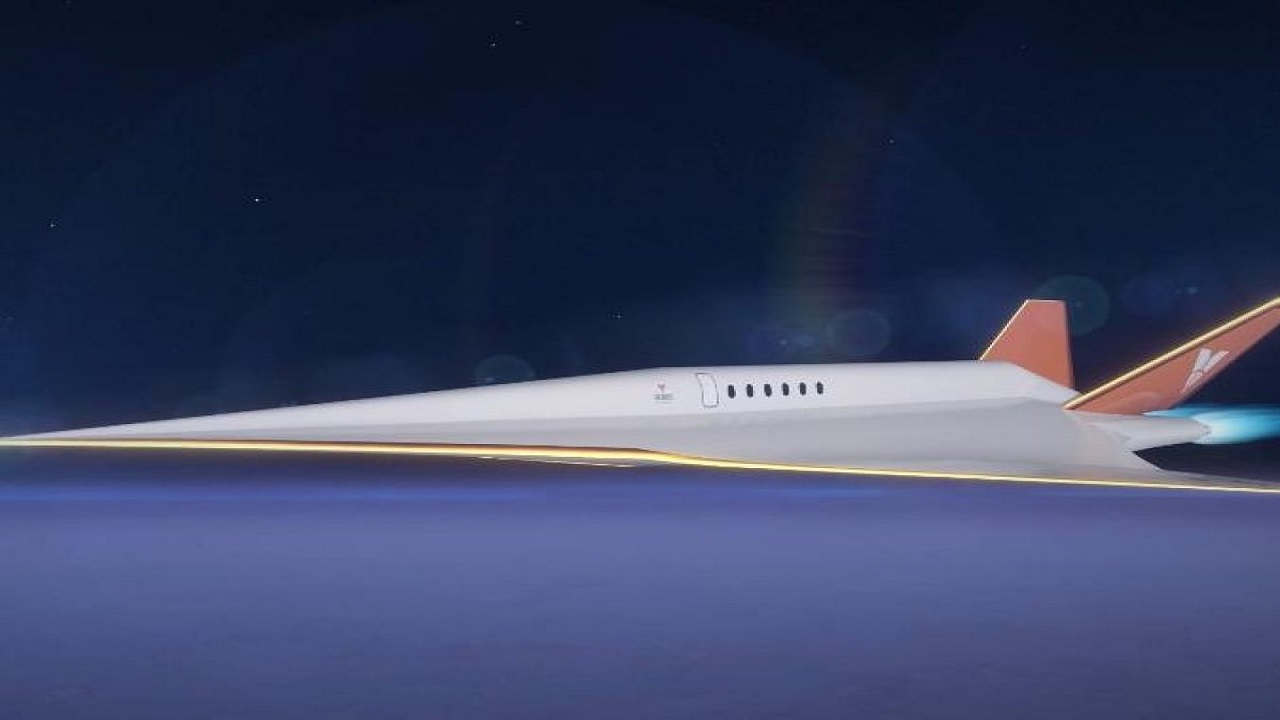

Company Develops New Supersonic Jet Capable of Flying from the US to Tokyo in 60 Minutes. The Supersonic Plane Reaches Mach 9 and Transports Up to 12 Passengers.
Engineers from aerospace company Venus Aerospace have released photos of their newest supersonic jet, which can take passengers from New York in the United States to Tokyo in Japan, basically on the other side of the planet, in just one hour, flying to the edge of space before landing back on Earth. The startup claims that the Stargazer can achieve 6,905.42 mph, or 11,000 km/h, a speed known by engineers as Mach 9.
Supersonic Plane Developed in Partnership with NASA
To achieve such speed, the plane reaches a maximum altitude of 170,000 feet, half the distance between the ground and the atmosphere. According to data, the supersonic jet was developed in conjunction with NASA’s main crewed space flight facility.
The team behind it studied data from the Space Shuttle program to assist in completing the project. The model is being developed to be 45 m long and 30 m wide, with a total weight of 7 tons. With limited space and the need to stay lightweight to achieve high speeds, the supersonic jet will only have capacity for 12 passengers.
-
Brazilian Innovator Transforms 1962 Mercury Comet with Nissan Leaf Electric Motor, Achieving 125 km Range for Under $6,000

-
China Tests Giant 582-Ton Magnets to Contain Plasma Hotter Than the Sun’s Core, Aiming to Cut Superconductor Costs and Generate First Electricity from “Artificial Sun” by 2030
-
Seventh Grader Builds Nuclear Fusion Machine at Home, Aiming for Guinness World Record

-
Ancient Ritual Circle, Hidden for 5,000 Years, Discovered in Scotland’s Machrie Moor Using Sensors, Revealing a “Phantom Stonehenge”



According to Andrew Duggleby, co-founder of Venus Aerospace, this is not science fiction, but a fact. The company worked with NASA at the Johnson Space Center and can access the information from the sonic boom test data of the Space Shuttle program.
It’s worth noting that Venus decided to put its plan into action for the supersonic plane at the end of March and has been working on the project since 2020. The Stargazer is capable of crossing the globe from one point to another in record time, traveling from Los Angeles to Tokyo in just one hour, which conventionally takes about 12 hours.
Supersonic Aircraft Engine Tests
Venus Aerospace plans for its supersonic jet to take off and shortly after, perform a 10-minute boost with a rocket engine, which can send the vehicle to an altitude of approximately 50 km, or halfway to space.
The secret to such a feat is the use of a rotating detonation engine, which has the potential to enhance fuel efficiency in a variety of applications, from U.S. Navy ships to rocket engines.
In the rotating detonation engine, the detonation wave travels around a channel that is sustained by the injection of oxidizer and fuel, producing a shock wave that propagates at supersonic speed.
In conventional rocket engines, for instance, a highly pressurized propellant and an oxidizer are injected into a combustion chamber where they burn and generate a tremendously energetic exhaust column.
Engines Provide Approximately 10% Increase in Efficiency
Now, the idea seems to have come to fruition. Research groups from developed countries (the US, Japan, and others) have produced and tested these engines, moving beyond theory.
In laboratory tests, the engines provided approximately a 10% increase in fuel energy efficiency. To achieve speed, hypersonic models are about 80% fuel and oxidizer.
This way, as Andrew Duggleby, the Chief Technology Officer at Venus Aerospace, explained to Ars Technica, by increasing fuel efficiency, there’s leftover mass for essential items such as landing gear, wings, and even a few passengers. This truly allows for the construction of a vehicle that is like an airplane.
It is worth highlighting that the Stargazer, however, is not the only hypersonic plane project currently being produced; the U.S. Air Force is also funding a vehicle called QuarterHorse, capable of flying five times faster than sound.


