Portuguese
  Spanish


The conversion was born from an unused classic station wagon, received a motor, inverter, charger, and battery from a crashed 2014 Nissan Leaf, and drew attention for avoiding luxury electric adaptations that usually cost tens or hundreds of thousands of dollars
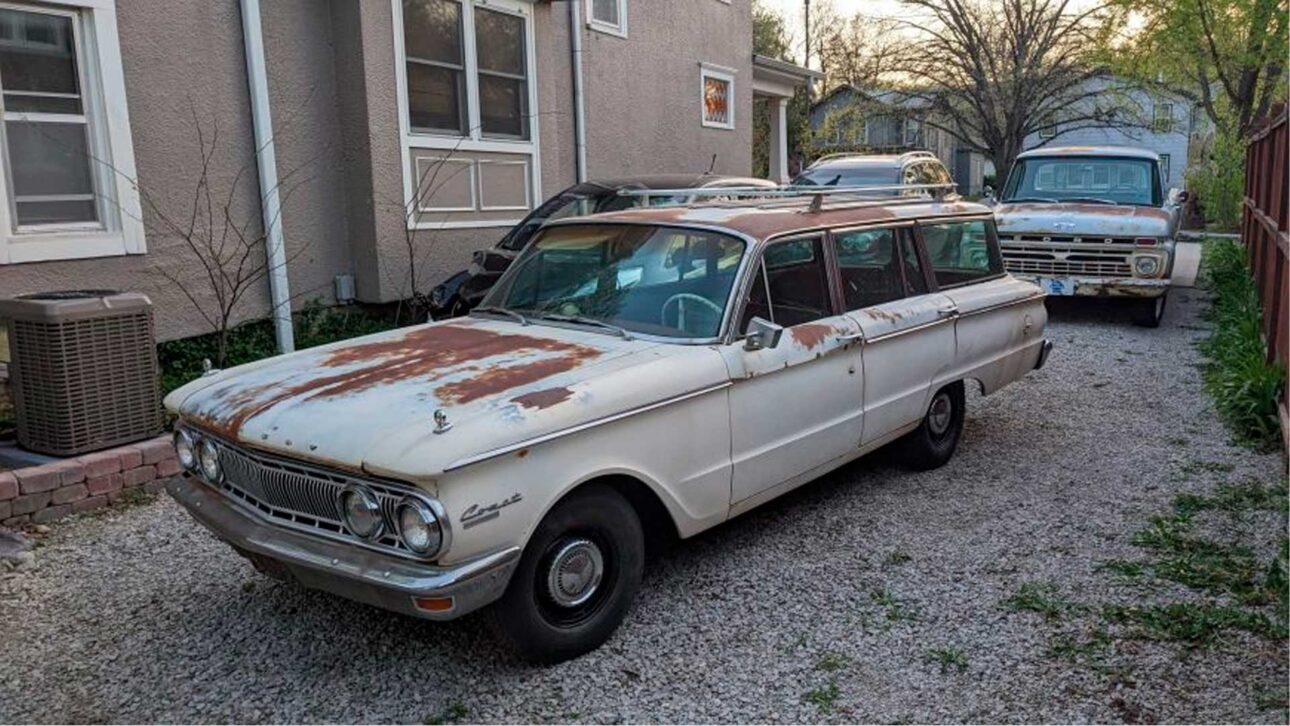
A 1962 Mercury Comet station wagon, which was parked and unused, returned to the road with an electric motor after receiving repurposed parts from a crashed 2014 Nissan Leaf. The project was done in a homemade fashion, with a goal to spend less than $6,000, not including the value of the old car.
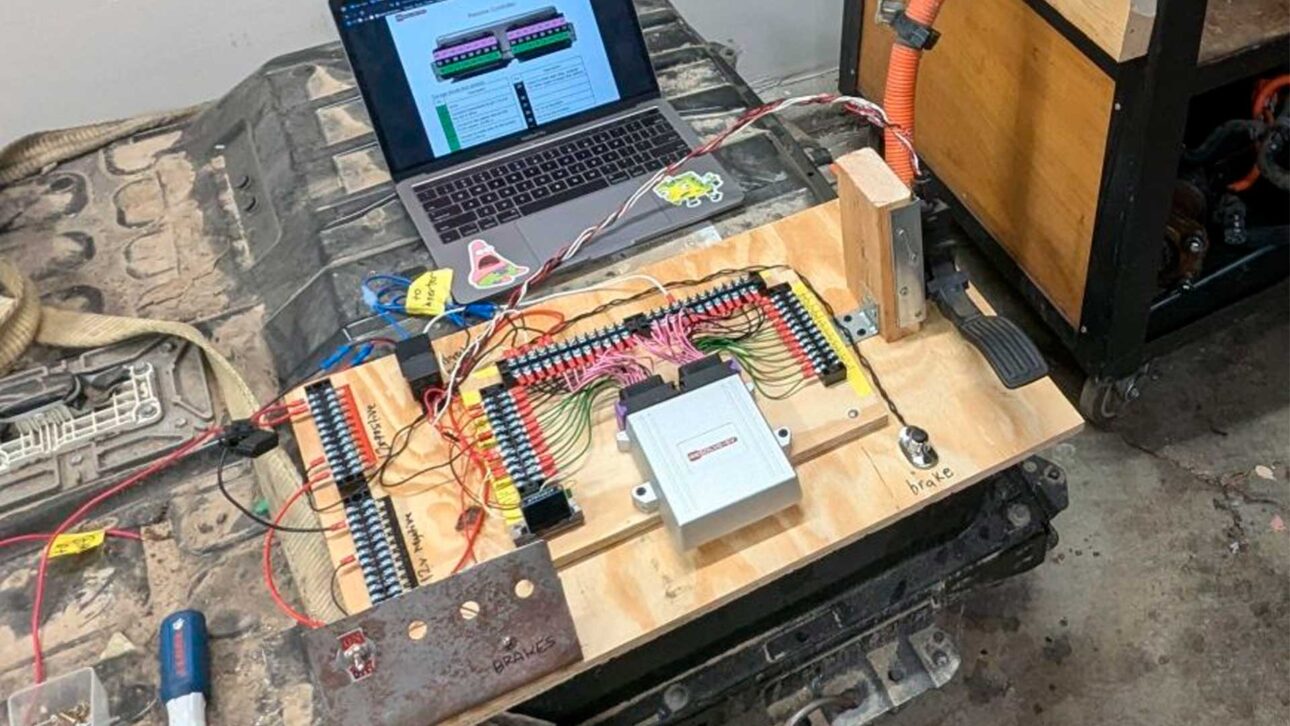
According to InsideEVs, the adaptation used the Leaf’s high-voltage set, including an electric motor, inverter, charger, battery, and management system. The donor car cost $3,000, while the Resolve-EV controller, a part used to make the original Nissan components communicate with each other, cost about $900.
The result draws attention because most electric car conversions of classic cars usually target expensive, collectible models and customers willing to pay a high price.
-
China Tests Giant 582-Ton Magnets to Contain Plasma Hotter Than the Sun’s Core, Aiming to Cut Superconductor Costs and Generate First Electricity from “Artificial Sun” by 2030

-
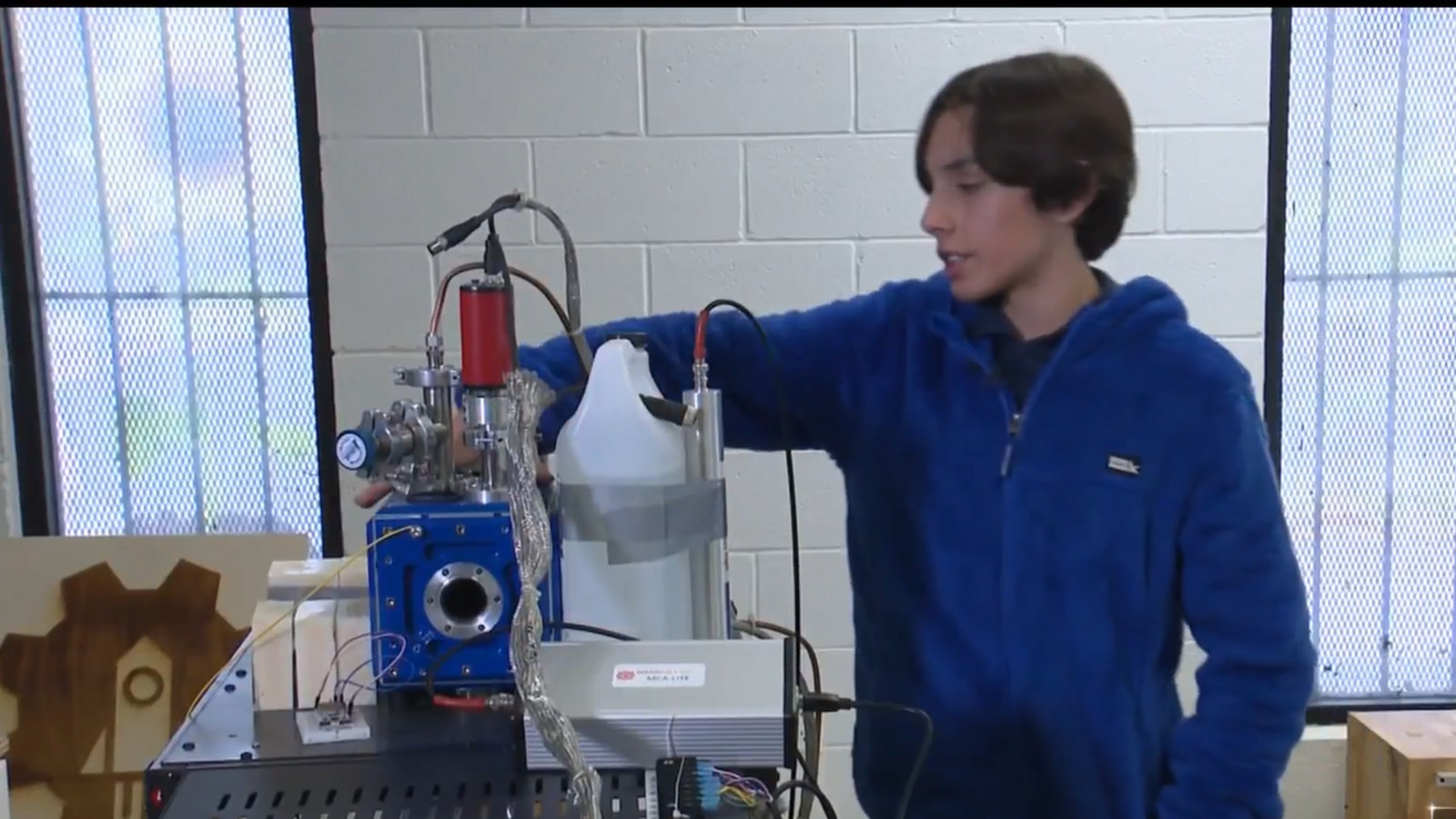
Seventh Grader Builds Nuclear Fusion Machine at Home, Aiming for Guinness World Record

-
Ancient Ritual Circle, Hidden for 5,000 Years, Discovered in Scotland’s Machrie Moor Using Sensors, Revealing a “Phantom Stonehenge”

-
Engineers Develop Fridge-Sized Machine to Produce 95-Octane Synthetic Fuel from Air and Water, Aiming to Sustain Combustion Engines Without Oil



In this case, the proposal was different, using parts from a crashed electric car, self-labor, and handcrafted solutions to transform an old station wagon into a functional electric vehicle.
The crashed Nissan Leaf became the electric heart of a station wagon manufactured more than half a century earlier
The base of the project was a 1962 Mercury Comet wagon, an old family car with a long body and typical 1960s American styling. The original combustion engine was removed to make room for a 24 kWh lithium-ion battery, taken from the Nissan Leaf.
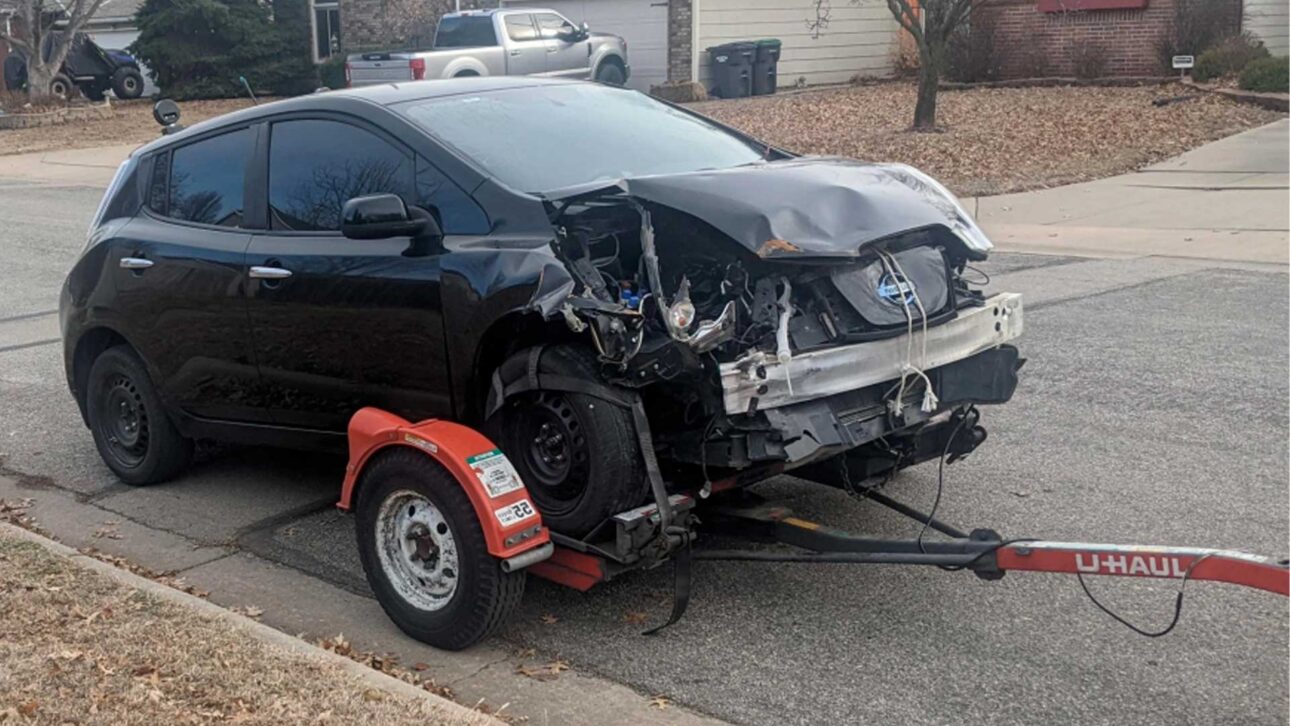
The creator of the project, identified as Danny on the site Dan.nix, noted that he bought the Mercury Comet for restoration and also a crashed 2014 Nissan Leaf considered a total loss. The idea from the start was to reuse as much as possible of the modern electric car, including BMS, charger, inverter, motor, and charging ports.
This choice helped cut costs. Instead of buying a motor, controller, battery, and charger separately in the conversion market, he took advantage of a set that had already been designed to work in a production car. Even so, the adaptation required cutting, welding, custom supports, and several tests until the car moved correctly.
The motor that previously drove the front wheels of the Leaf ended up on the rear axle of the Comet
In the original Nissan Leaf, the electric motor is at the front and drives the front wheels. In the Mercury Comet, the set was installed at the rear, a very different solution from the donor car’s factory architecture.
For this, it was necessary to create a De Dion-type axle, reinforce the suspension with updated leaf springs, and shorten half-shafts to fit the set within the width of the old wagon. The solution aimed to preserve the classic look but with a completely new mechanics under the body.
The Resolve-EV controller was a central piece in this stage. It allows using original Leaf components without replacing the entire electronic system with more expensive aftermarket parts. In the project, this meant keeping the battery BMS, inverter, charger, and motor working as a set close to the original.


The battery also didn’t enter the car as it left the Leaf. The package of 48 modules was disassembled, revised, and installed in a new metal cradle in the front compartment, precisely where the combustion engine used to be. Some modules needed to be replaced due to damage during disassembly.
The cheap project was not simple and the electrical part almost stalled the conversion
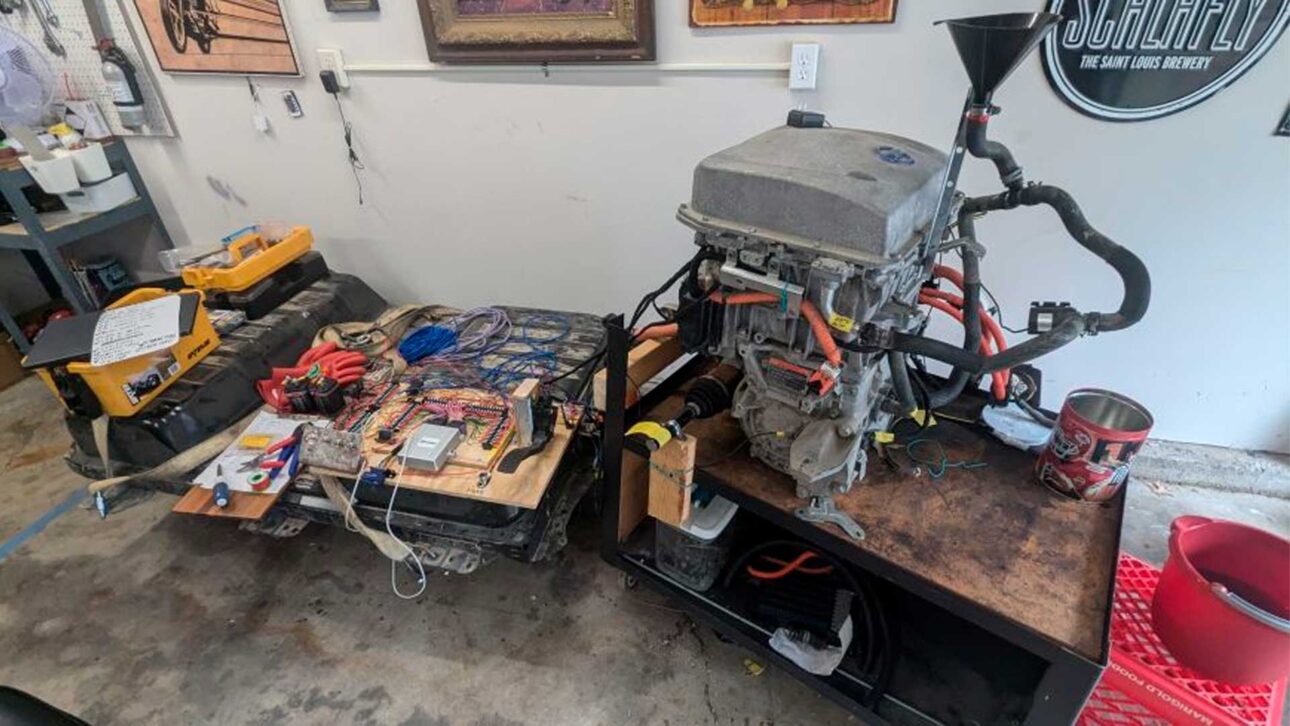
The low-cost goal did not eliminate the most difficult part of an electric conversion: integrating high voltage, charging, battery management, and motor control safely. The car didn’t run on the first attempt.
During the tests, there was an issue with inverted high-voltage cable terminals, a probable failure in the onboard charger, replacement with a used charger, and substitution of a pre-charge resistor. After that, the wheels finally turned, but in the wrong direction.
The error was in the connection of some high-voltage cables. After the correction, the motor started working as expected. This detail shows the difference between a low-cost adaptation and a simple adaptation: the budget was tight, but the work required electrical knowledge, tools, patience, and tolerance for error.
There was also an interesting visual solution. The J1772 charging port was installed where the gasoline filler used to be. On the outside, the wagon still looks like a classic car; on the inside, the “tank” now receives electric energy.
The estimated range was close to that of the original Leaf, even in a 1962 body
The creator of the project estimates that the electric Mercury Comet can run up to 78 miles, about 125 kilometers, on a full charge. The number depends on the controller’s reading and still needs to be seen as an estimate of real use, not as official factory data.
The comparison with the Leaf helps to understand the result. The 2014 Nissan Leaf used a 24 kWh battery, 80 kW motor, equivalent to 107 hp, and had an EPA estimated range of 84 miles, about 135 kilometers, according to technical data gathered by Kelley Blue Book.
In other words, the 1962 wagon was just a few kilometers below the donor electric car in estimated range. For a homemade project, made with used parts and an old body, this is a relevant data point. It doesn’t mean the Comet became a modern electric vehicle, but it shows that components from a wrecked EV can still have a useful life in another vehicle.
Actual consumption can vary greatly. Weight, tires, aerodynamics, terrain, temperature, and battery condition directly affect the range. In adapted electric cars, the final calibration and the quality of the connections also weigh on performance and safety.
Electric conversions reuse parts but still require technical criteria
The case of the Mercury Comet shows a trend that should appear more frequently as used and wrecked electric cars reach auctions and junkyards. Motors, inverters, chargers, and batteries from accident-damaged EVs can serve as a base for restoration projects, prototypes, non-daily use vehicles, and low-budget conversions.
The United States Department of Energy points out that fully electric vehicles do not emit pollutants from the exhaust, although the total emission depends on the source of electricity and the production of components. This difference helps explain why there is interest in reusing electric assemblies, especially when the alternative would be to discard still functional parts.
But there are clear limits. Such a conversion involves high voltage, risk of short circuit, fire, electric shock, insulation failures, and the need for brakes, suspension, and structure compatible with the new weight. There are also legal issues, as each country or state has its own rules for regularizing modified vehicles.
In Brazil, such projects would require attention to documentation, vehicle safety inspection, fuel change in the registration, and traffic regulations. It’s not enough for the car to work in the garage. To circulate legally, the adaptation needs to go through technical and administrative processes.
Would you have the courage to transform a classic car into an electric one using parts from a wrecked vehicle, or do you think the original engine is part of the car’s soul? Leave your opinion in the comments and tell us which old model you would like to see running with an electric motor.