Portuguese
  Spanish


China has completed tests on two superconducting magnets used in nuclear fusion reactors and has set a new date on the global energy radar. The country aims to finish an experimental device by 2027 and demonstrate, around 2030, electricity generation with the same physical process that powers the Sun.
The race for nuclear fusion has gained a new chapter in China. At the end of June, two superconducting magnets developed in the country underwent technical and performance tests under full operating conditions, a stage considered decisive for the advancement of the so-called “artificial sun”.
The project does not involve a commercial plant ready to supply cities on a large scale by 2030. The announced goal is to demonstrate the first generation of electricity by nuclear fusion, an intermediate step between laboratory experiments and a future power plant connected to the grid.
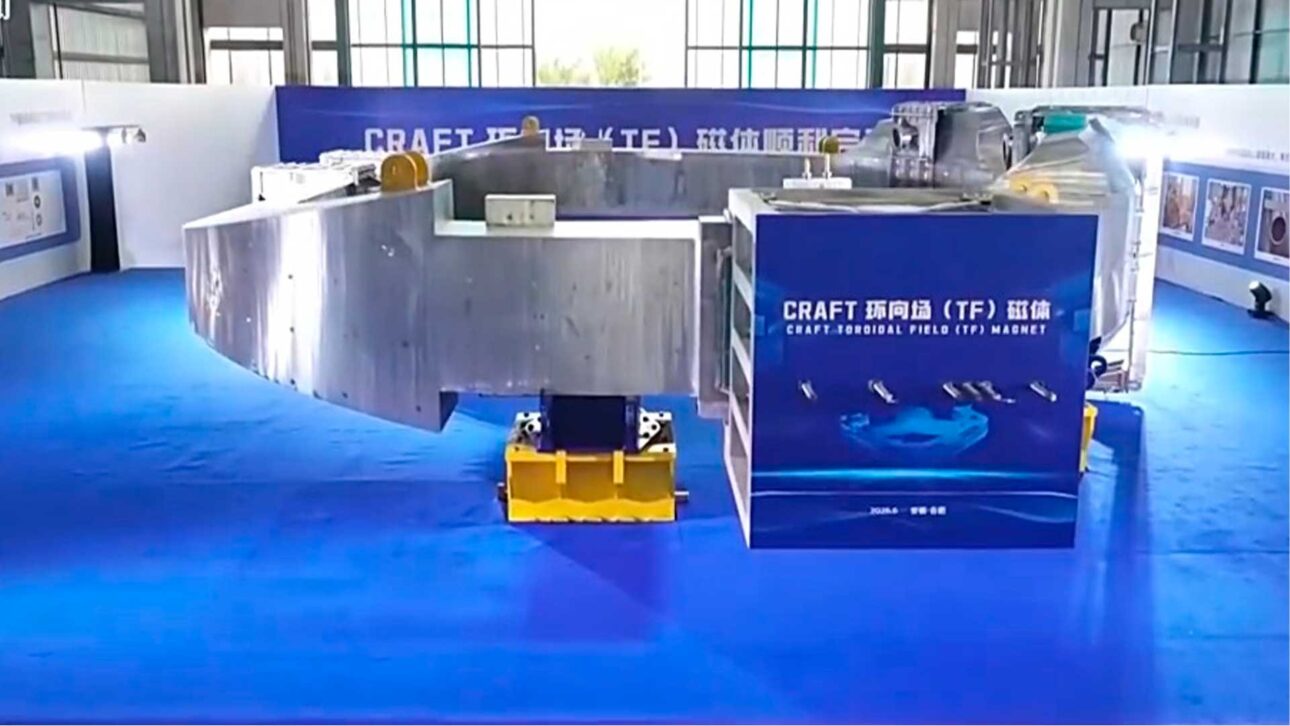
According to CGTN, the tested equipment includes a high-temperature superconducting central solenoid coil, a piece used to control the plasma, and a 582-ton toroidal magnet.
-
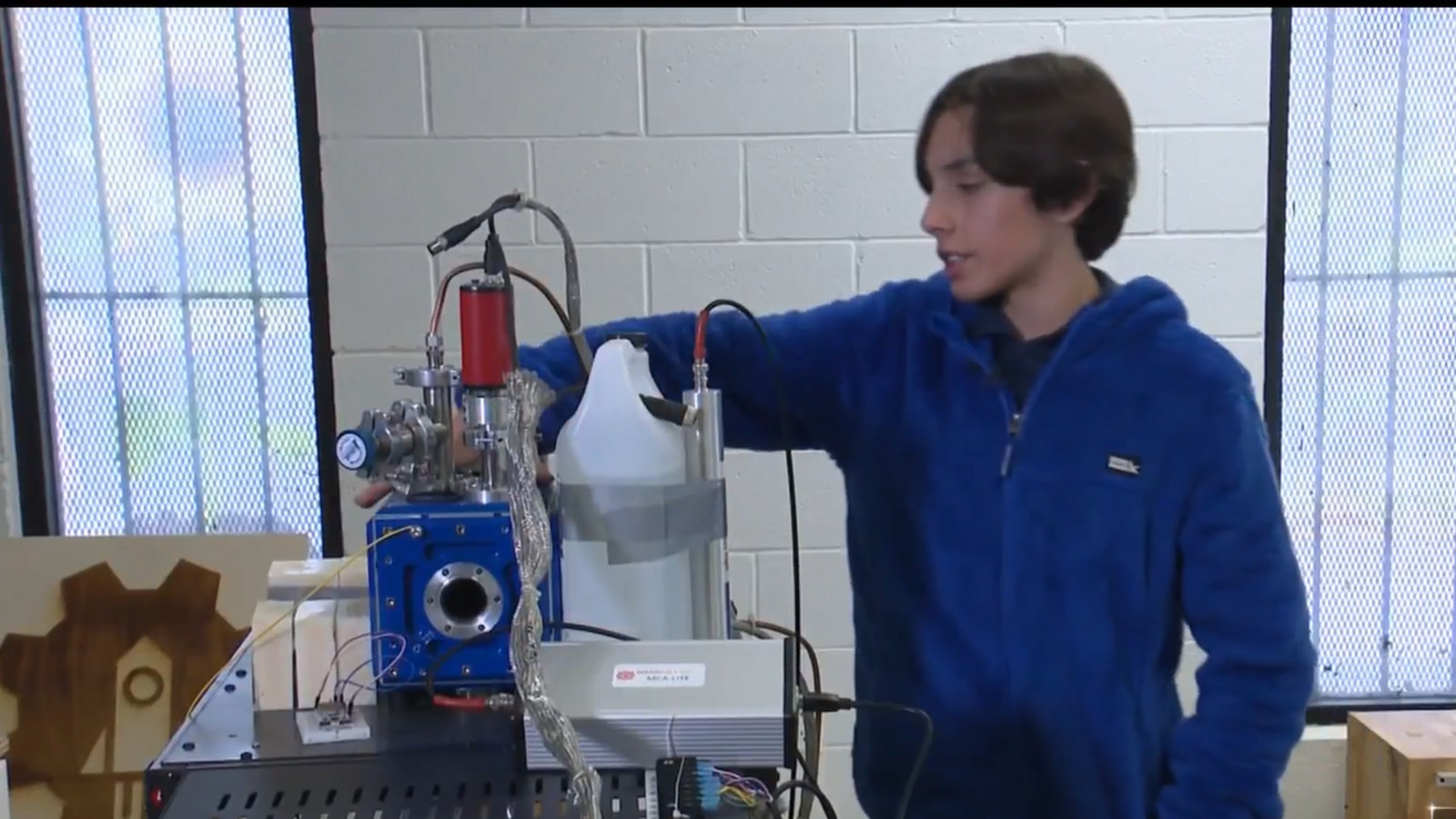
Seventh Grader Builds Nuclear Fusion Machine at Home, Aiming for Guinness World Record

-
Ancient Ritual Circle, Hidden for 5,000 Years, Discovered in Scotland’s Machrie Moor Using Sensors, Revealing a “Phantom Stonehenge”

-
Engineers Develop Fridge-Sized Machine to Produce 95-Octane Synthetic Fuel from Air and Water, Aiming to Sustain Combustion Engines Without Oil
-
Two-Armed Robot Uses AI to Reassemble Destroyed Pompeii Frescoes, Solving an “Impossible” Puzzle


The forecast is to complete the compact experimental device by the end of 2027 and aim for the first electrical demonstration around 2030.
The challenge begins before electricity and involves keeping the plasma suspended without touching the reactor walls
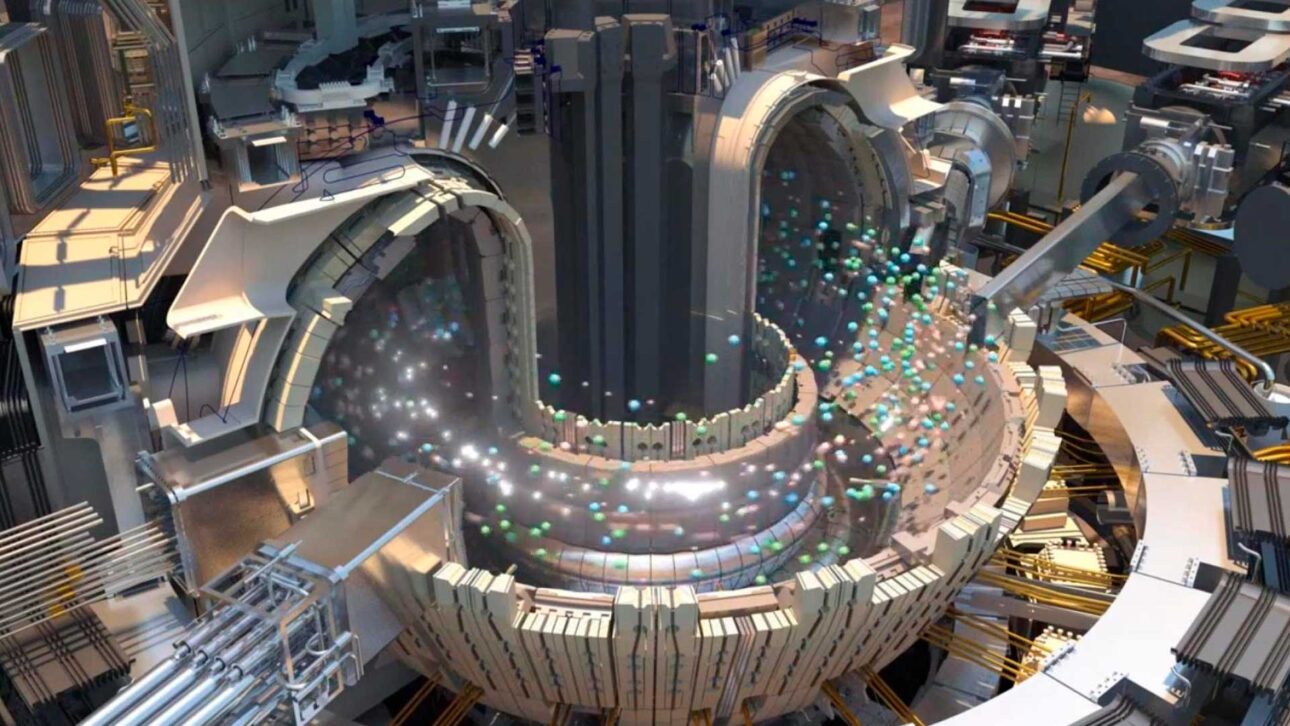
Nuclear fusion attempts to reproduce, on Earth, the reaction that occurs inside the Sun. Instead of breaking heavy atoms, as happens in fission used in conventional nuclear plants, fusion joins light nuclei and releases energy.
The problem is that this reaction requires extreme temperatures. In the case of tokamak-type reactors, the fuel turns into plasma and needs to be confined by magnetic fields. If this plasma touches the internal walls of the equipment, the reaction loses stability and can be interrupted.
That is why magnets are one of the most expensive and difficult parts of the system. They function as an “invisible cage,” keeping the plasma suspended inside the chamber. The new Chinese phase is particularly interesting because it addresses this bottleneck: the ability to control a mass of plasma hot enough to generate fusion without destroying the reactor itself.
The World Nuclear Association explains that, on Earth, fusion is much more difficult than in the Sun because there is no gravitational force compressing the fuel. Therefore, hydrogen isotopes need to be heated to extreme temperatures and kept stable long enough for the nuclei to unite.
What China wants to prove by 2030 is not yet a commercial plant
The Chinese project known as BEST, an acronym in English for Burning Plasma Experimental Superconducting Tokamak, is located in Hefei, in Anhui province. It is treated as a bridge between current Chinese experiments and future demonstration reactors.
According to the Chinese Academy of Sciences, BEST was designed to seek net fusion energy gain and demonstrate electricity generation around 2030. The institution also reported that the project marks the transition from basic research to a larger-scale engineering phase.
This difference is crucial. Generating electricity in a controlled test does not mean building a fleet of fusion plants right after. It will still be necessary to prove stable operation, materials resistant to neutron radiation, cooling systems, remote maintenance, tritium production, and competitive cost.
Even so, the timeline draws attention because nuclear fusion carries an old promise: to produce a large amount of energy with abundant fuel, without direct carbon emissions during generation and with different waste than those produced by fission nuclear plants.
Seawater comes into play because deuterium is one of the keys to the fuel
The most studied fusion for energy generation uses deuterium and tritium, two isotopes of hydrogen. Deuterium can be extracted from seawater, while tritium, rarer and radioactive, needs to be produced and controlled within the reactor’s technological cycle.
The International Atomic Energy Agency states that fusion does not emit CO₂ or other atmospheric pollutants during the generation process. The IAEA also explains that fusion does not produce long-lived nuclear waste like those associated with fission, although it involves tritium and materials activated by reactor operation.
In Chinese communications, deuterium appears as a strong argument. The estimate released is that the fusion energy associated with the deuterium present in 1 liter of seawater would be equivalent to the energy of approximately 300 liters of gasoline. This number helps explain why the technology is seen as a potential long-term energy source, but it does not eliminate the engineering challenges.
The very need for giant magnetic fields shows that fusion is still far from simple. The fuel may be abundant, but the machine capable of using this fuel safely, stably, and at an acceptable price is still in development.
The race is not only Chinese and ITER shows the size of the technological barrier
China is not alone. The United States, Japan, the United Kingdom, the European Union, and private companies are also racing to turn fusion into a real source of electricity. The international ITER project in France brings together decades of research and serves as a reference for much of the field.
ITER was designed to produce 500 megawatts of fusion power in the plasma from 50 megawatts of heating, but it will not convert this energy into electricity. Its function is to test physical conditions and technologies that pave the way for future machines capable of generating electrical energy.
This detail helps measure the weight of the Chinese announcement. If BEST manages to demonstrate fusion electricity around 2030, the achievement will place China in a prominent position in the next stage of the race, which is to transform experimental reactors into systems with measurable electrical output.
The advancement of magnets also has another practical effect. China reported that it reduced the cost of superconducting material from 400 yuan per meter to about 100 yuan per meter. If this reduction holds on an industrial scale, it could lower part of the cost of equipment that today makes fusion a costly and difficult technology to replicate.
The “artificial sun” can change energy, but the turnaround depends on continuous operation and real price
The promise of nuclear fusion is enormous, but the path still involves tough stages. It’s not enough to heat the plasma for seconds or minutes. A future plant will have to operate for long periods, transform heat into electricity, withstand internal wear, and compete with solar, wind, hydroelectric, gas, coal, and nuclear fission.
The Chinese announcement shows progress in a sensitive technical point: the magnets that sustain magnetic confinement. Without them, there is no stable plasma. Without stable plasma, there is no controlled fusion. And without repeatable operation, there is no reliable electrical generation.
The expectation of 2030, therefore, should be read as a demonstration goal, not as the immediate arrival of unlimited energy at the outlet. Still, if China meets the schedule, the world will witness one of the most observed stages in the history of nuclear energy: the attempt to transform the heat of an “artificial sun” into usable electricity.
Do you believe that nuclear fusion can become a real energy alternative in the coming decades or does it still seem like a promise too distant? Leave your opinion in the comments and say whether this technology should receive more public and private investment.