Portuguese
  Spanish


Sales Decline Pressures And Accelerates Search For New Sources Of Revenue, A Challenging Scenario For Ford, Which Bets On The Electric Future With The Urgent Need To Generate Financial Results
Ford Is Experiencing One Of The Most Challenging Chapters Of Its Recent History. Pressured By Negative Results In Its Electric Division, The Automaker Decided To Adopt A Bold Strategy: Transforming The Production Of electric batteries Into A New Business, Opening Space For Sales To Third Parties.
The Bet Took Shape In Glendale, Kentucky, Where BlueOval SK – A Joint Venture Between Ford And South Korea’s SK On – Officially Inaugurated Its Battery Factory. The First Destination Will Be The Electric F-150 Lightning Pickup, One Of The Company’s Most Iconic Models. But The Plans Go Beyond.
In An Interview With Bloomberg, Michael Adams, CEO Of BlueOval SK, Made The New Horizon Clear:
-
2027 Toyota Corolla Cross Unveiled: New Design, Enhanced Fuel Efficiency, Reduced Maintenance Costs, Advanced Technology, Connected Services, and Up to 10-Year Warranty

-
Fiat Cronos Precision 2018: Affordable Sedan with Spacious Trunk and Reliable Maintenance
-
Volkswagen to Cut Production by 1 Million Cars by 2030, Reducing Jobs and Platforms, Focusing on More Profitable Models

-
Toyota Launches First 100% Electric Car in Brazil: bZ4X with 343 HP, All-Wheel Drive, 361 km Range, Priced at $419,990 BRL, Limited to 99 Units




“Our Partners Are Seeking Opportunities For New Businesses.”
This Statement Reflects The Company’s Repositioning: It Is Not Just About Manufacturing Electric Cars, But About Acting As A Supplier In A Sector That Is Growing In Importance In The Global Energy Transition.
Sales Decline Pressures And Accelerates Search For New Sources Of Revenue
The Movement Comes At A Delicate Moment. Between January And July 2025, Ford’s Sales Of Electric Vehicles Dropped Nearly 10% Compared To The Same Period Last Year. This Sales Decline Pressures And Accelerates The Search For New Sources Of Revenue, Making Battery Sales A Concrete Alternative To Strengthen Cash Flow.
The Situation Is Worsening With The End Of The $7,500 Tax Credit, Valid Until September, Which Ensured Price Competitiveness For Electric Vehicles In The United States. Without This Incentive, Ford Will Have To Compete For Space In An Even More Crowded Market.
History Also Weighs:
In 2024, The Model E Division, Responsible For Electric Vehicles, Accumulated A Loss Of $5.1 Billion. The Numbers Reinforce The Urgency For New Solutions. In This Scenario, Electric Batteries May Become Not Only A Strategic Product But A Lever To Ensure The Automaker’s Survival In The Global Race For Clean Energy.
It Is Worth Remembering That The Trend Is Not Exclusive To Ford. Toyota Has Already Announced Plans To Supply Batteries For Honda’s Hybrid Vehicles Starting In 2026. The Sector Is Moving Toward A New Phase, Where Even Direct Rivals May Become Clients.
Course Adjustments: Fewer Factories, More Efficiency In The Electric Plan
However, The Expansion Does Not Happen Without Cuts. The BlueOval SK Factory In Kentucky, Which Was Originally Expected To Employ 2,500 People, Will Now Have Only 1,450 Workers. Another Unit In The State Halted Its Production, Reflecting Ford’s More Cautious Stance.
Still, The Third Factory In Tennessee Remains In The Plans, With A Start Date Projected For 2027. The Difference Is That The Next-Generation Electric Pickup, Which Would Use These Batteries, Has Been Delayed To 2028, In A Clear Redesigning Of Priorities.
EV Platform And Affordable Batteries: A Big Bet For 2027
Alongside The Cost-Cutting Measures, Ford Is Betting On A Trump Card That Could Unlock The Market: The Ford EV Universal Platform. This New Architecture Will Standardize Components And Reduce Production Costs, Making Electric Vehicles More Affordable.
The First Model Is Already Planned: A Mid-Sized Electric Pickup, With An Initial Price Around $30,000, Scheduled To Hit The Market In 2027. The Strategy Is Clear: To Make Electric Vehicles Attractive Not Only To High-Income Consumers But To A Broader Audience.
To Reduce Costs, The Company Will Use Lithium-Iron-Phosphate (LFP) Batteries, Known For Their Durability And Lower Price. Production Will Be In Michigan, With Technology Licensed From The Chinese Giant CATL.
This Decision Shows Pragmatism: By Adopting Cheaper And More Reliable Solutions, Ford Creates Conditions To Compete On Price And, At The Same Time, Open A Promising Business Front By Selling Electric Batteries To Other Companies.
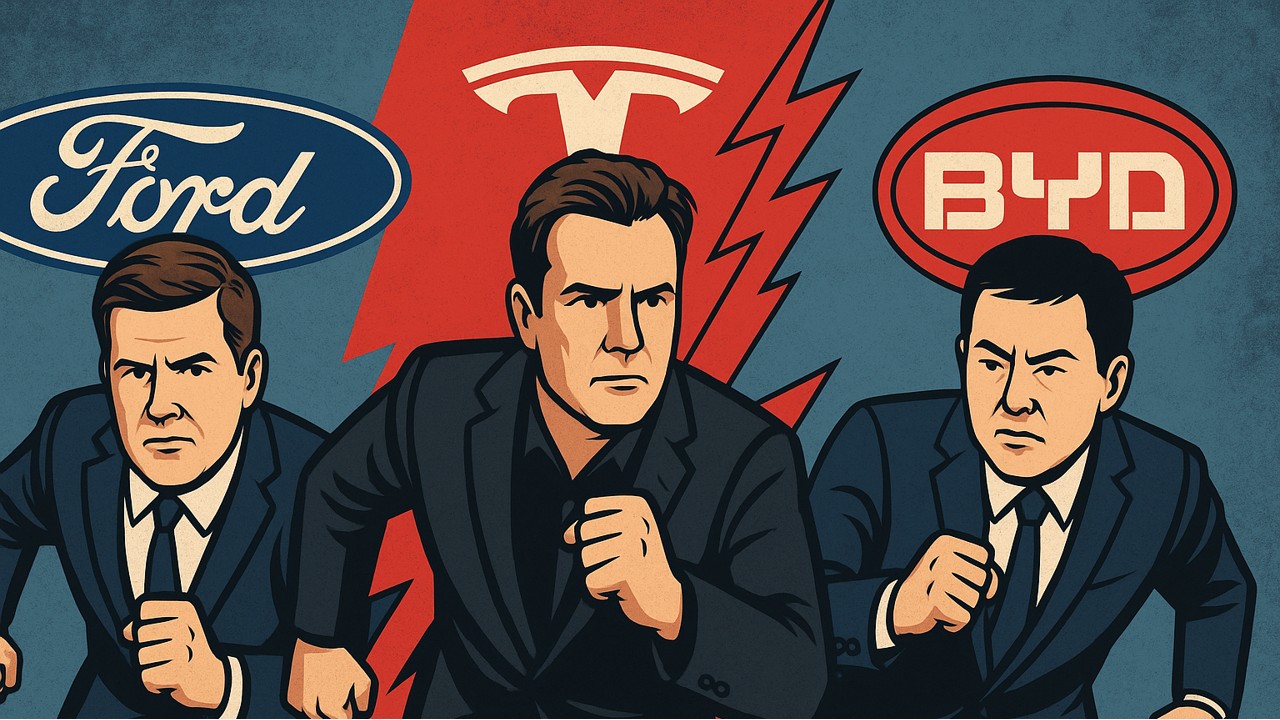
The Competition Is Intense. Tesla Is The Leader In Profitability, While Chinese Companies Like BYD Are Advancing Aggressively.
To Compete, Ford Needs To Prove Not Only That It Knows How To Build Cars But That It Can Provide Reliable Energy, At Scale, For An Entire Ecosystem.
If Successful, The Company Could Launch A New Era: Uniting Its Century-Long Tradition With A Vision Of The Future Where Electrification Is Not Just A Product, But Also A Service And Strategic Supply.