Portuguese
  Spanish


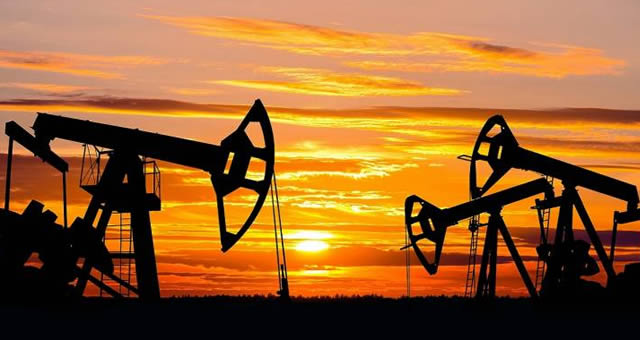

Bill 1470/19 Distributes Oil And Gas Royalties To States And Municipalities According To The Rules Of The State Participation Funds (FPE) And The Municipalities (FPM).
Oil, shale, and natural gas exploration companies must compensate 8% of the value of the products, with half going to states and half to municipalities. Currently, the Oil Law (9,478/97) ensures greater financial compensation to states and municipalities where extraction occurs. According to the law, compensation of up to 5% of production is divided as follows: 70% of the royalties go to producing states; 20% to producing municipalities; and 10% to municipalities affected by loading and unloading operations of oil and natural gas.
For the amount exceeding 8% of production, the proposal distributes resources in 37.5% to states and another 37.5% to municipalities, and 25% to the Ministry of Science, Technology, Innovations and Communications (MCTIC). The Oil Law divides what exceeds 5% of production as follows: 52.5% to producing states; 15% to producing municipalities; 7.5% to municipalities affected by loading/unloading operations; and 25% for the MCTIC. The same logic applies to the sharing of what is extracted in offshore fields; the resources go to all states and municipalities, not just those that are producing or affected by the production.
-
Lenovo Unveils Legion Y700 Tablet with RGB Backlighting, 5G, and SIM Card Support
-
Lenovo Unveils Legion Y700 Tablet with RGB Backlighting, 5G, and SIM Card Support
-
Northern Brazilian City Prepares Task Force to Mitigate El Niño Impacts with Stockpiled Fish, Drone Monitoring, Firefighting, and Water Supply Reinforcement in Remote Areas

-
Brazil to Issue “Panda Bonds” in China, Aiming to Raise Up to 5 Billion Yuan at Lower Interest Rates Than Dollar Debt

According to Congressman Sebastião Oliveira (PR-PE), the current laws on financial compensation for oil and gas exploration (Laws 7,990/89 and 9,478/97) have not promoted a fair distribution of resources. “They favor producing states and municipalities to the detriment of others, which is unjustified, as hydrocarbons are the property of the Union,” he said.
The proposal is being processed in a conclusive manner and will be analyzed by the Committees on Mines and Energy; Economic Development, Industry, Commerce and Services; Finance and Taxation; and Constitution, Justice and Citizenship.
Ministry Releases Issuance Of Bonds For Oil And Gas Projects
The Minister of Mines and Energy, Bento Albuquerque, signed an ordinance on Monday, June 17, that allows the raising of funds through the issuance of debentures for oil, natural gas, and biofuel projects. Bento Albuquerque announced the measure that regulates the classification of priority projects in the three sectors in São Paulo during the Ethanol Summit 2019.
“Today we concluded an act of the federal government that perfectly translates what we intend to do to unlock the investments that the country so desperately needs, generating jobs and income,” declared the minister.
In addition to the Minister of Mines and Energy, Bento Albuquerque, the opening of the event was attended by the Minister of Agriculture, Tereza Cristina, the Minister of the Civil House, Onyx Lorenzoni, the Governor of São Paulo, João Dória, the president of Apex-Brasil, Sergio Ricardo Segovia Barbosa, among other authorities.
“The expectation is that the measure will strengthen the goals of RenovaBio with the expansion of the number of biofuel plants and, consequently, increase the supply of ethanol, potentially reducing fuel prices for consumers,” stated the MME in a note, citing an investment of R$ 9 billion per year with the renewal of sugarcane fields and an additional R$ 4 billion with the increase in sugarcane production.
“With the implementation of RenovaBio, investments will be even greater. We estimate that approximately R$ 60 billion per year will be needed in this sector,” he stated.